Redefining the phenotypic continuum of cardiovascular disease using machine learning
Abstract Body (Do not enter title and authors here): Background Current approaches that define cardiovascular disease rely on assignment of traditional diagnostic labels which may not reflect the natural continuum of phenotypic expression, influenced by genetic and environmental modifiers, or adequately identify groups with shared molecular mechanisms. Machine learning can leverage advances in genetic and imaging characterisation to reclassify phenotypic diversity along a continuum, from health to disease.
Research Aims Our study aims to build a tree-like classification of cardiovascular phenotypes in the community where branches represent subjects with shared features, ordered by their severity. Using dilated cardiomyopathy (DCM) and hypertrophic cardiomyopathy (HCM) as exemplar conditions with opposing phenotypes, we aim to demonstrate the interaction between genetic and environmental modifiers of disease expression.
Methods We analysed cardiovascular magnetic resonance (CMR) imaging, electrocardiogram (ECG), biomarkers and clinical data from participants in the UK Biobank. Using unsupervised learning of multiparametric data, we built a tree of phenotypic expression. We projected the risk of DCM and HCM cases, and associated rare and common variant risk, onto the tree structure.
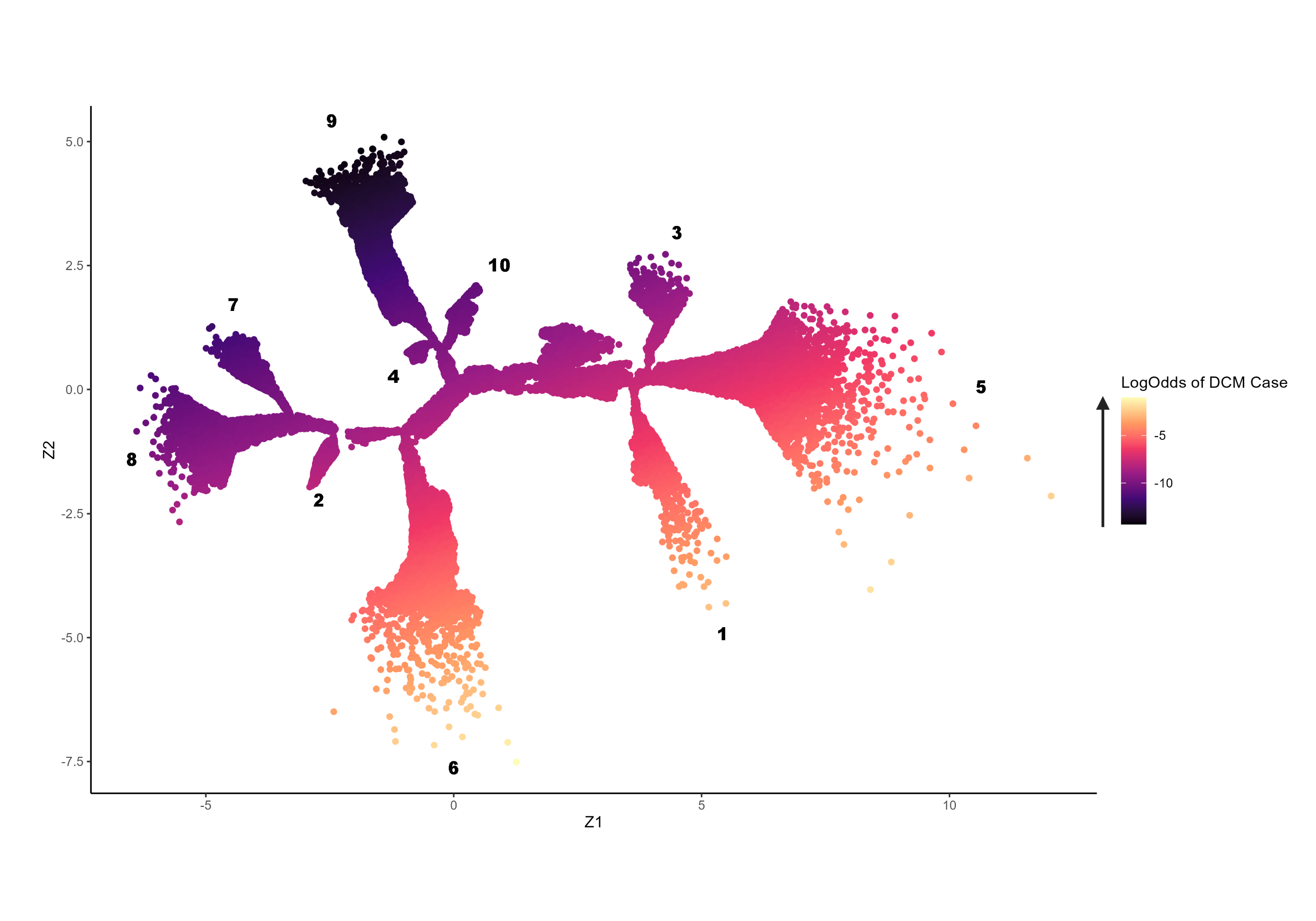
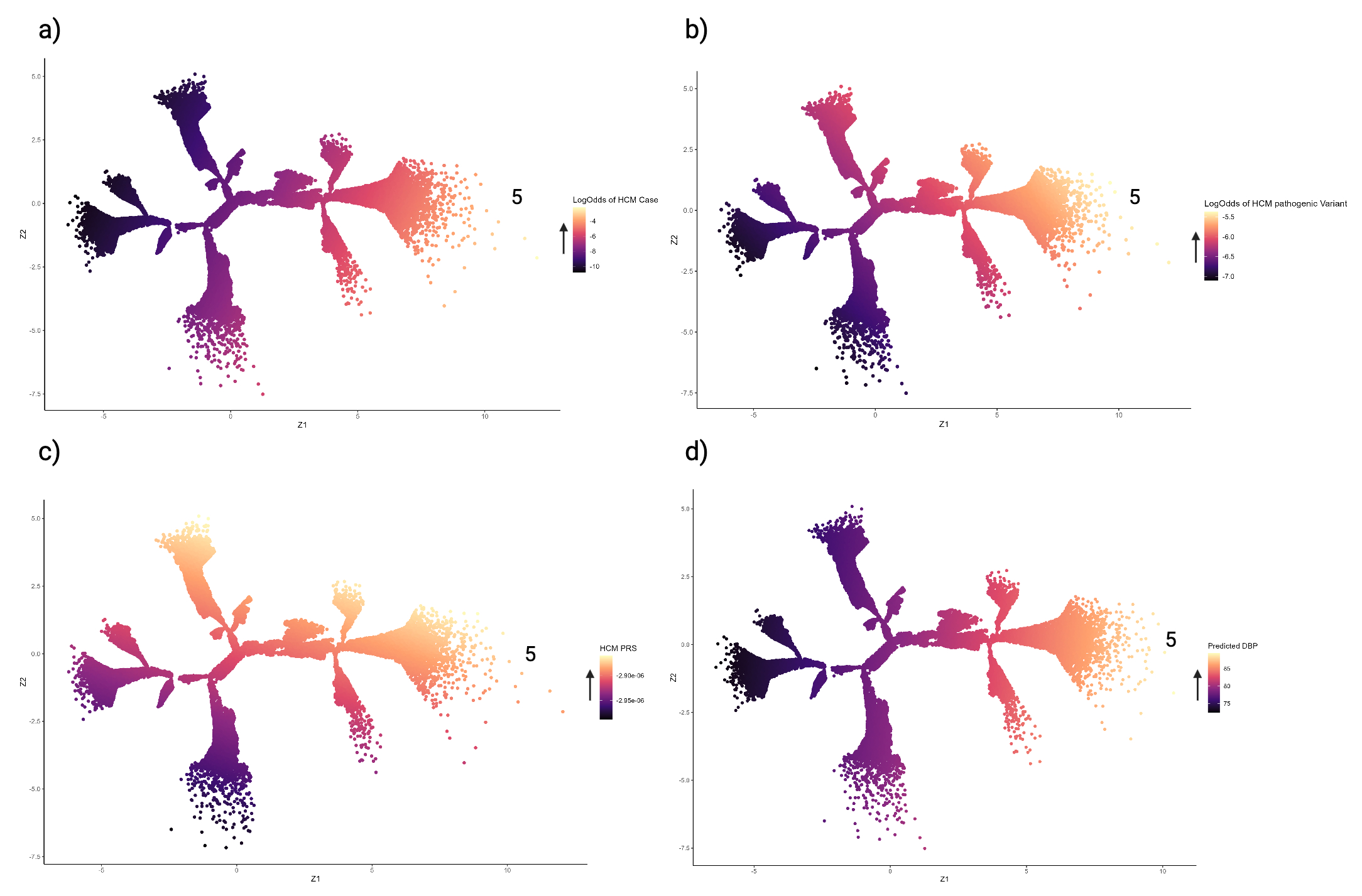
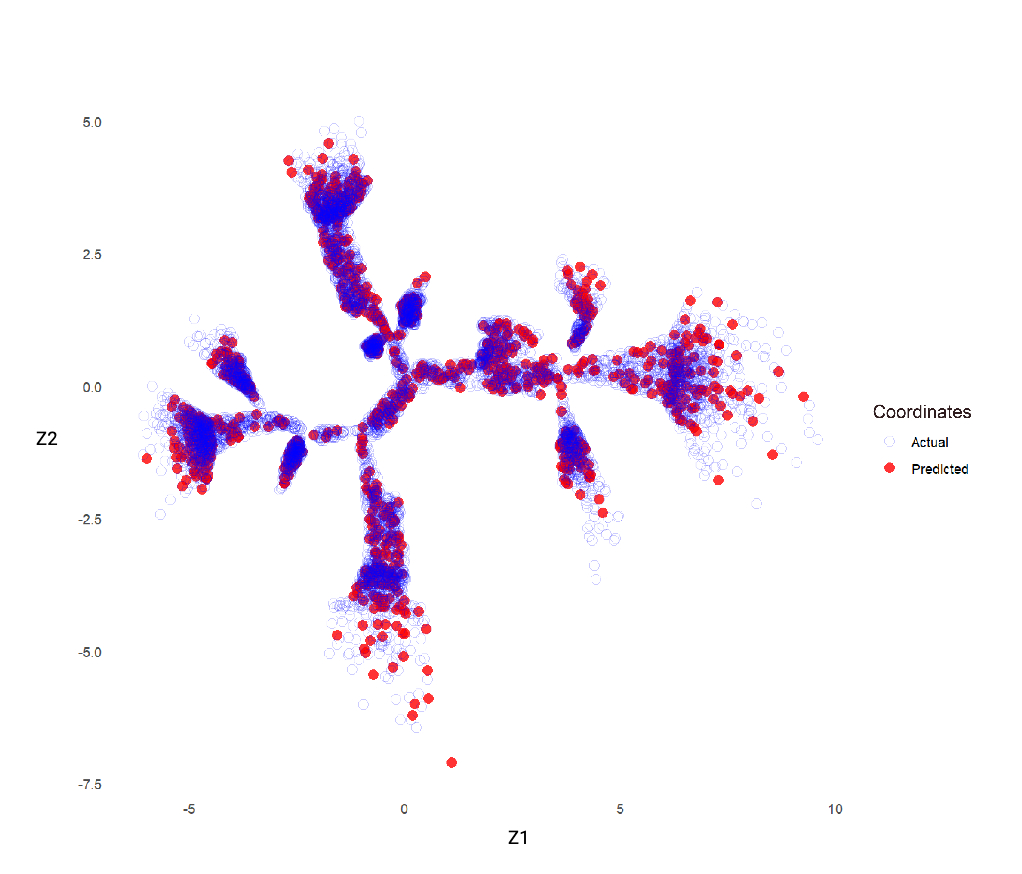
Results Ten main branches were discovered, using data from 41,525 participants (51.7 % female, median age 65 yrs [IQR: 58, 70]). The extremities of branches 1 and 6 were enriched for DCM cases (p <0.05) and participants with reduced ejection fraction and high left ventricular volumes (p <0.05). Compared with subjects at the tree centre, distal participants in branch 1 had increased blood pressure (BP) and body mass index (BMI), whilst those in branch 6 were more likely to have high HbA1c levels and carry a pathogenic DCM variant (p <0.05). The extremity of branch 5 was enriched for HCM cases, rare sarcomeric variants (p = 0.004) and high polygenic risk (p <0.001). Whilst the ends of branches 3 and 9 had high polygenic risk for HCM, they were less likely to have elevated BP and BMI, and had reduced likelihood of HCM expression, compared with branch 5. A phenomapping model was trained to accurately project unseen subjects onto the tree (R2 0.98).
Conclusions We present a tree-like continuum of cardiovascular phenotypes, providing a novel framework for mechanistic discovery and exploration of genotype-phenotype associations. Phenomapping of unseen subjects enables personalised estimation of genetic and cardiovascular risk.
Curran, Lara
(
Imperial College London
, London , United Kingdom )
Inglese, Paolo
(
Imperial College London
, London , United Kingdom )
Rjoob, Khaled
(
Imperial College London
, London , United Kingdom )
Mcgurk, Kathryn
(
Imperial College London
, London , United Kingdom )
Lu, Chang
(
Imperial College London
, London , United Kingdom )
Zheng, Sean
(
Imperial College London
, London , United Kingdom )
Tahasildar, Shamin
(
Kings College London
, London , United Kingdom )
Kalaie, Soodeh
(
Imperial College London
, London , United Kingdom )
Bai, Wenjia
(
Imperial College London
, London , United Kingdom )
Halliday, Brian
(
Imperial College London
, London , United Kingdom )
Tayal, Upasana
(
Imperial College London
, London , United Kingdom )
De Marvao, Antonio
(
Kings College London
, London , United Kingdom )
Ware, James
(
Imperial College London
, London , United Kingdom )
Prasad, Sanjay
(
Imperial College London
, London , United Kingdom )
O'regan, Declan
(
Imperial College London
, London , United Kingdom )
Author Disclosures:
Lara Curran:DO NOT have relevant financial relationships
| Brian Halliday:DO have relevant financial relationships
;
Advisor:Astra Zeneca:Past (completed)
| Upasana Tayal:DO NOT have relevant financial relationships
| Antonio de Marvao:DO NOT have relevant financial relationships
| James Ware:No Answer
| Sanjay Prasad:No Answer
| Declan O'Regan:No Answer
| Paolo Inglese:DO NOT have relevant financial relationships
| Khaled Rjoob:DO NOT have relevant financial relationships
| Kathryn McGurk:DO have relevant financial relationships
;
Consultant:Checkpoint Capital LP:Past (completed)
| Chang Lu:No Answer
| Sean Zheng:No Answer
| Shamin Tahasildar:DO NOT have relevant financial relationships
| Soodeh Kalaie:No Answer
| Wenjia Bai:No Answer