
Logo

American Heart Association

  110
  0


Final ID: Sa2185

Alcohol-Related Cardiomyopathy - Exploration of Recent Mortality Trends in the United States

Abstract Body (Do not enter title and authors here): Introduction:
Data is accumulating regarding the contemporary trends of mortality rates in patients with alcohol-related cardiomyopathy across the United States.
Hypothesis:
We hypothesized that with increased awareness about the adverse effects of alcohol on the cardiovascular system and the advancement of echocardiography in the early diagnosis of alcoholic cardiomyopathy, mortality rates may show a downward trend.
Methods:
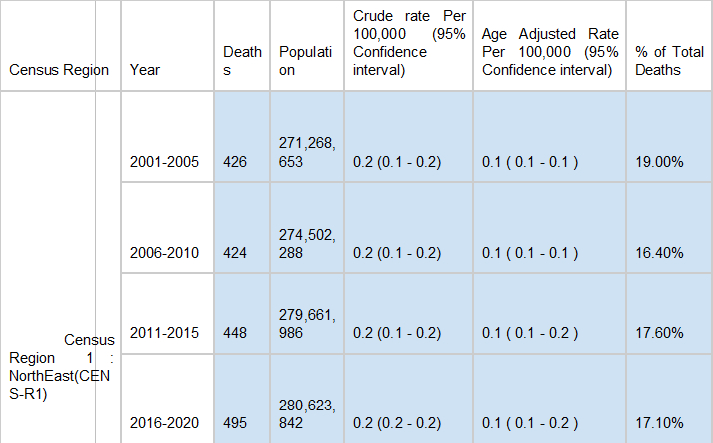
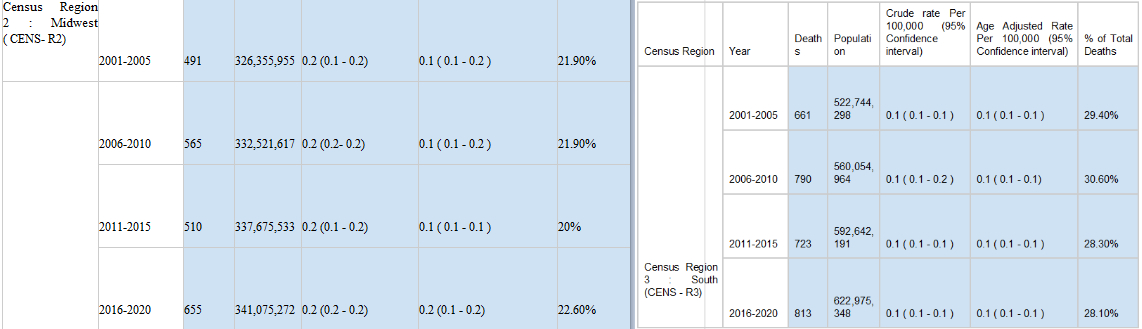
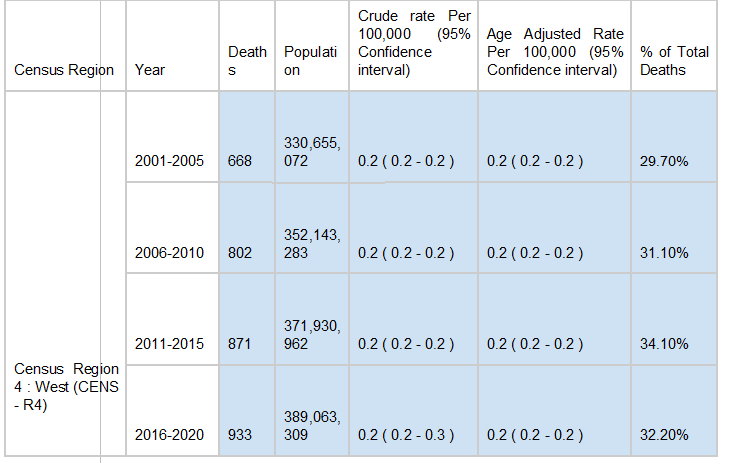
This is a retrospective observational study that retrieved death certificates from the CDC WONDER (Center for Disease Control and Prevention’s Wide-ranging ONline Data for Epidemiological Research) database from 2001-2020. The mortality rate of alcohol-related cardiomyopathy using ICD code I42.6 (Alcoholic cardiomyopathy) was studied from 2001-2020. This study duration was further subdivided into five-year periods. We calculated the crude mortality rate and age-adjusted mortality rate per 100,000 for four U.S census regions (CR-1 Northeast, CR-2 Midwest, CR-3 South, CR-4 West).
Results:
The overall age-adjusted mortality rate remained at 0.1/100,000 deaths in four U.S census regions until 2015; however, in the last five years of the study period, AAMR(age-related mortality rate) increased from 0.1 to 0.2/100,000 deaths.


Conclusions:
The mortality trends associated with alcohol-related cardiomyopathy have not changed significantly over the past two decades. This can be explained by the larger number of people developing alcoholic cardiomyopathy due to the increase in global alcohol use in addition to the fact that more diagnosed patients are receiving earlier treatment with goal-directed medical therapy for cardiomyopathy. Limitations of this study include intrinsic weakness of the WONDER dataset (changes with ICD-9 to ICD-10 codes, and potentially miscoding) which needs further research.


Discussion:
This suggests that while mortality rates associated with alcohol-related cardiomyopathy remained relatively steady for most of the study period, there was a concerning uptick in the latter years. This could prompt further investigation into potential factors contributing to this increase, despite advancements in awareness and diagnostic techniques.
  • Aun, Muhammad  ( King Edward Medical University , Lahore , Pakistan )
  • Mughal, Mohsin  ( Monmouth Medical Center , Long Branch , New Jersey , United States )
  • Author Disclosures:
    Muhammad Aun: DO NOT have relevant financial relationships | Mohsin Mughal: No Answer
Meeting Info:

Scientific Sessions 2024

2024

Chicago, Illinois

Session Info:

Cardiomyopathy Potpourri 1

Saturday, 11/16/2024 , 02:00PM - 03:00PM

Abstract Poster Session

More abstracts on this topic:
25-Year Decline in Aortic Aneurysm and Dissection Mortality in the U.S.: Impact of Endovascular Repair and Forecast to 2030

Ali Manzer, Umar Haddaya, Nazir Tahira, Nizam Muhammad, Steafo Lark, Sharif Ayesha, Jehangir Hanzala, Arham Muhammad, Hamza Anfal, Hassan Arbaz, Amjad Ans, Ali Iman, Zuha Zuha

A Hypertrophic Cardiomyopathy-Based Model Estimate of the Prevalence of Danon Disease in the United States

Maron Martin, Massera Daniele, Manganaro Susan, Bailey Miranda, Rehbein Fletcher, Taylor Matthew

More abstracts from these authors:
Outcomes of Transcatheter Mitral Repair in Cardiogenic Shock With and Without Mechanical Circulatory Support

Suppah Mustafa, Alsidawi Said, Naik Hursh, Kumar Sant, Rahban Habib, Mohmand Billal, Naqvi Abeeha, Mughal Mohsin, Andrade Ambar, Yeneneh Beeletsega, Bellamkonda Pallavi

You have to be authorized to contact abstract author. Please, Login
Not Available