
Logo

American Heart Association

  152
  0


Final ID: 4115015

Hyperpolarized Carbon-13 Metabolic Imaging Detects Changes in Cardiac Mitochondrial Metabolism in Patients Before and After Coronary Artery Bypass Graft Surgery

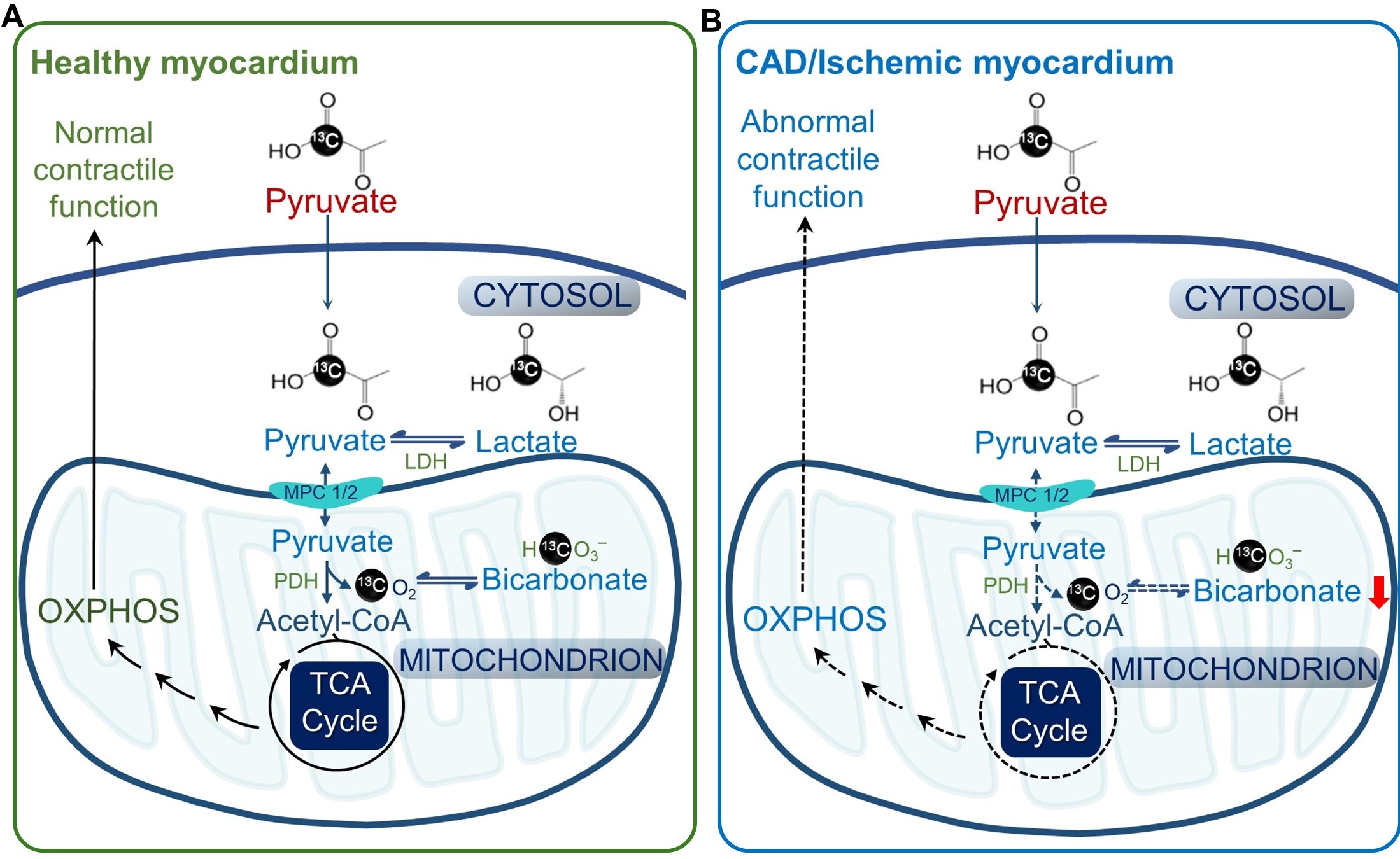
Abstract Body (Do not enter title and authors here): Background: Coronary Artery Disease (CAD) is a significant global health issue, necessitating improved diagnostic tools for visualizing cardiac energetics. Traditional imaging methods such as PET and dobutamine stress echocardiography do not directly assess mitochondrial metabolism. Hyperpolarized Carbon-13 metabolic magnetic resonance imaging (HP-13C MRI) offers a promising non-invasive method for investigating mitochondrial function in CAD. This study utilizes HP-13C MRI to detect changes in mitochondrial metabolism in patients undergoing Coronary Artery Bypass Graft (CABG) surgery (Fig.1).

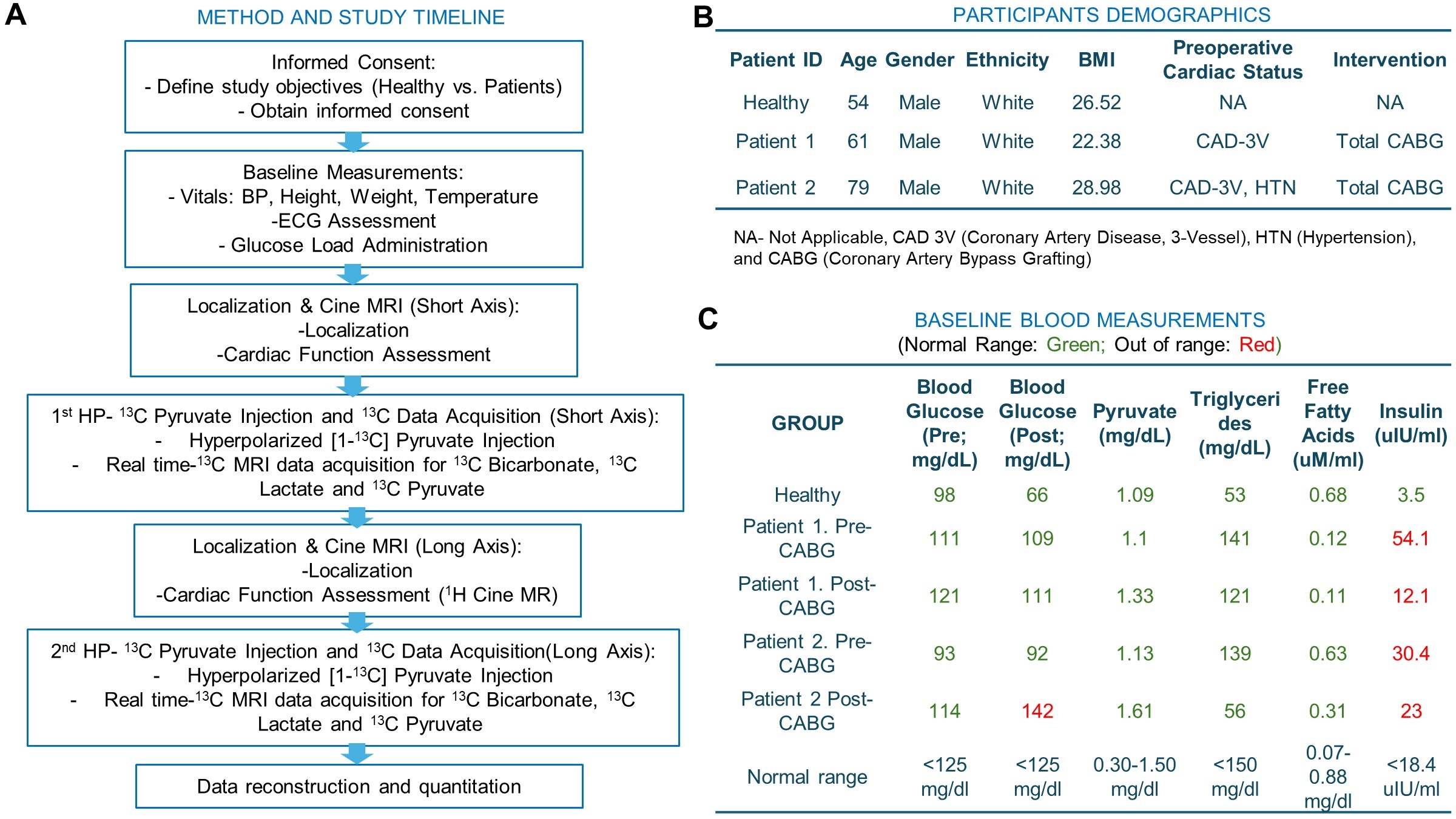
Methods: We conducted HP-13C MRI examinations on two patients with advanced CAD before and (~4-6 months after CABG surgery and one healthy subject (Fig. 2 A,B). Participating subjects provided informed consent according to a protocol approved by the Institutional Review Board and Protocol Review Committee. Baseline blood samples were analyzed for pyruvate, triglycerides, free fatty acids, and insulin levels. Post-glucose load, patients received an intravenous injection of an IND-approved metabolic probe, [1-13C] pyruvic acid, prepared under Good Manufacturing Practice regulations. The HP solution was administered after polarization in a clinical polarizer (SPINlabâ„¢, GE Healthcare). Imaging was performed using a GE MR750 MR system with a Helmholtz loop-pair 13C coil (PulseTeq Limited, UK). Data were reconstructed and analyzed with MATLAB scripts.

Results and Discussion:
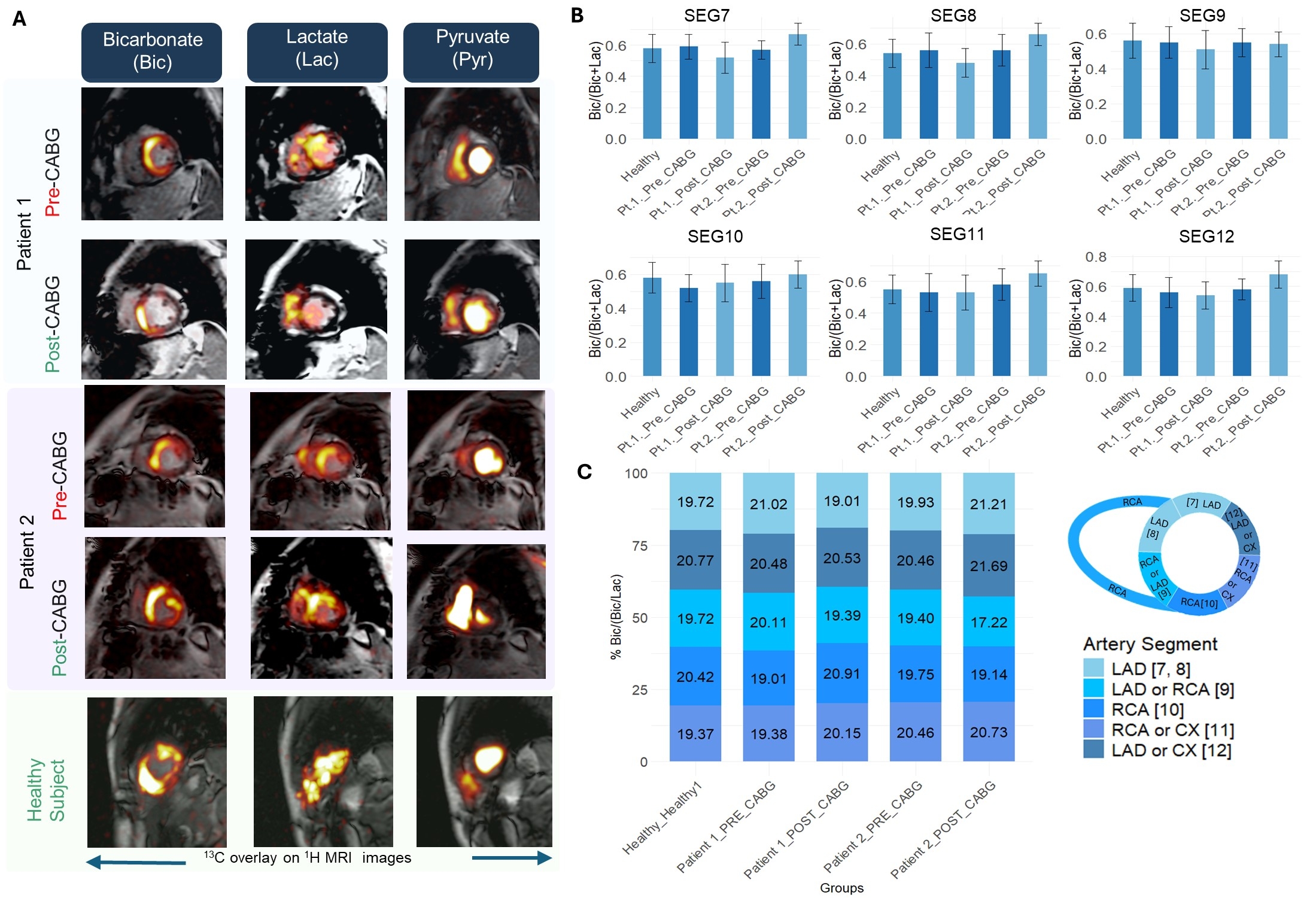
Baseline blood measurements were normal for the healthy subject, but those with advanced CAD showed variable and abnormal values (Fig. 2C). HP-13C MRI safely assessed cardiac metabolism in patients with advanced CAD. Patients with advanced CAD exhibited reduced pyruvate metabolism compared to healthy controls, shown by lower myocardial bicarbonate/(bicarbonate+lactate) ratios (Bic/(Bic+Lac)). Following CABG, only Patient 2 showed improved Bic/(Bic+Lac), while Patient 1 did not (Fig. 3A-B). This variability may be influenced by differences in nutrition, hormonal status, medication regimens, or other factors. Changes in % Bic/(Bic+Lac) across different coronary artery segments were observed post-CABG in CAD patients (Fig. 3C).

Conclusion:
HP-13C MRI non-invasively assesses cardiac metabolism in CAD patients, demonstrating the potential to evaluate post-CABG metabolic changes. Our efforts continue to recruit large cohort to understand individual variability.
  • Sharma, Gaurav  ( UT Southwestern Medical Center , Dallas , Texas , United States )
  • Mcneil, Sarah  ( UT Southwestern Medical Center , Dallas , Texas , United States )
  • Lin, Sung-han  ( UT Southwestern Medical Center , Dallas , Texas , United States )
  • Harrison, Crystal  ( UT Southwestern Medical Center , Dallas , Texas , United States )
  • Park, Jae Mo  ( UT Southwestern Medical Center , Dallas , Texas , United States )
  • Peltz, Matthias  ( UT Southwestern Medical Center , Dallas , Texas , United States )
  • Malloy, Craig  ( UT Southwestern Medical Center , Dallas , Texas , United States )
  • Jessen, Michael  ( UT Southwestern Medical Center , Dallas , Texas , United States )
  • Author Disclosures:
    Gaurav Sharma: DO NOT have relevant financial relationships | Sarah McNeil: No Answer | Sung-Han Lin: DO NOT have relevant financial relationships | Crystal Harrison: DO NOT have relevant financial relationships | Jae Mo Park: DO NOT have relevant financial relationships | Matthias Peltz: DO NOT have relevant financial relationships | Craig Malloy: No Answer | Michael Jessen: DO have relevant financial relationships ; Ownership Interest:United Health Products Inc:Active (exists now)
Meeting Info:

Scientific Sessions 2024

2024

Chicago, Illinois

Session Info:

CVSA Early Career Investigator Abstract Award Competition

Saturday, 11/16/2024 , 01:30PM - 02:30PM

Abstract Oral Session

More abstracts on this topic:
Characteristics and Natural History of Early ATTR Cardiac Amyloid Infiltration

Porcari Aldostefano, Allegro Valentina, Tomasoni Daniela, Zampieri Mattia, Cantone Anna, Masri Ahmad, Urey Marcus, Ioannou Adam, Petrie Aviva, Gustafsson Finn, Whelan Carol, Razvi Yousuf, Emdin Michele, Metra Marco, Sinagra Gianfranco, Lachmann Helen, Wechalekar Ashutosh, Hawkins Philip, Gillmore Julian, Fontana Marianna, Cappelli Francesco, Nitsche Christian, Serenelli Matteo, Longhi Simone, Sinigiani Giulio, Cipriani Alberto, Aimo Alberto

Early Adoption of Sodium-Glucose Cotransporter-2 Inhibitor Among Patients Hospitalized with Heart Failure and Preserved Ejection Fraction in the United States

Abdel Jawad Mohammad, Spertus John, Greene Stephen, Ikeaba Uchechukwu, Chiswell Karen, Fonarow Gregg, Chan Paul

More abstracts from these authors:
Noninvasive cardiac phenotyping in patients treated with chemo- and immunotherapy for breast cancer

Khashami Fatemeh, Henning Anke, Unni Nisha, Zaha Vlad, Dimitrov Ivan E, Fuetterer Maximilian, Kozerke Sebastian, Harrison Crystal, Huynh Mai, Park Jae Mo, Kovacs Zoltan, Malloy Craig

HP-13CMRAnalyst: A MATLAB Application for Dynamic Cardiac Metabolic Imaging Analysis Using Hyperpolarized Carbon-13 MRI

Sharma Gaurav, Jagtap Jaidip, Peltz Matthias, Malloy Craig, Jessen Michael

You have to be authorized to contact abstract author. Please, Login
Not Available