
Galectin-3 is Dispensable for Thoracic Aortic Aneurysmal Formation and Rupture in Mice
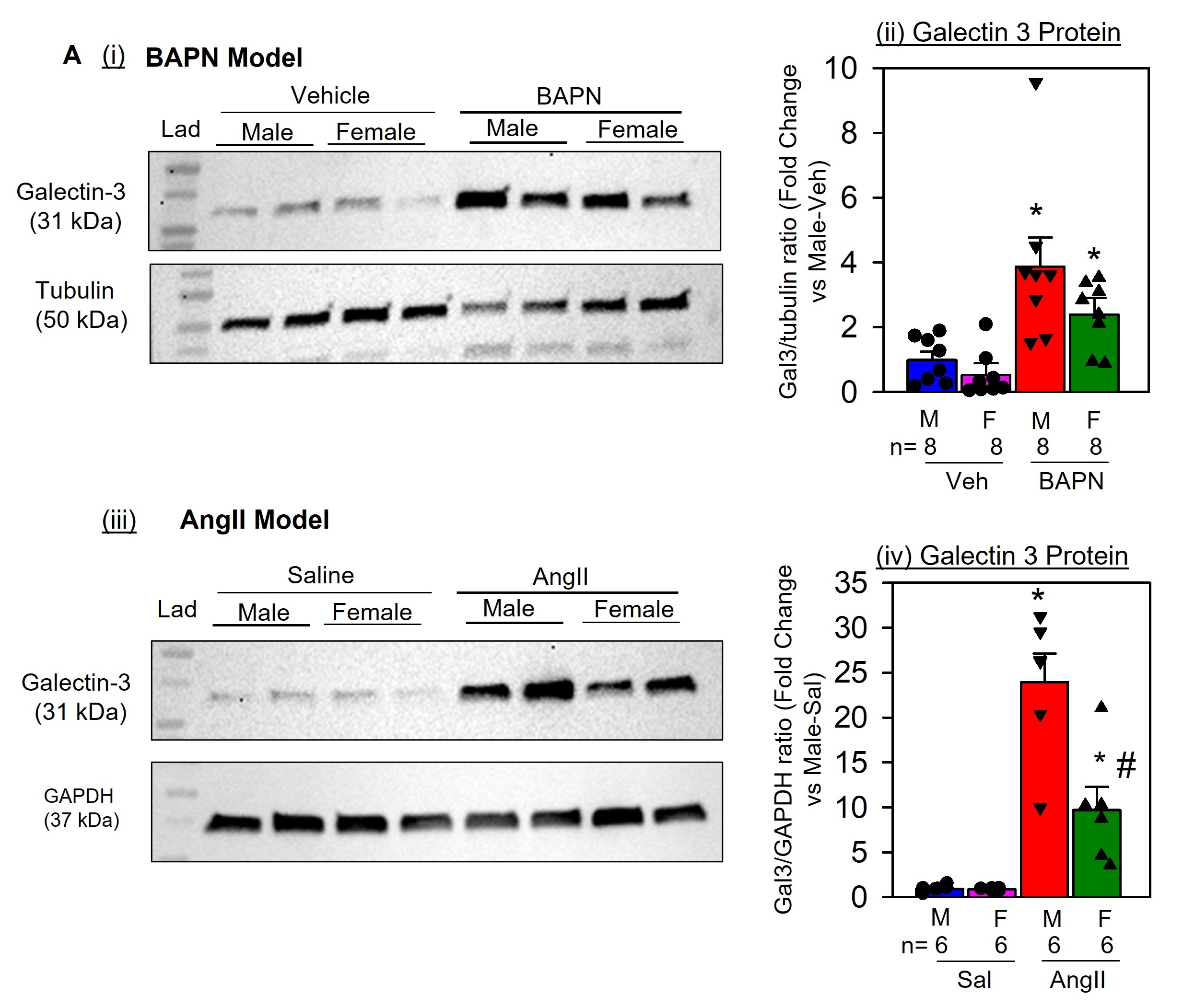
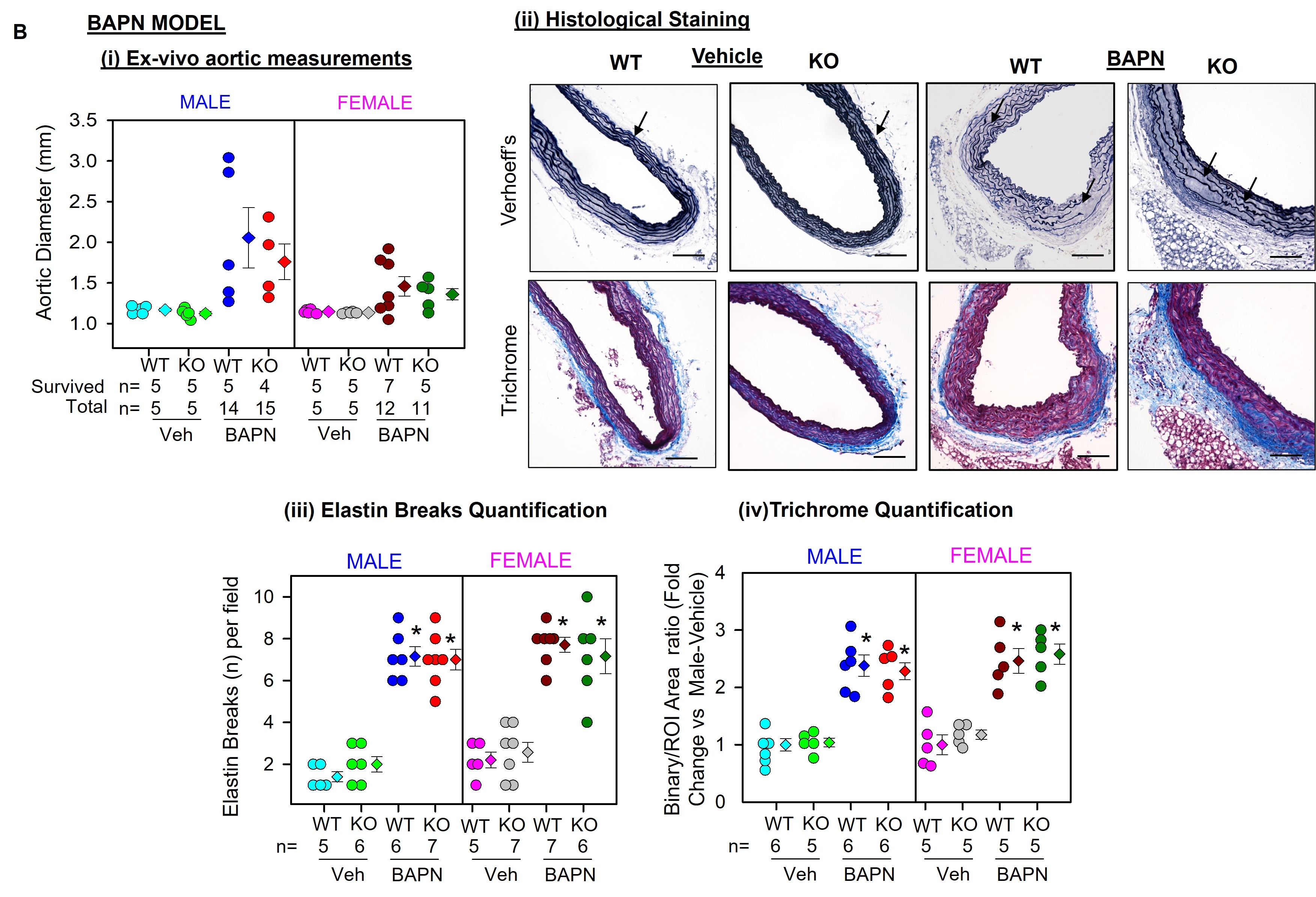
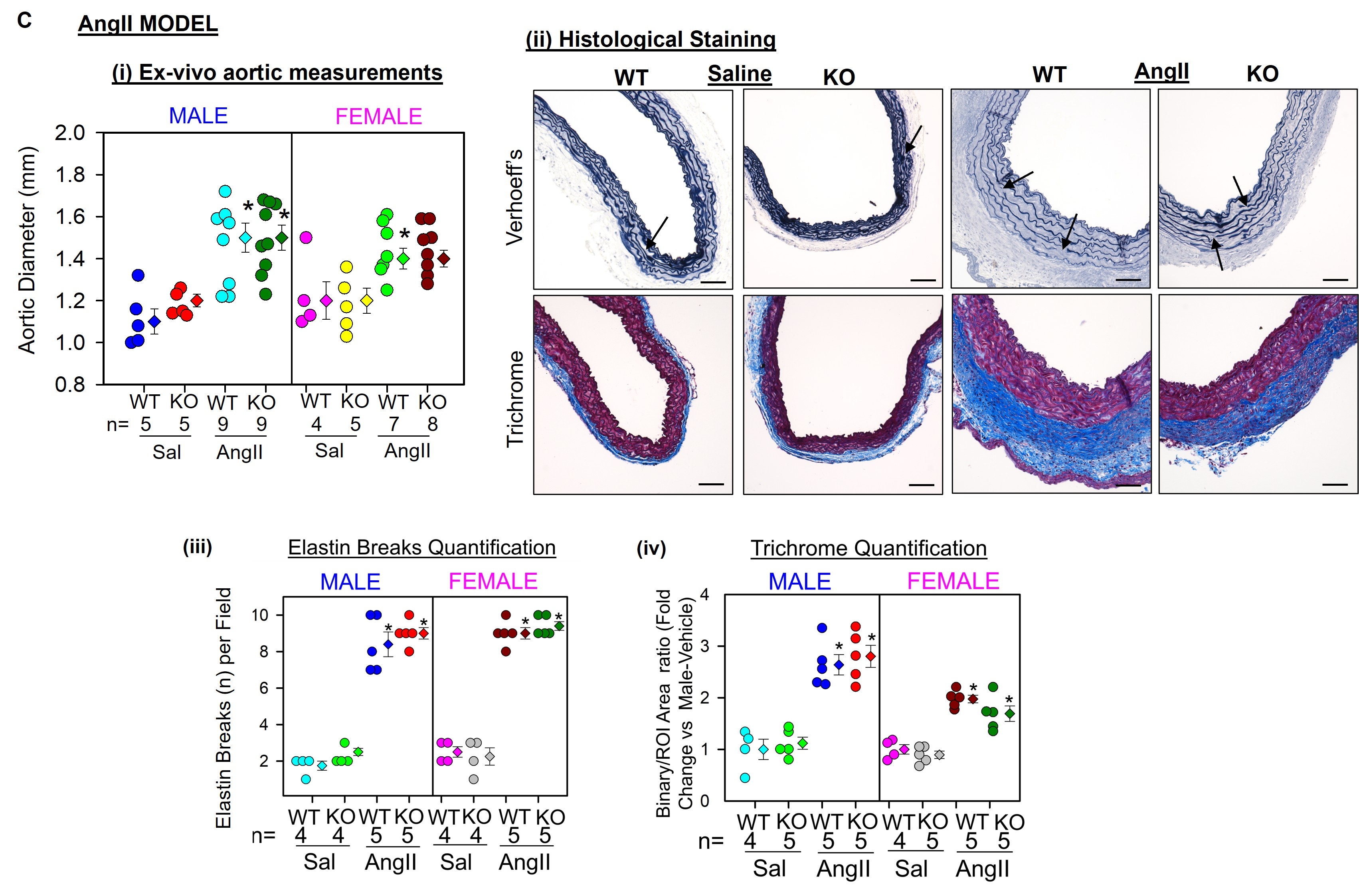
Abstract Body: Background and Objective: Thoracic aortic aneurysm (TAA) is an asymptomatic, life-threatening disease with mortality greater than 80% after rupture with no surgical interventions. TAA progression is associated with the disruption of medial elastic fibers and extracellular matrix structural proteins such as collagen and elastin. Galectin-3 (Gal-3), a β-galactoside-binding lectin, regulates inflammation and fibrosis. Increased level of circulating Gal-3 was reported in TAA patients. However, the role of Gal-3 in TAA development is unknown. In this study, we examined the effects of Gal-3 deficiency on TAA formation in mice by utilizing Lysyl oxidase inhibitor, β-aminopropionitrile (BAPN)- or Angiotensin II (AngII)- induced TAA models. Methods and Results: BAPN Model: 3–4-weeks-old male and female Gal-3 deficient (KO), and wild type (WT) littermate control mice were administered with either vehicle or low (0.1%) or high (0.5%) dose of BAPN for 4 weeks in drinking water. AngII Model: 8 weeks old Gal-3 WT or KO mice were infused with either saline or AngII (1,000 ng/kg/min) via osmotic mini-pumps for 28 days. TAA was examined by ex vivo aortic external width measurements. Mortality by TAA rupture was calculated. Western blot analyses of thoracic aortic lysates harvested from either BAPN or AngII-infused mice showed a significant increase in Gal-3 protein compared to vehicle controls (P<0.05 BAPN/AngII vs vehicle). Ex vivo measurements of BAPN administered mice showed an equivalent acceleration of aortic dilation in both WT and KO male and female mice compared to controls (P<0.05). BAPN (0.5%) administration accelerated TAA rupture equivalently in both WT and KO male (WT=64%; KO=73%) and female (WT=41%; KO=54%) mice compared to controls. Low dose of BAPN (0.1%) showed a rupture of 33% in male WT(4/12) and 9% in KO(1/11) mice and female showed about 9-16% rupture in WT(1/10) and KO(2/12) mice. Verhoeff’s and Trichrome staining of BAPN mice showed equivalently increased medial elastin breaks and adventitial collagen accumulation in both WT and KO male and female mice compared to controls (P<0.05; n=5-7). Similarly, AngII infusion significantly but equivalently increased aortic dilation along with increased elastin breaks and collagen accumulation in both male and female WT and KO mice compared to vehicle controls (P<0.05; n=4-5). Conclusion: These findings suggest that Gal-3 deficiency did not influence either BAPN or AngII-induced TAA formation or rupture in mice.
Ramesh, Nithya
(
University of Nebraska Medical Center
, Omaha , Nebraska , United States )
Downey Jr., Edward
(
University of Missouri
, Columbia , Missouri , United States )
Liu, Zhenguo
(
University of Nebraska Medical Center
, Omaha , Nebraska , United States )
Subramanian, Venkateswaran
(
University of Nebraska Medical Center
, Omaha , Nebraska , United States )
Author Disclosures:
Nithya Ramesh:DO NOT have relevant financial relationships
| Edward Downey Jr.:No Answer
| Zhenguo Liu:DO NOT have relevant financial relationships
| Venkateswaran Subramanian:DO NOT have relevant financial relationships