Biochemical and Biomechanical Extracellular Matrix Effects on Lipedema Derived Adipose Stromal Cells
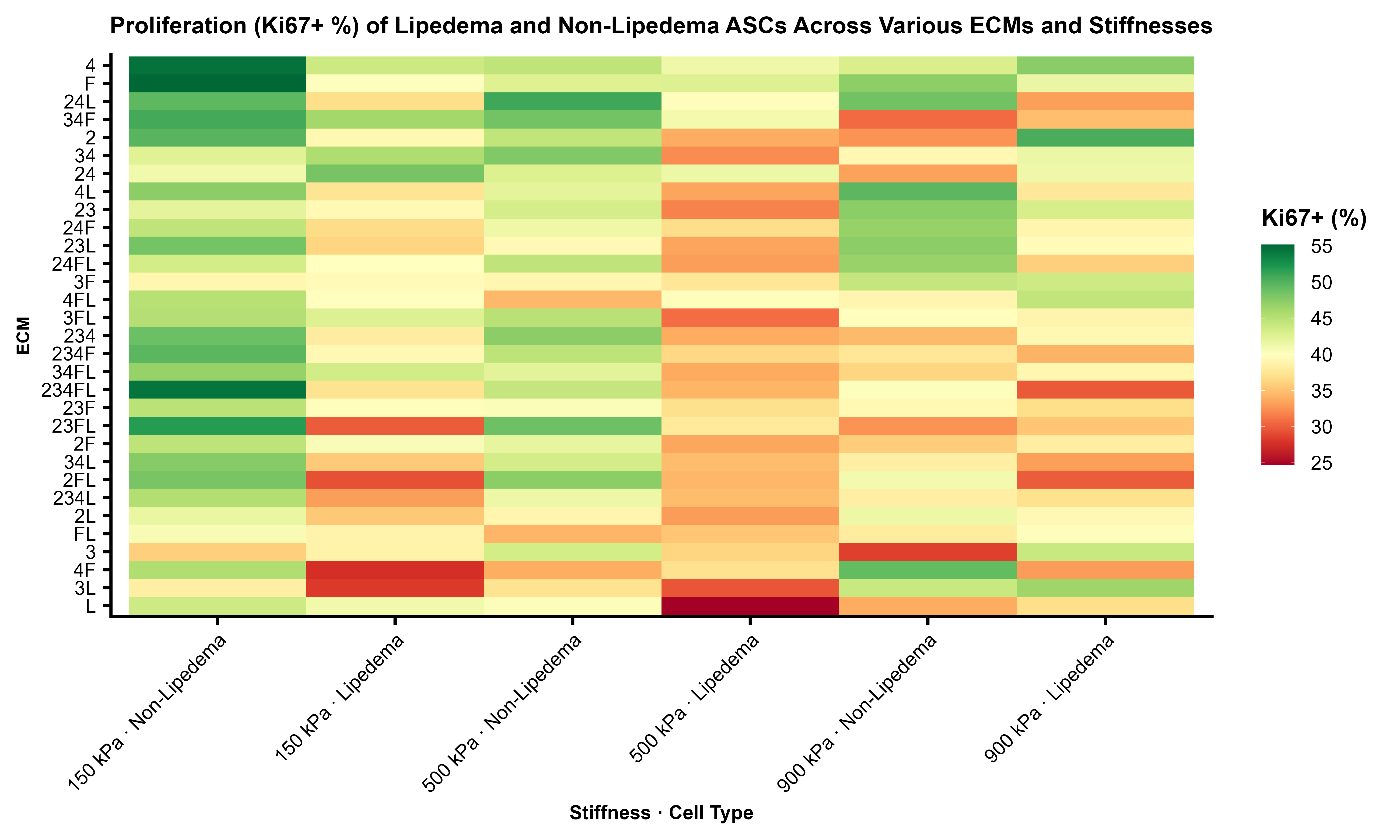
Abstract Body: Introduction: Lipedema is a fat disorder in which high levels of inflammation and over proliferative adipocytes lead to accumulation of adipose tissue in peripheral limbs. Lipedema is intertwined with lymphedema, in which patients with advanced stages of lipedema often develop secondary lymphedema. The adipose tissue extracellular matrix (ECM) modulates the function of adipocytes and adipose stromal cells (ASCs). In lipedema, the aberrant adipose tissue is characterized by stiff and fibrotic nodules, suggesting changes in biochemical and mechanical properties. It is unknown how the biomechanical and biochemical composition of the ECM affects lipedema. Thus, we have developed a tissue chip format using various ECMs and stiffnesses to evaluate their effects on ASCs from both lipedema and non-lipedema patients. Hypothesis: Lipedema donor-derived ASCs have higher proliferation compared to non-lipedema cells, and stiffer substrates will have higher proliferation rates compared to softer substrates. Methods: Tissue chips were fabricated using 64 well microscale formats. Polydimethylsiloxane substrates were fabricated with three stiffnesses (150, 500, and 900 kPa). Upon surface modification by polydopamine, 31 different multi-component ECM combinations consisting of collagens 2-4, fibronectin, and laminin were immobilized. Human ASCs from lipedema or non-lipedema patients were seeded onto tissue chips (n=3), cultured for 48h, fixed, and then stained Ki67 as a proliferation marker. Ki67 expression was quantified using cellprofiler software and analyzed using R. Results and Conclusions: ASCs from non-lipedema donors showed higher Ki67 expression, compared to lipedema donors, indicating higher degree of proliferation. Additionally, 150 kPa substrates showed higher rates of proliferation compared to 900 kPa substrates, while 500 kPa substrates had moderate proliferation rates in between the other two stiffnesses. To a lesser extent, the ECM biochemical composition further influenced proliferation capacity. Contrary to our hypothesis, non-lipedema ASCs had higher proliferation rates than lipedema ASCs, and softer substrates had higher rates of proliferation than stiffer substrates. As lipedema adipocytes are hypertrophic, we expected that lipedema derived ASCs would have higher rates of proliferation compared to non-lipedema ASCs. Additional analysis of other metrics of lipedema (ie inflammation) and further interrogation of lymphatic function are warranted.
Marini, Ande
(
Stanford University
, Palo Alto , California , United States )
Bunnell, Bruce
(
UNTHSC
, Fort Worth , Texas , United States )
Huang, Ngan
(
STANFORD UNIVERSITY
, Stanford , California , United States )
Author Disclosures:
Ande Marini:DO NOT have relevant financial relationships
| Bruce Bunnell:No Answer
| Ngan Huang:DO NOT have relevant financial relationships