Logo

American Heart Association

  6
  0


Final ID: Wed145

An Interpretable Multimodal Artificial Intelligence Framework Identifies High-Risk Phenotypes Benefiting From Beta-Blockers in Myocardial Infarction With Preserved or Mildly Reduced Ejection Fraction

Abstract Body: Introduction
β-blockers are foundational for myocardial infarction (MI), but conflicting results from recent trials (REBOOT, BETAMI-DANBLOCK) create uncertainty about their benefit in patients with preserved or mildly reduced LVEF. This heterogeneity highlights the urgent need for precision phenotyping to guide targeted therapy.
Hypothesis
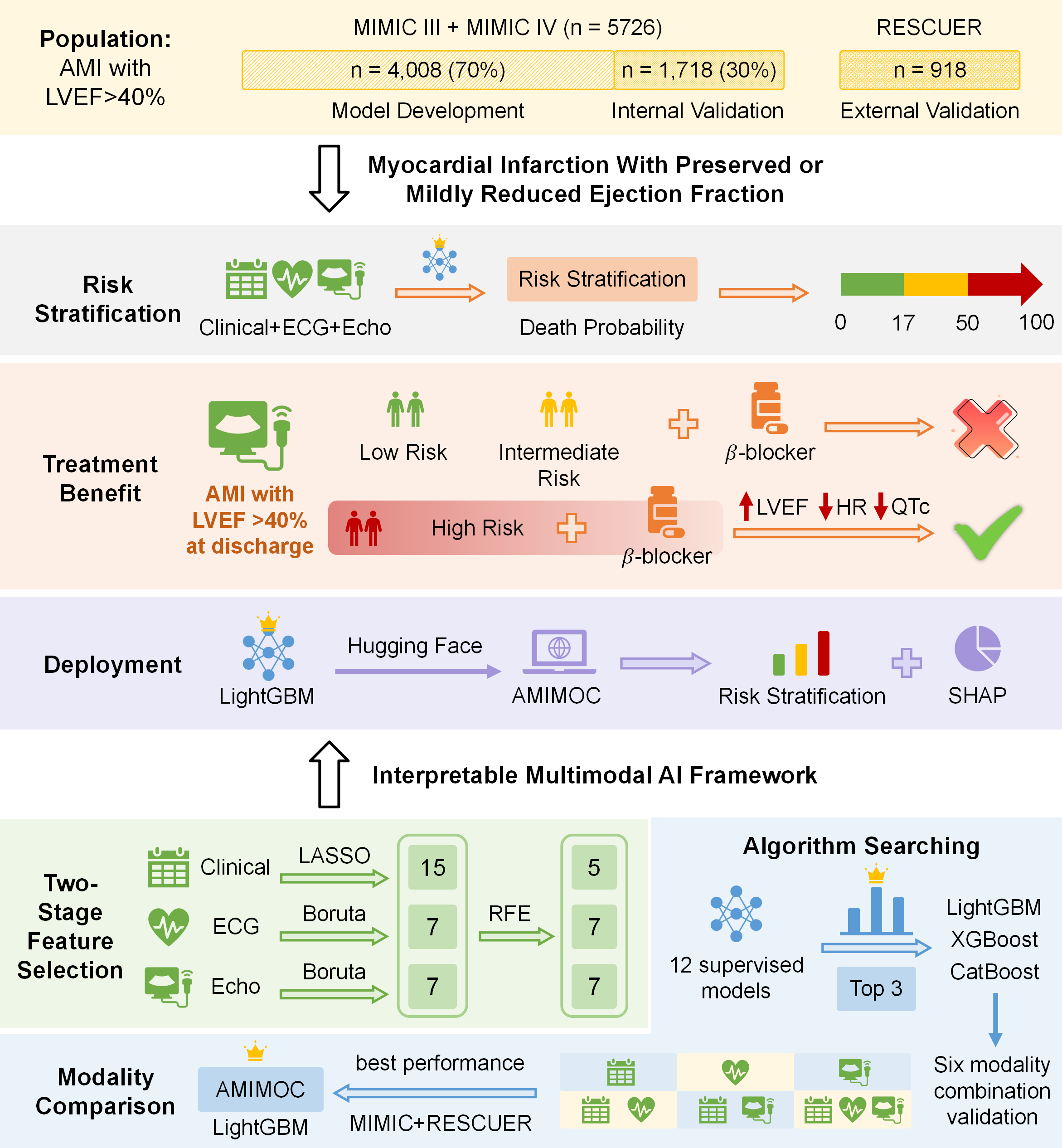
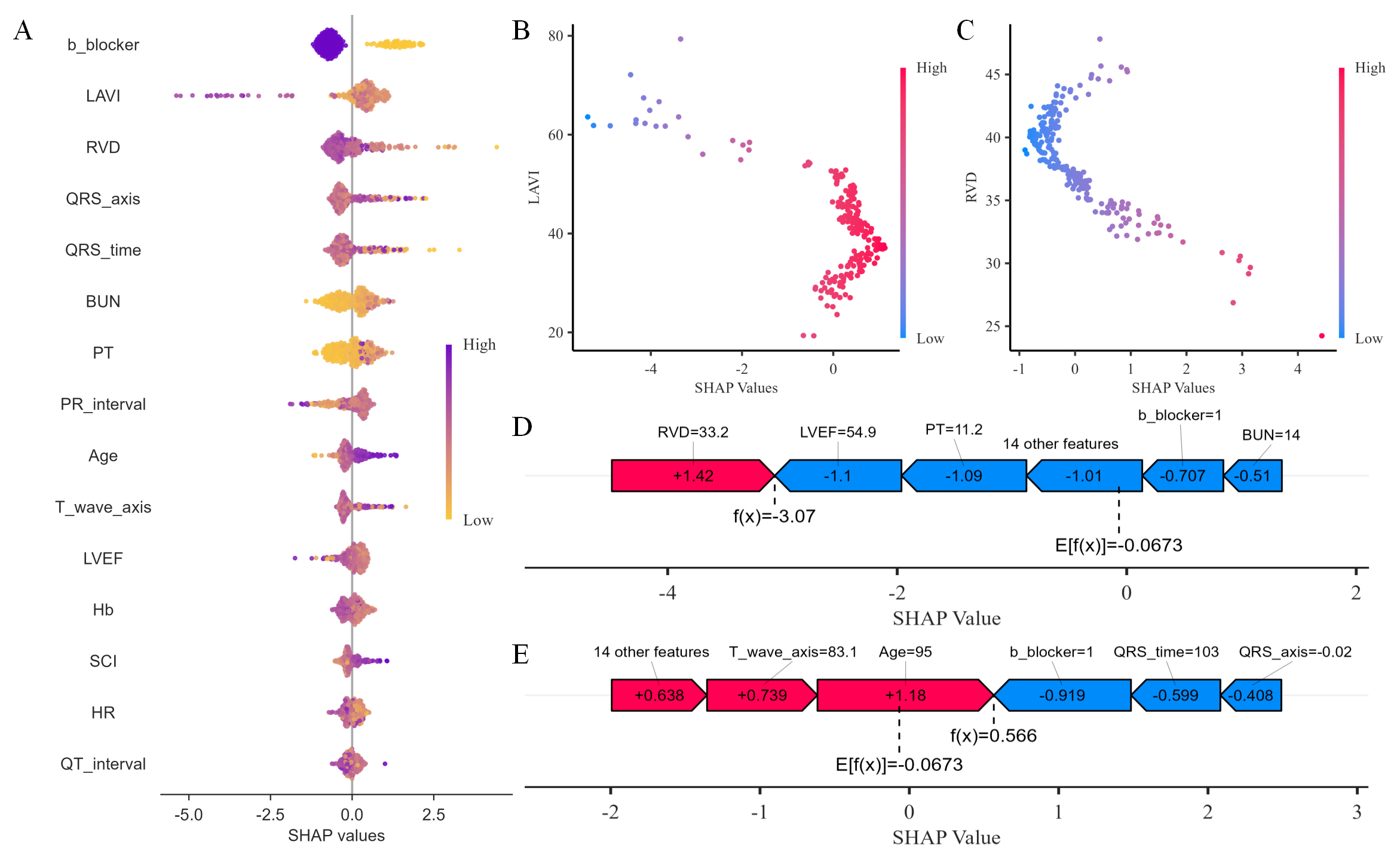
We hypothesized that an interpretable multimodal AI framework (AMIMOC) integrating clinical, ECG, and echocardiographic data could identify a distinct phenotype of MI patients with LVEF>40% who derive significant benefit from β-blockers, with physiological markers as key modifiers of treatment response.
Methods
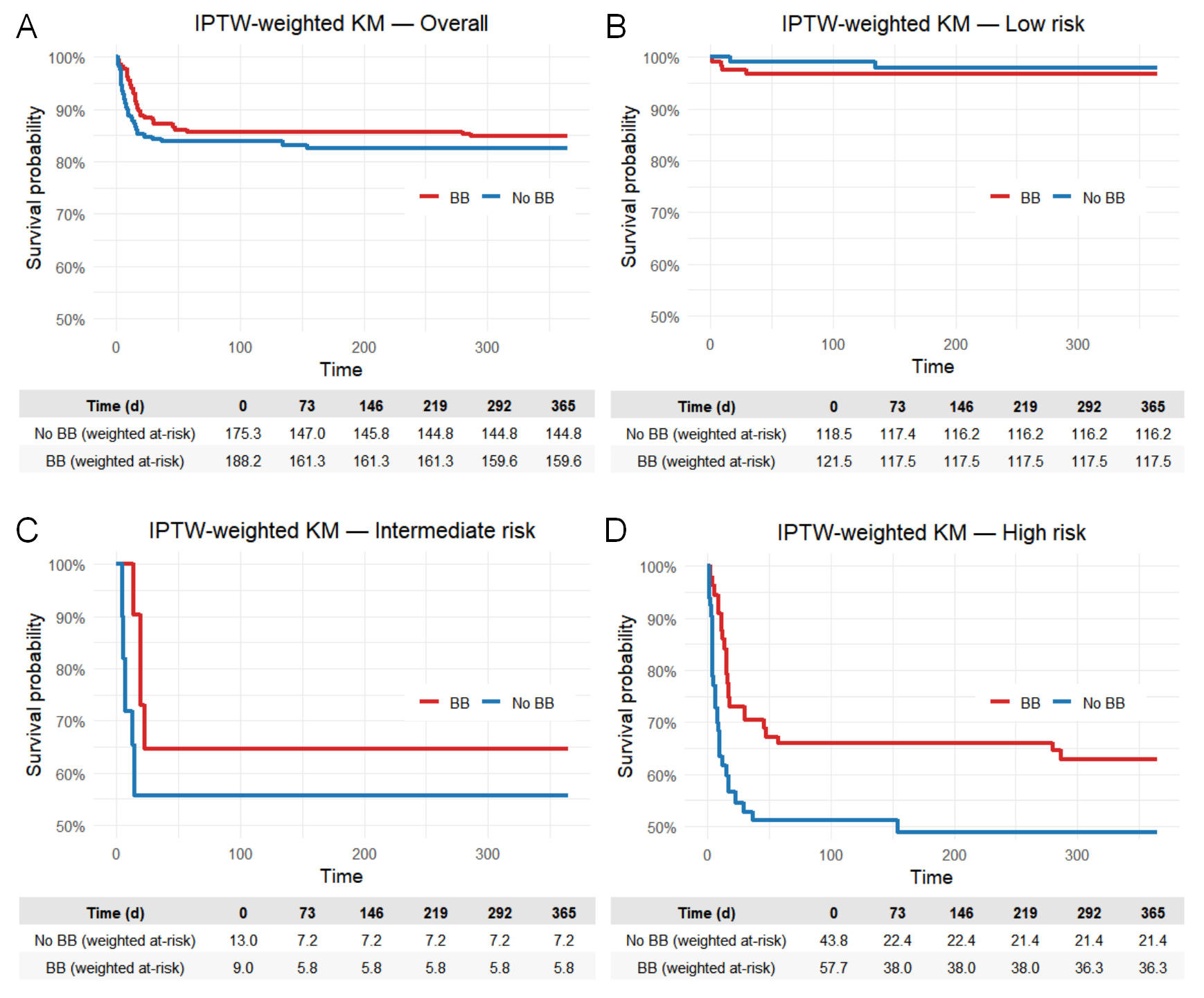
AMIMOC was developed using pooled data from MIMIC-III/IV (N=5,726) and externally validated in the RESCUER cohort (N=918). Patients in RESCUER were stratified by AMIMOC-predicted 1-year mortality into low (<17%), intermediate (17-50%), and high (>50%) risk groups. Stabilized inverse-probability-of-treatment weighted Cox models assessed the association between discharge β-blocker prescription and 1-year all-cause mortality. Multiple mediation analysis explored pathways via post-discharge LVEF, heart rate, and corrected QT (QTc) interval. Multivariable logistic regression identified independent predictors of treatment benefit.
Results
AMIMOC identified a high-risk phenotype characterized by LVEF 40-49%, elevated discharge heart rate, prolonged QTc interval, and multi-vessel coronary artery disease. In this stratum, β-blocker use was associated with a significant 1-year mortality reduction (aHR=0.516, 95%CI=0.366-0.726; P<0.001), with no significant benefit in low-risk patients. Female sex was an independent predictor of treatment benefit (aOR=1.12, 95%CI=0.98-1.29; P=0.09). Mediation analysis showed 78.5% of the survival benefit was mediated through improved LVEF (35.1%), heart rate control (34.2%), and QTc normalization (19.3%), which were key physiological targets for precision intervention.
Conclusions
An interpretable multimodal AI framework enables precision stratification of MI patients with LVEF>40% to identify those most likely to benefit from β-blockers. The distinct high-risk phenotype and sex-related treatment response modifiers provide actionable insights for therapeutic target optimization and personalized care. These findings support moving beyond a one-size-fits-all approach, informing phenotype-enriched trials and sex-specific intervention strategies to refine β-blocker therapy in contemporary MI management.
  • Chen, Yang  ( Peking University Third Hospital , Beijing , China )
  • Zhang, Conghui  ( Beihang University , Beijing , China )
  • Li, Rui  ( Peking University Third Hospital , Beijing , China )
  • Qiao, Qi  ( Peking University Third Hospital , Beijing , China )
  • Dong, Siyu  ( Peking University , Beijing , China )
  • Ma, Yue  ( Peking University Third Hospital , Beijing , China )
  • Wang, Wenyao  ( Peking University Third Hospital , Beijing , China )
  • Tang, Yida  ( Peking University Third Hospital , Beijing , China )
  • Author Disclosures:
    Yang Chen: DO NOT have relevant financial relationships | Conghui Zhang: No Answer | Rui Li: No Answer | Qi Qiao: No Answer | Siyu Dong: DO NOT have relevant financial relationships | Yue Ma: No Answer | Wenyao Wang: No Answer | Yida Tang: No Answer
Meeting Info:
Session Info:

01. Poster Session 1 & Reception

Wednesday, 05/13/2026 , 06:00PM - 08:00PM

Poster

More abstracts on this topic:
ANSWER-HF: A Randomized Controlled Trial of Sacubitril/Valsartan Versus Enalapril in Patients with Chronic Chagas Cardiomyopathy and Reduced Ejection Fraction

Madrini Junior Vagner, Antunes Talita, Damiani Lucas, Jose Grupi Cesar, Mathias Junior Wilson, Lopes Renato, Ramires Felix, Ramos Souza Paulo, Fernandes Fabio, Maria Ianni Barbara, Silva Martins Alan, JadÁn Luzuriaga Georgina Del Cisne, Cardoso Barbosa Fonseca Keila, Ribeiro Orlando, Bispo Da Cruz Allecineia

A Case Series of Papillary Fibroelastomas on the Coumadin ridge

Aboukhatwa Omar, Akiki Elias, Kurmann Reto, Larson Kathryn, Keeney Michael, Bois Melanie, Klarich Kyle

You have to be authorized to contact abstract author. Please, Login
Not Available