Logo

American Heart Association

  8
  0


Final ID: Fri089

A Conserved HMOX1-Associated Macrophage Axis Dominates Inflammatory Variation Across Human Peripheral Arteries

Abstract Body: Background:
Atherosclerosis is a systemic inflammatory disease affecting multiple arterial beds. However, most bulk transcriptomic studies emphasize disease versus control comparisons rather than conserved inflammatory programs that vary within atherosclerotic tissue across different vascular territories.

Methods:
Bulk microarray gene expression data from human carotid, femoral, and infra-popliteal arteries were analyzed using an unbiased principal component analysis framework. Dominant transcriptional axes were identified and biologically annotated using gene ontology enrichment, curated macrophage gene programs, and partial correlation analysis to assess independent biological contributions. Conservation across arterial beds and disease states was evaluated. External reproducibility was tested by projecting discovery-derived gene loadings into an independent human carotid plaque cohort.

Results:
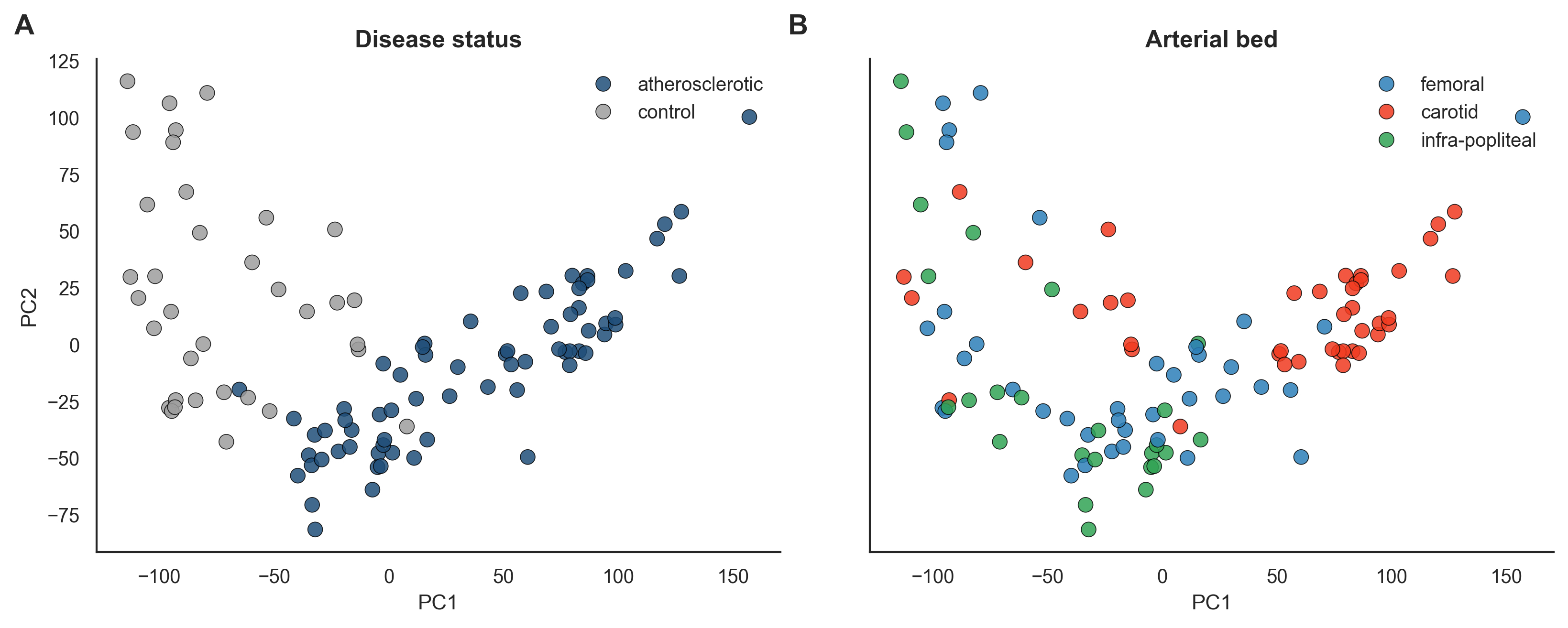
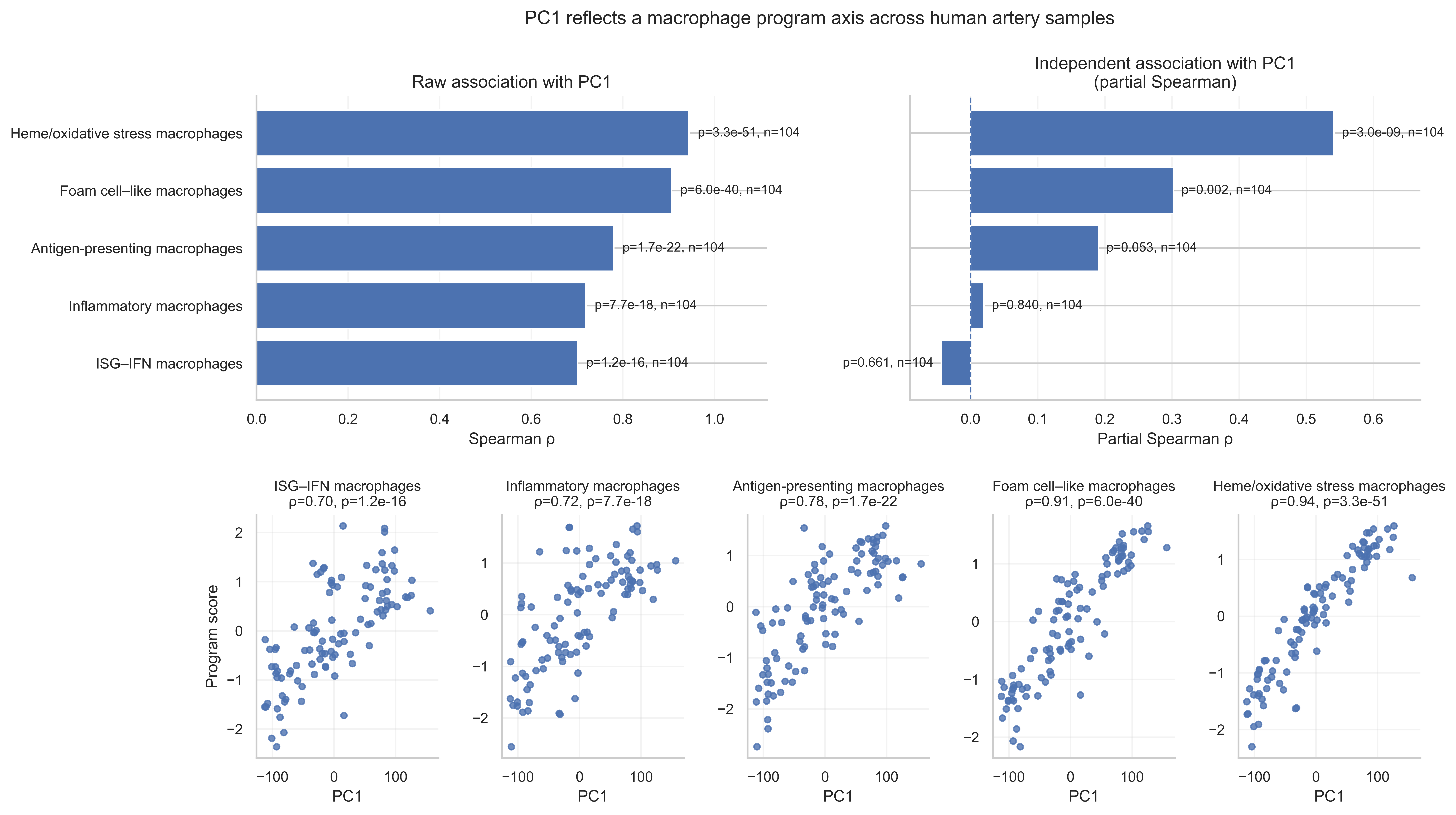
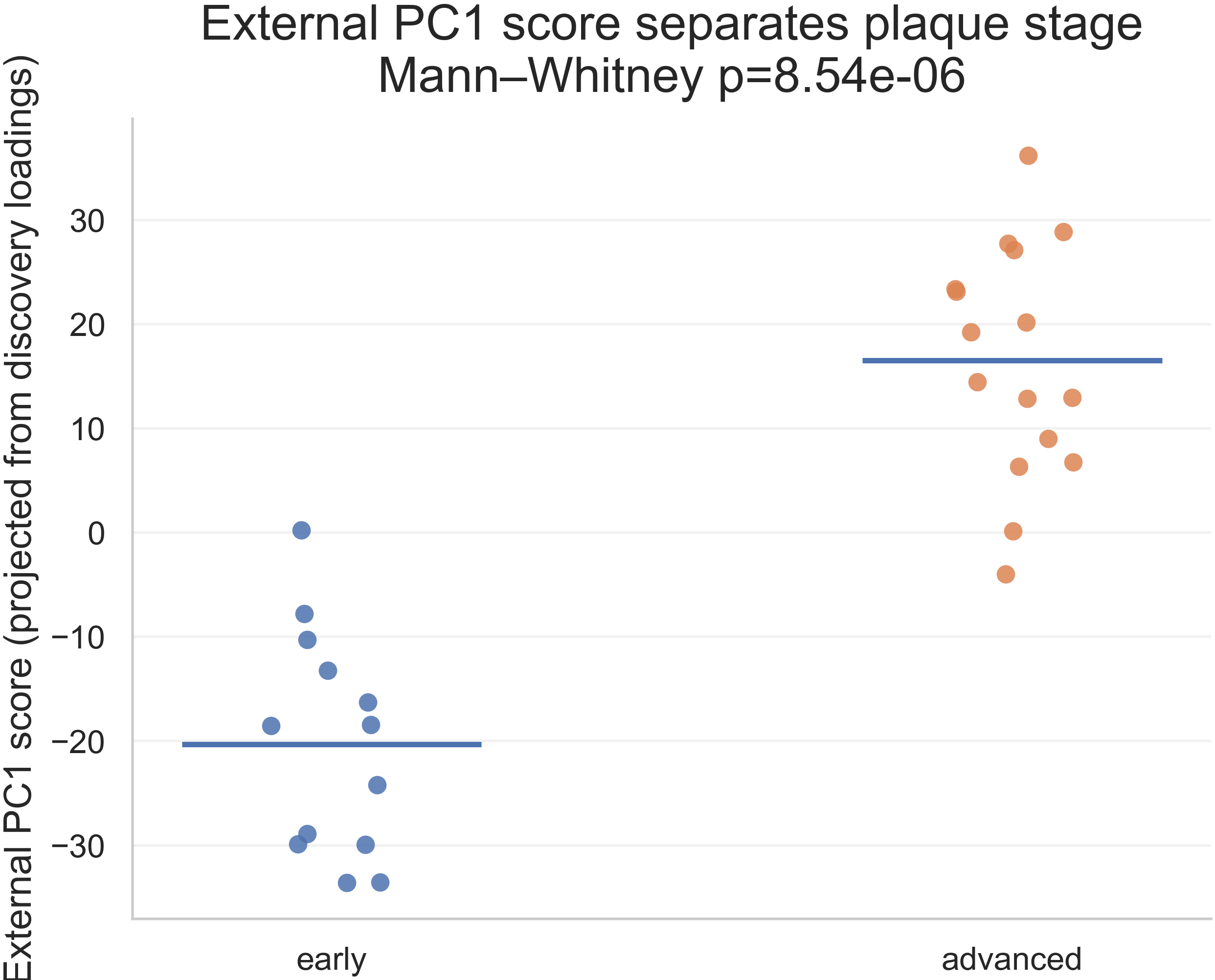
The leading principal component captured the dominant source of transcriptomic variation across peripheral arteries and separated atherosclerotic from control tissue along a continuous axis rather than discrete clusters. This axis was conserved across arterial beds and showed strong enrichment for immune activation, phagocytosis, and macrophage-related biological processes. Gene-level analyses demonstrated nonrandom alignment with an HMOX1-associated macrophage stress and heme oxidative program, exceeding enrichment expected by chance. Although multiple macrophage programs correlated with this axis, partial correlation analysis revealed that the stress-associated lipid macrophage program accounted for the dominant independent contribution, while other inflammatory signatures reflected shared covariance. Within atherosclerotic samples, axis scores scaled continuously with HMOX1 module activity rather than binary disease status. Projection of the axis into an independent cohort reproduced this pattern, with higher projected scores and HMOX1 program activity observed in advanced plaques.

Conclusions:
Across human peripheral arteries, inflammatory variation in atherosclerosis is organized along a conserved, continuous macrophage program centered on HMOX1 associated stress biology. These findings support a systems-level model in which plaque inflammation reflects a graded macrophage axis shared across vascular territories rather than discrete inflammatory states, providing a quantitative framework for studying plaque progression and macrophage driven vascular pathology.
  • Patel, Suraj  ( Stony Brook Medicine , Stony Brook , New York , United States )
  • Pulickal, Christo  ( Stony Brook Medicine , Stony Brook , New York , United States )
  • Zhang, David  ( Stony Brook Medicine , Stony Brook , New York , United States )
  • Yarmohammadi, Hirad  ( Columbia University Medical Center , New York , New York , United States )
  • Madhavan, Mahesh  ( Columbia University Medical Center , New York , New York , United States )
  • Author Disclosures:
    Suraj Patel: DO NOT have relevant financial relationships | Christo Pulickal: DO NOT have relevant financial relationships | David Zhang: DO NOT have relevant financial relationships | Hirad Yarmohammadi: DO NOT have relevant financial relationships | Mahesh Madhavan: No Answer
Meeting Info:
Session Info:

15. Poster Session 3 & Reception

Friday, 05/15/2026 , 05:00PM - 07:00PM

Poster

More abstracts on this topic:
A Non-invasive In Vivo Experimental Model of Heart Failure Using Optogenetic Tachypacing in Larval Zebrafish

Savoie Emma, Ramadan Ahmed, Purvis Katherine, Stoyek Matthew, Quinn Alex

A CRISPR-Activation CROP-seq Screen Identifies HMGN1 as a Dosage-Sensitive Regulator of Heart Defects in Down Syndrome

Ranade Sanjeev, Mital Rahul, Boileau Ryan, Koback Frances, Padmanabhan Arun, Merriman Alexander, Wallace Langley, Nguyen Annie, Poulis Nikolaus, Gifford Casey, Pollard Katherine, Li Feiya, Srivastava Deepak, Whalen Sean, Angelo Pelonero, Ye Lin, Huang Yu, Brand Abigail, Nishino Tomohiro, Costa Mauro

You have to be authorized to contact abstract author. Please, Login
Not Available