Primary Cilia Protein IFT88 Is a Key Governor of Smooth Muscle Phenotype
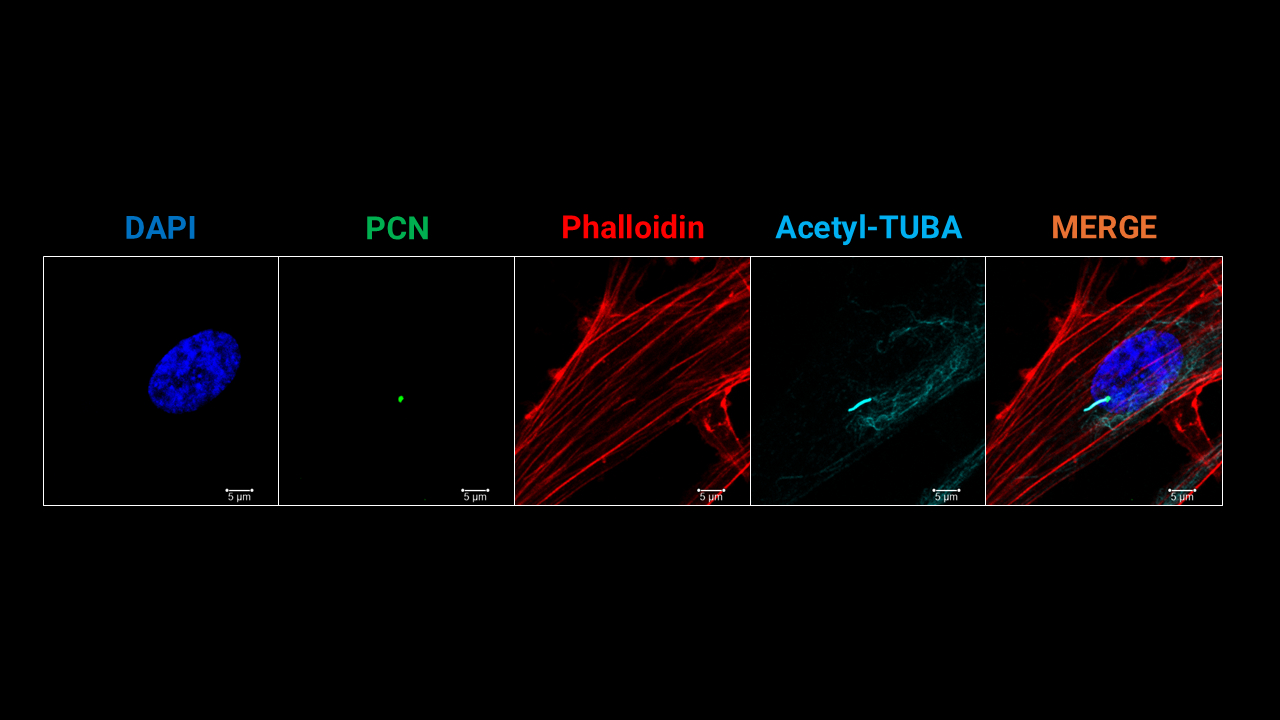
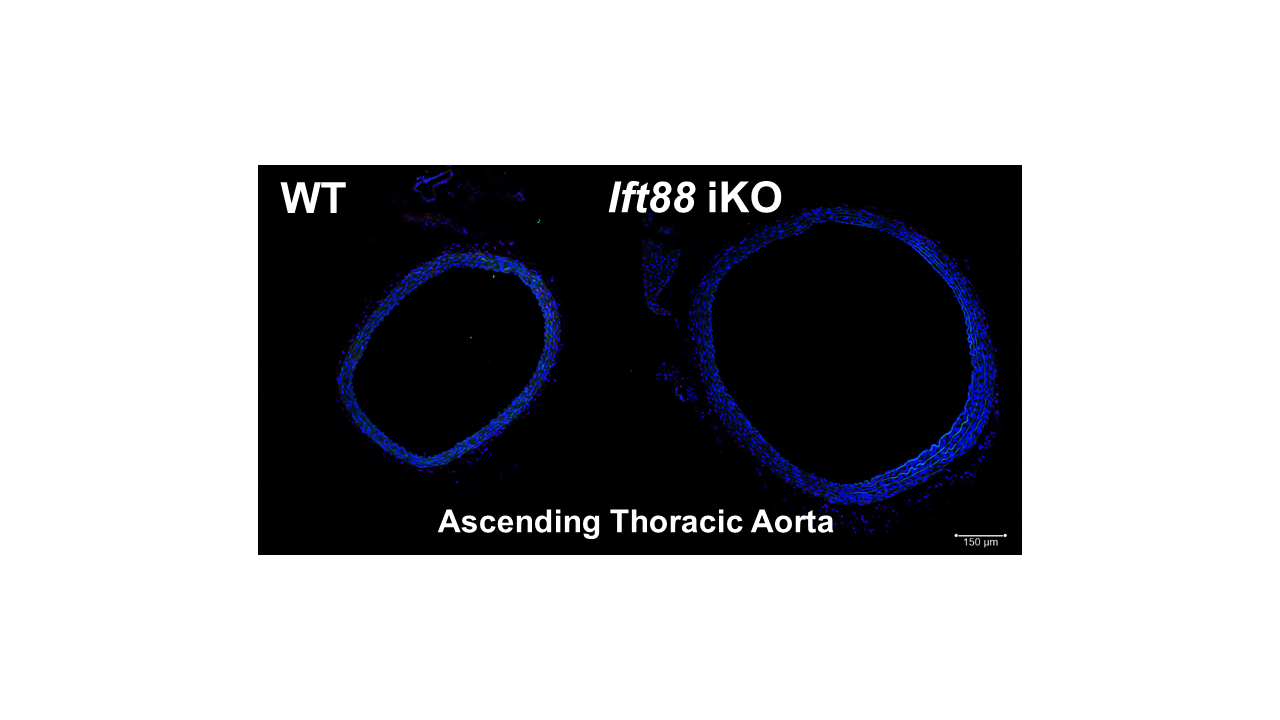
Abstract Body: Vascular smooth muscle cells (SMCs) are central to the pathology of cardiovascular diseases including atherosclerosis, aneurysm, and intimal hyperplasia. In these contexts, SMCs de-differentiate to acquire an invasive, proliferative, and inflammatory phenotype. We investigated whether the primary cilia, a receptor-rich organelle regulating signal transduction and cell cycle entry, influences SMC phenotypic switching. We observed that approximately 33% (1/3) of SMCs are ciliated in human and mouse aortas, regionally biased toward the endothelium. Our data suggests that expression of IFT88, a key cilia gene, and cilia formation are significantly upregulated in human SMCs upon serum starvation or treatment with pro-differentiation agents TGF-β and rapamycin. IFT88 knockdown dramatically reduced both primary cilia formation and contractile gene expression while increasing inflammatory, aneurysm-enriched gene expression in qPCR and RNAseq analyses. Leveraging a cilia/centriole dual fluorescent reporter mouse, FACS isolation of ciliated aortic SMCs revealed enrichment in gene expression associated with actomyosin contraction and ECM sensing compared to the nonciliated population. Notably, we found that IFT88 expression is required for TGF-β signal transduction (SMAD2 phosphorylation, contractile gene expression) as well as mechanotransduction of ECM substrate stiffness in vitro. Inducible SMC-specific deletion of Ift88 in adult mice resulted in significant dilatation of the aortic arch with increased elastin breakage and fibrosis. Concordantly, DeepPVP, a phenotype-based prioritization of causative variants using deep learning, revealed that human IFT88 variants have a statistically significant association with aortic aneurysm and dissection in multiple cohorts (FinnGen, UK Biobank). Functionally, we determined that primary cilia are required for motility and proliferation of SMCs, and morphologically distinct IFT88+ cilia are enriched in neointimas of ligated carotid arteries compared to healthy media. Furthermore, scRNAseq data suggests that high Ift88 expression correlates with mitotic and chemotactic gene expression during early remodeling (3 days post injury) compared to Ift88 low SMCs. Collectively, our data suggests that IFT88 is required for maintaining contractile SMC phenotype and vascular integrity, and that ciliated SMCs represent a novel differentiated subpopulation that is anatomically and functionally primed to promote intimal hyperplasia.
O'brien, Brendan
(
Yale School of Medicine
, New Haven , Connecticut , United States )
Martin, Kathleen
(
YALE SCHOOL OF MEDICINE
, New Haven , Connecticut , United States )
Author Disclosures:
Brendan O'Brien:DO NOT have relevant financial relationships
| Kathleen Martin:DO NOT have relevant financial relationships