Long-Term Averaged Blood Pressure Traits in Patients with Female Sex-Biased Arteriopathies
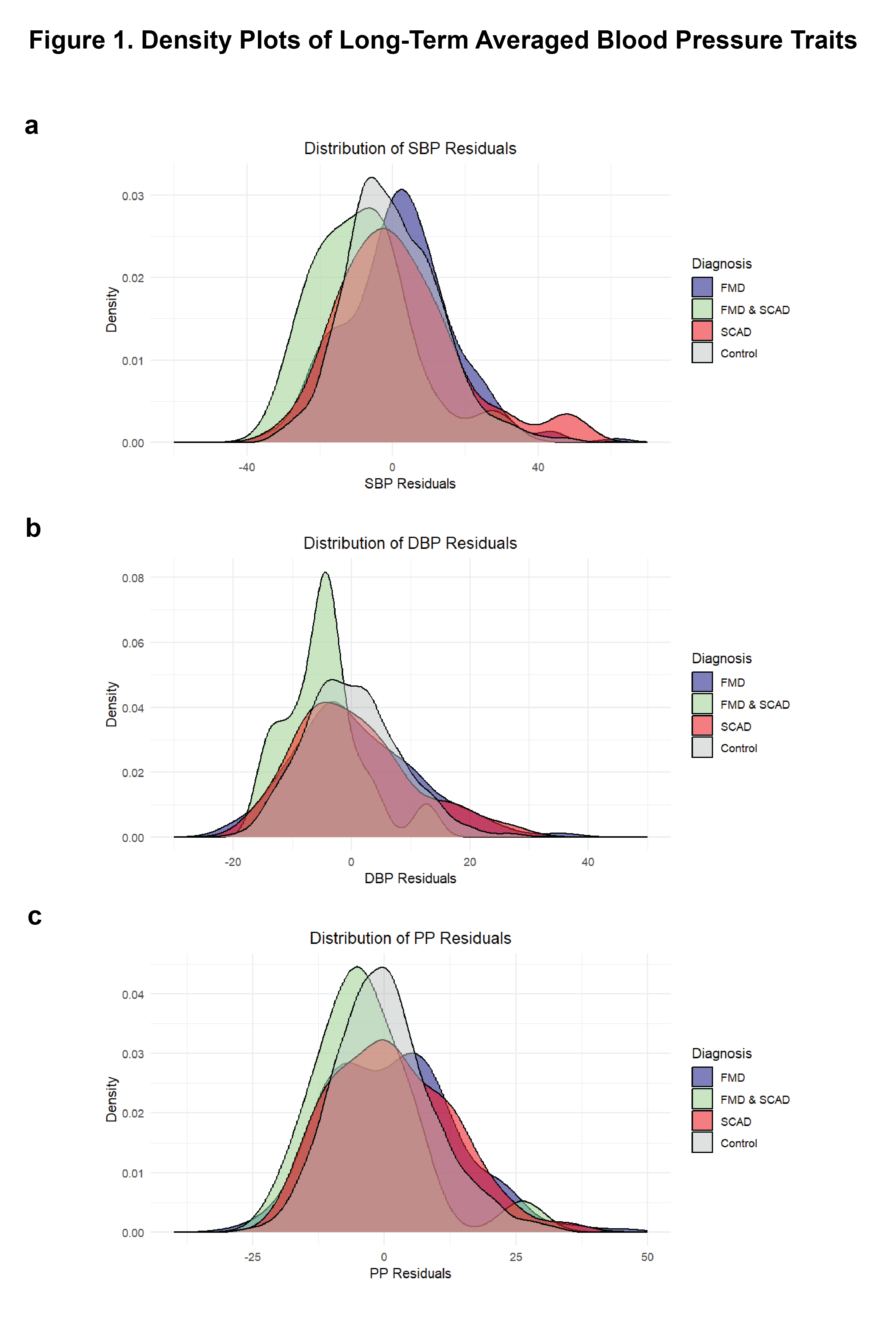
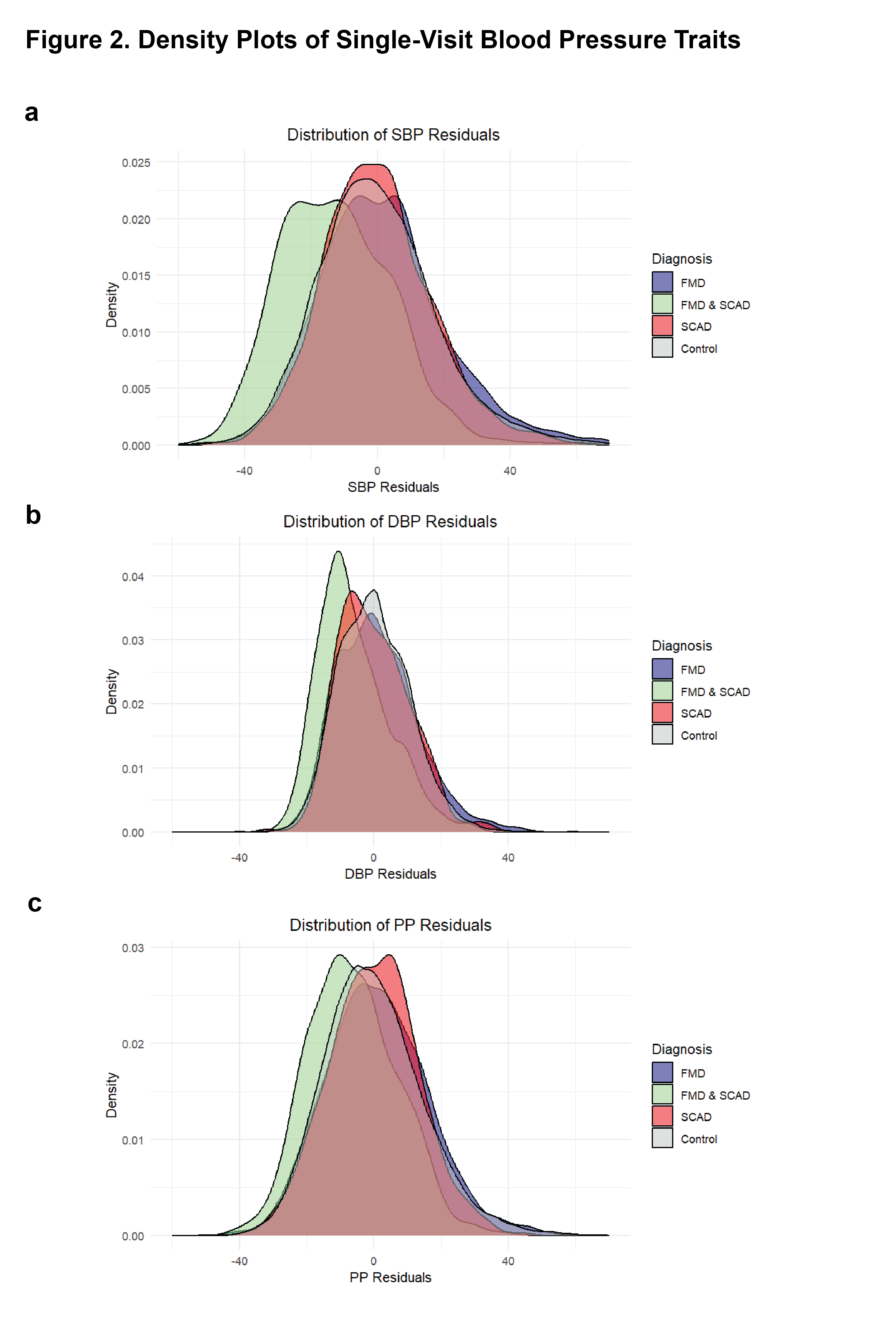
Abstract Body: Introduction: Fibromuscular dysplasia (FMD) and spontaneous coronary artery dissection (SCAD) are female sex-biased arteriopathies that remain understudied. Detailed assessments of blood pressure (BP) among those with these conditions and compared to controls have been limited due to lack of clinical data. Hypothesis: We hypothesized that the FMD and SCAD groups would exhibit higher and lower long-term averaged (LTA) BP traits compared to controls, respectively. Methods: Electronic health records of individuals with ICD codes for FMD and SCAD at Michigan Medicine were reviewed to confirm diagnoses. Age- and sex-matched controls were selected from the Michigan Genomics Initiative using 3:1 matching. BP traits including systolic BP (SBP), diastolic BP (DBP), and pulse pressure (PP) were adjusted for anti-hypertensive use and transformed into visit-specific residuals by adjusting for age, age-squared, sex, and BMI. LTA BP traits (LTA SBP, LTA DBP, and LTA PP) were calculated by averaging residuals from 2, 3, or 4 visits at least 1 year apart. Density plots were used to compare the LTA BP trait distribution between groups, and linear regression models assessed associations between LTA BP traits and aneurysm or dissection history in the FMD group. Results: Among the final cohort (NFMD=232, NSCAD=60, NFMD+SCAD=18, and 1,404 controls), the FMD group had the highest LTA SBP distribution while the group with both FMD and SCAD exhibited the lowest distributions across all LTA BP traits (Figure 1). As creating LTA BP traits with the above requirements limited our case counts, we sought to validate our findings with single-visit BP measurements. This analysis nearly doubled the number of cases and yielded similar findings (Figure 2). In the FMD group, dissection history was negatively associated with LTA SBP (Estimate: -0.002, SE: 0.001, P-value=0.020) while aneurysm history was positively associated (Estimate: 0.003, SE: 0.001, P-value=0.030). Conclusion: FMD patients exhibited a higher LTA SBP while those with both FMD and SCAD exhibited lower LTA BP traits when compared to controls. Notably, we found associations between LTA SBP with aneurysm and dissection history in opposing effect directions. Our findings suggest that lower BP may signify increased risk for dissection in those with FMD; larger cohort studies are needed to refine these risk assessments.
Gupte, Trisha
(
University of Michigan
, Ann Arbor , Michigan , United States )
Ganesh, Santhi
(
University of Michigan
, Ann Arbor , Michigan , United States )
Author Disclosures:
Trisha Gupte:DO NOT have relevant financial relationships
| Santhi Ganesh:No Answer