Clinical Impact and Cost-Effectiveness of Potassium-Enriched, Sodium-Reduced Salt Substitutes in Hypertension: A Meta-Analysis of Randomized Controlled Trials
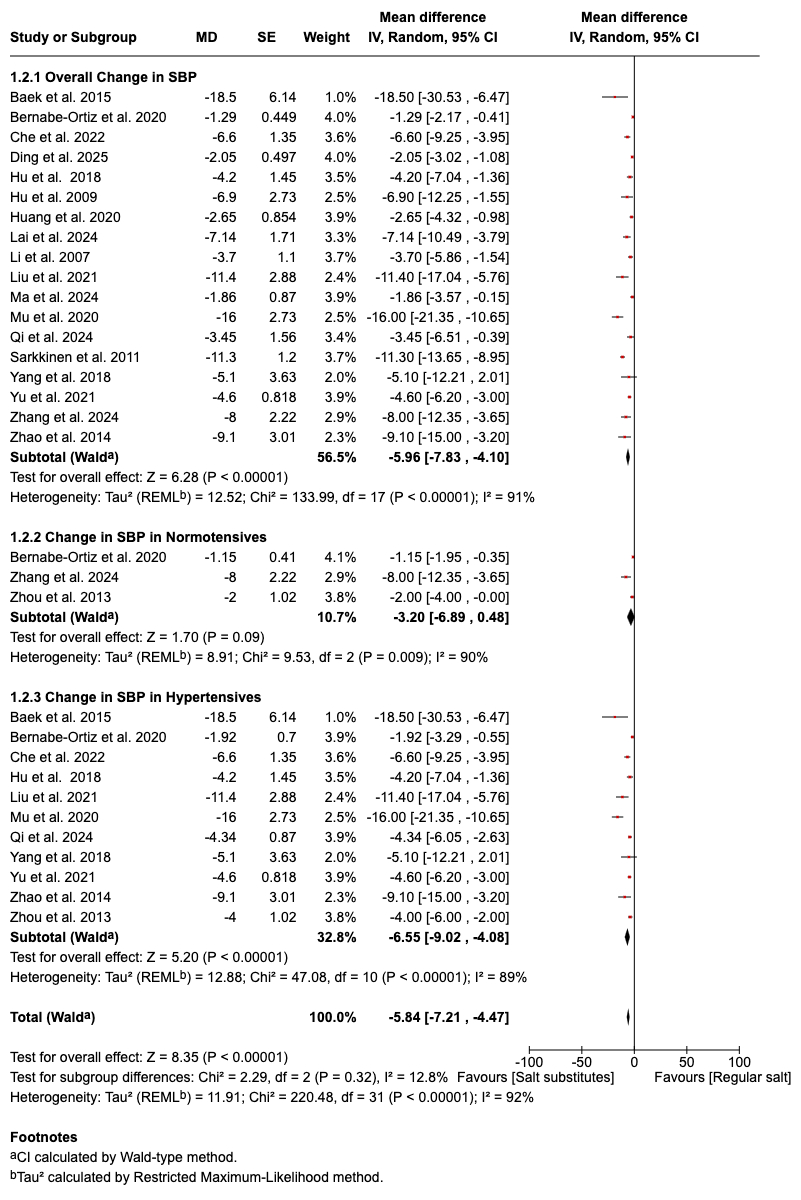
Abstract Body: Background: Potassium-enriched, sodium-reduced salt substitutes offer a promising dietary intervention to lower blood pressure and reduce cardiovascular risk by decreasing sodium and increasing potassium intake. Despite growing evidence, clinical adoption remains limited, and guidelines are inconsistent. This study synthesizes evidence from RCTs, offering a unique focus on cost-effectiveness, QALYs, clinical outcomes, and subgroup analysis of hypertension outcomes. Methods: We conducted a meta-analysis of RCTs comparing salt substitutes versus regular salt, reviewing studies up to May 2025. Data were pooled using RevMan 5.4 with a random-effects model to estimate mean differences (MD) and hazard ratios (HR) with 95% confidence intervals. The protocol is registered in PROSPERO (CRD420251047324). Results: We included 25 RCTs involving 55,733 participants (47.2% male, mean age 62.5 years) at high cardiovascular risk follow-up ranging from 2 months to 5 years. Pooled analysis showed salt substitutes significantly lowered systolic blood pressure (SBP) by 5.96 mmHg (95% CI: −7.83 to −4.10; P < 0.001) and diastolic blood pressure by 2.12 mmHg (95% CI: −3.06 to −1.19; P < 0.001). Subgroup analysis based on baseline hypertension status revealed greater SBP reduction in hypertensive individuals (-6.55 mmHg; P < 0.001) than in normotensives (-3.20 mmHg; P = 0.09). Salt substitutes were associated with a lower incidence of hypertension (HR: 0.53; P < 0.001), and no significant difference in antihypertensive medication use was observed (MD: −1.17; P = 0.34). Clinical outcomes showed reduced risks of cardiovascular events (HR: 0.82; P = 0.005), stroke (HR: 0.85; P < 0.001), and all-cause mortality (HR: 0.87; P < 0.001) in the salt substitute group. Salt substitutes significantly reduced healthcare costs, with an incremental savings of 19.23 USD (P = 0.004), while improving health outcomes, as evidenced by a 0.06 increase in QALYs (P = 0.007). Conclusion: Salt substitutes significantly reduced blood pressure, with greater benefits in hypertensive individuals, and were associated with lower cardiovascular risk, mortality, healthcare costs, and improved QALYs, supporting their potential as a durable, cost-effective intervention for hypertension control. These findings support broader clinical and policy adoption of salt substitutes while highlighting the need for further research to evaluate long-term adherence, acceptability, and sustainability across diverse populations.
Sebastian, Sneha Annie
( Azeezia Medical College
, Kollam
, India
)
Padda, Inderbir
( Richmond University Medical Center
, Staten Island
, New York
, United States
)
Dhulipala, Vishal
( Prisma Health
, Columbia
, South Carolina
, United States
)
Author Disclosures:
Sneha Annie Sebastian:DO NOT have relevant financial relationships
| Inderbir Padda:No Answer
| Vishal Dhulipala:DO NOT have relevant financial relationships