Biological Aging, Cognitive Decline, and Dementia Risk in a Community-Based Cohort: the Atherosclerosis Risk in Communities Study
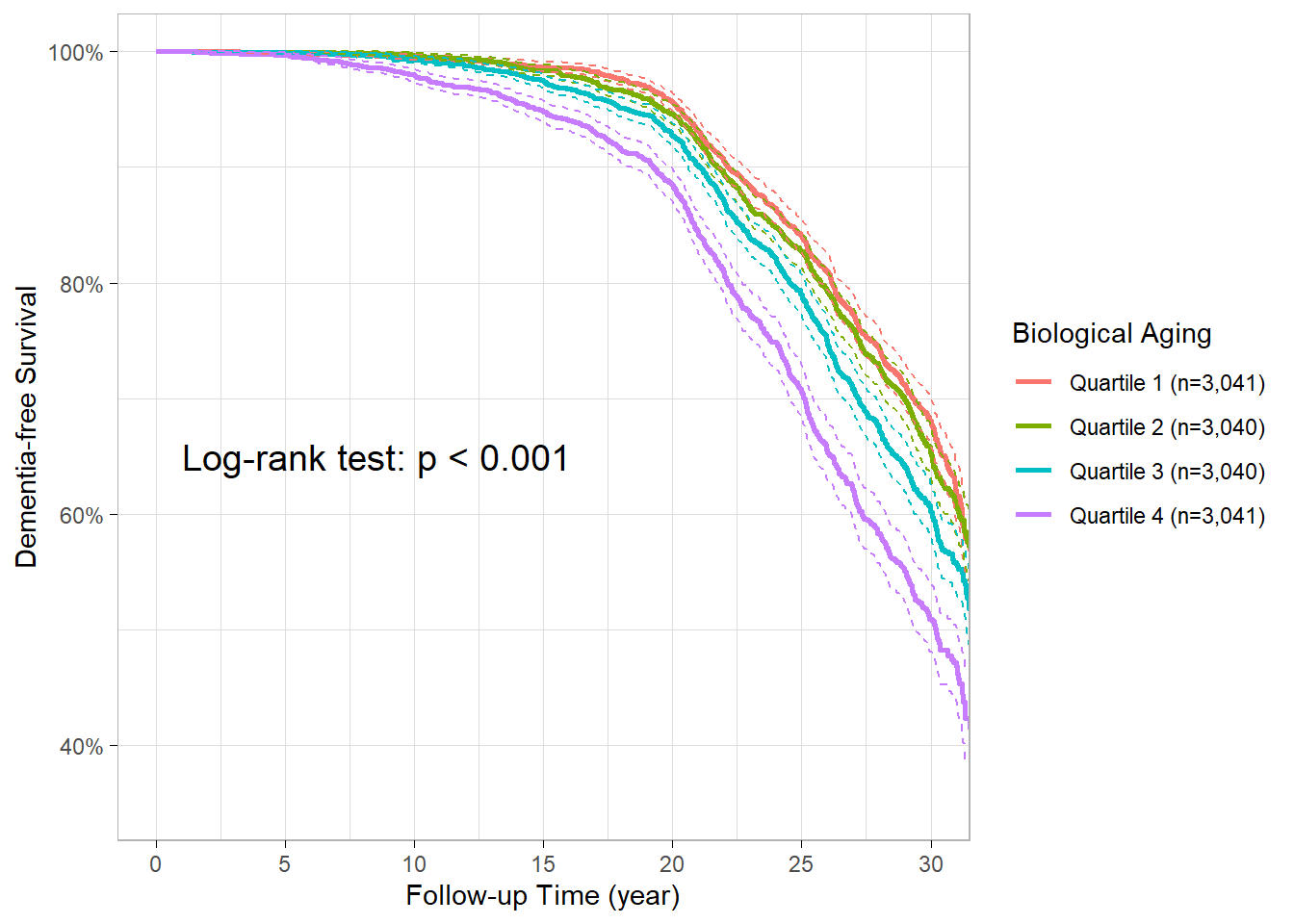
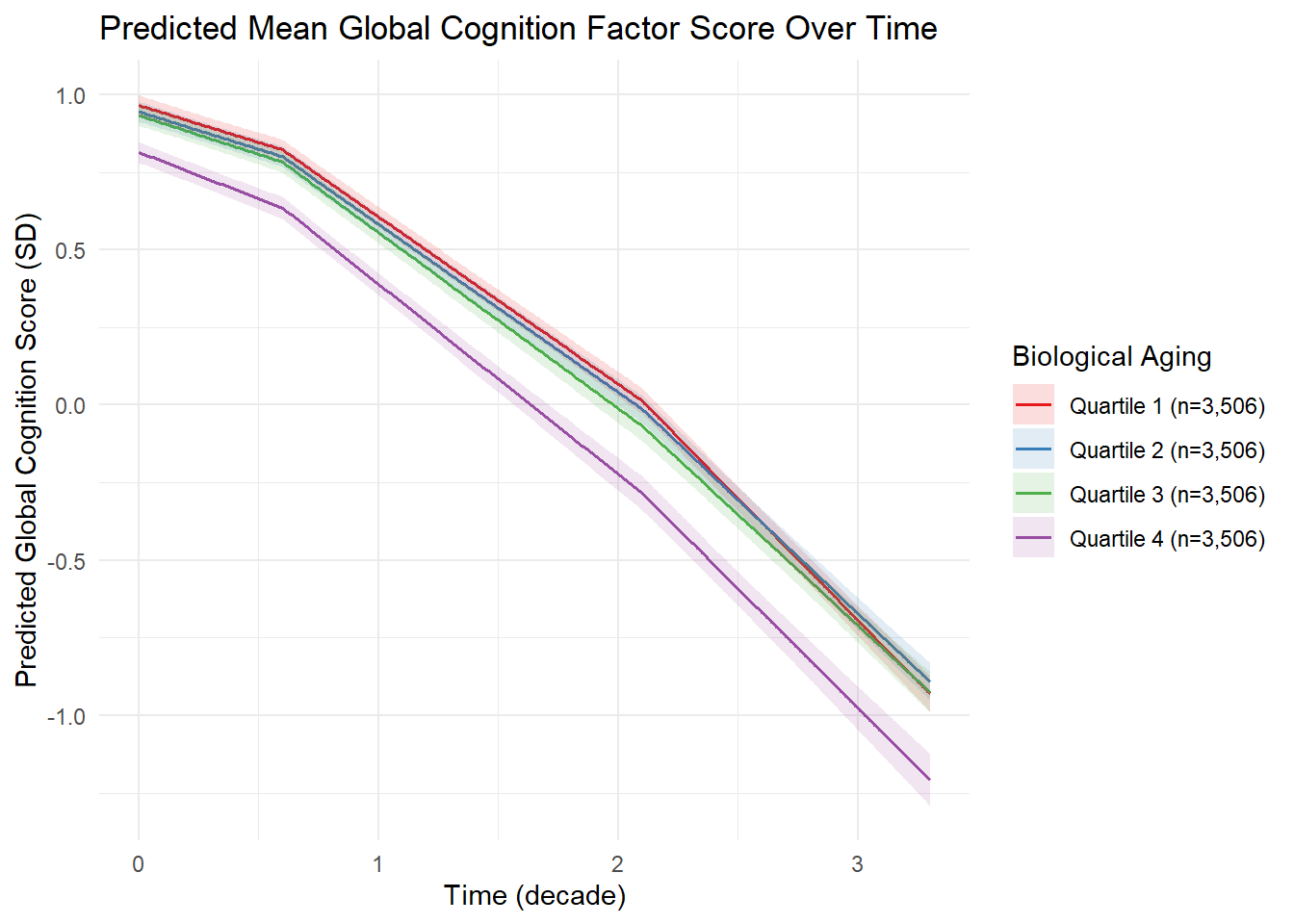
Abstract Body: Background: Chronological age is a major risk factor for cognitive decline and dementia, but it does not fully capture individual variability in biological aging processes. While prior studies have examined associations between biological aging—primarily measured using epigenetic clocks or telomere length—and cognitive outcomes, findings have been mixed and often limited by cross-sectional designs or short follow-up periods. The objective of this study was to test the hypothesis that higher midlife biological aging, as measured by homeostatic dysregulation, is associated with accelerated cognitive decline and an increased risk of dementia in later life. Methods: We analyzed data from 14,024 participants in the Atherosclerosis Risk in Communities (ARIC) Study, aged 45-64 years at baseline (Visit 2, 1990-1992), with up to 33 years of follow-up data. Biological aging at baseline (midlife) was quantified as homeostatic dysregulation using the Mahalanobis distance across 19 biomarkers and then categorized into quartiles. Repeat measures of cognitive function were collected and harmonized into a global cognition factor score. Incident dementia was ascertained through cognitive assessments, informant interviews, hospital records, and death certificates. Associations were evaluated using Cox proportional hazards models (for incident dementia) and linear mixed-effects models (for cognitive decline), with multiple imputation for missing data. Results: Over a median follow-up of 23.7 years, 3,482 participants developed dementia. A higher midlife biological aging score was associated with increased dementia risk (HR for highest vs. lowest quartile group: 1.66; 95% CI: 1.50, 1.84; p-trend < 0.001). Higher midlife biological aging was also associated with lower baseline cognitive function (highest vs. lowest quartile group: β = -0.153 SD; 95% CI: -0.207, -0.100) and faster rates of decline in global cognition (highest vs. lowest quartile group: β = -0.038 SD/decade; 95% CI: -0.064, -0.012). Conclusions: Midlife biological aging is a strong, independent predictor of later-life dementia risk and more rapid cognitive decline. These findings support the utility of measuring multisystem biological aging metrics earlier in the lifecourse to identify individuals at elevated risk for cognitive impairment, and also highlight the potential for early-life interventions targeting systemic aging processes.
Liu, Albert
(
UNC Chapel Hill
, Chapel Hill , North Carolina , United States )
Kucharska-newton, Anna
(
UNC Chapel Hill
, Chapel Hill , North Carolina , United States )
Bey, Ganga
(
UNC Chapel Hill
, Chapel Hill , North Carolina , United States )
Howard, Annie Green
(
UNC Chapel Hill
, Chapel Hill , North Carolina , United States )
Engel, Stephanie
(
UNC Chapel Hill
, Chapel Hill , North Carolina , United States )
Rosamond, Wayne
(
UNC Chapel Hill
, Chapel Hill , North Carolina , United States )
Palta, Priya
(
UNC Chapel Hill
, Chapel Hill , North Carolina , United States )