An allostatic load domain-specific metabolic profile in young adults - The African-PREDICT study
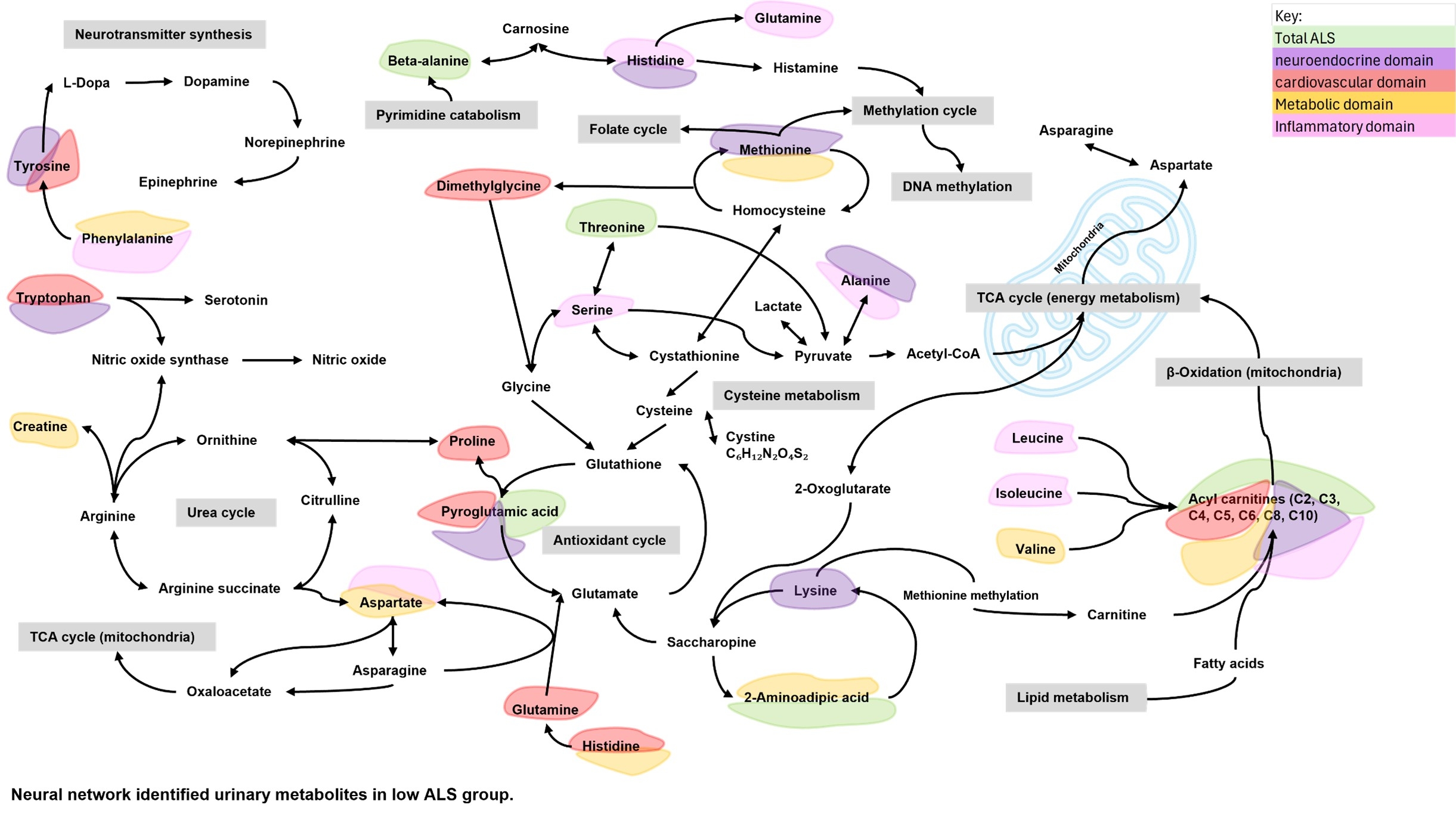
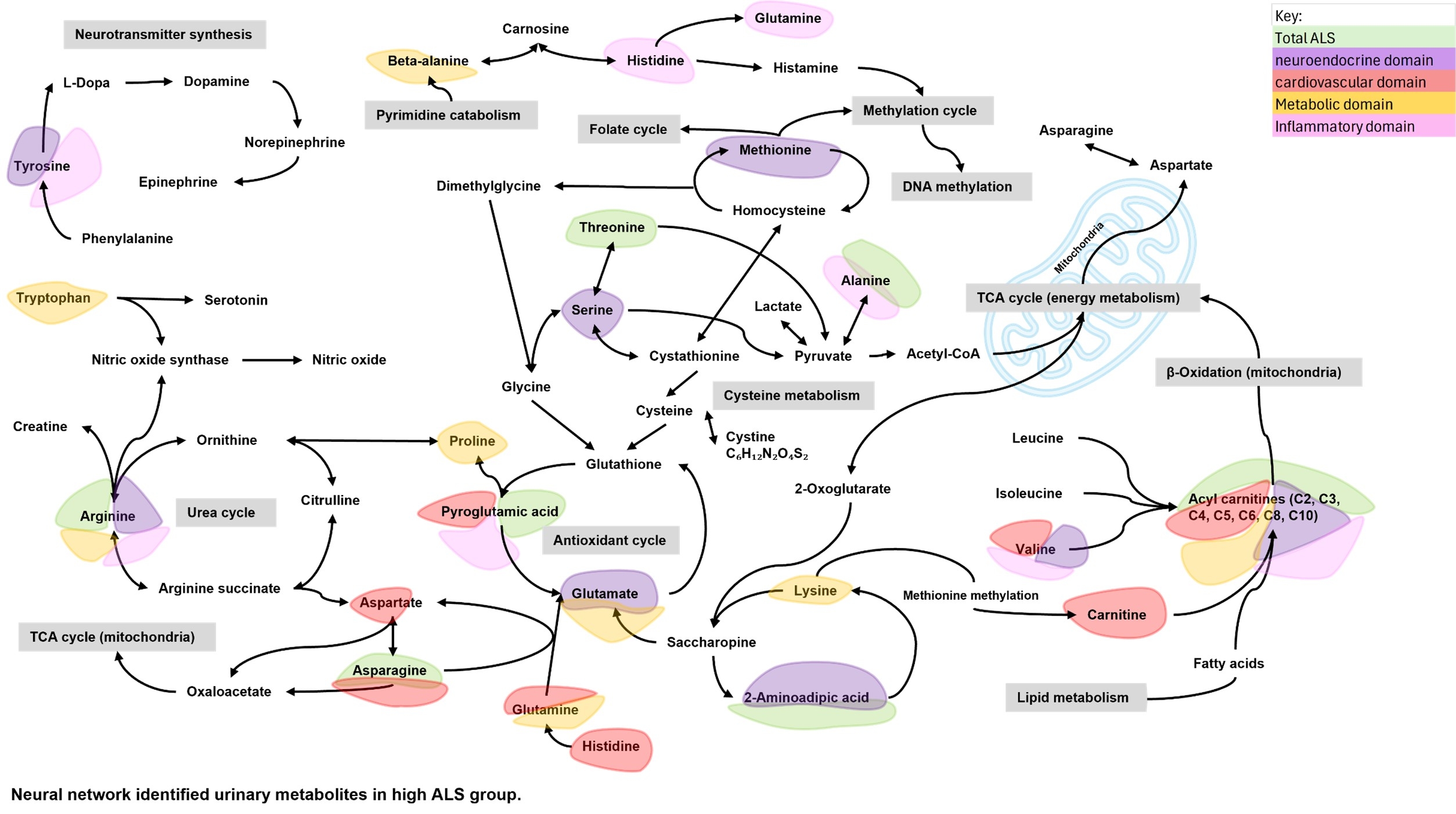
Abstract Body: Introduction: Allostatic load scores (ALS) quantify cumulative physiological burden of sustained stress across neuro-endocrine, metabolic, cardiovascular, and inflammatory domains. The heterogeneity of ALS complicates stress and risk evaluation and comparisons. Urinary metabolomic signatures may provide an innovative alternative to physiological stress characterization and identify early domain-specific changes. We (1) designed a novel, multilayered perceptron neural network (MLP-NN) method to investigate metabolic perturbations associated with domain-specific alterations in low and high sustained stress, as measured by ALS, and (2) described ALS domain-specific metabolomic profiles in young South Africans. Methods: Baseline data from 955 healthy Black and White South Africans (mean age 24±3 years; 48%Black; 50%male), was used. ALS was calculated using the upper quartile population-distributions of dehydroepiandrosterone, adrenocorticotropic hormone, cortisol, interleukin-6 , C-reactive protein, waist circumference, glycated haemoglobin, blood pressure, and the lower quartile population distributions of high-density lipoprotein cholesterol. Urinary amino acids and acylcarnitines (N=32 metabolites) were analyzed via liquid chromatography-tandem mass spectrometry. MLP-NN was used to assess metabolite contribution to the ALS domains while controlling for confounders identifying the top metabolites, per domain, with the highest synaptic weight. Results: High stress (ALS≥4) was observed in 30% of participants. All 32 metabolites significantly differed between high and low ALS groups (all P<0.05). MLP-NN revealed distinct metabolomic patterns for the four AL domains in both ALS groups. In the low ALS group, the MLP-NN identified metabolites, pyroglutamic acid, histidine, methionine, tryptophan, propionylcarnitine, butyrylcarnitine, and isovalerylcarnitine was identified to be significant in the neuro-endocrine, cardiovascular, and metabolic domains (all P<0.05). In the high ALS group, tyrosine, glutamine, pyroglutamic acid, 2-aminoadipic acid, histidine, valine, and arginine were identified to be significant in the neuro-endocrine, metabolic and inflammatory domains (all P<0.05). Conclusion: This MLP-NN-based approach identified unique urinary profiles reflective of higher AL, independent of confounders. This non-invasive approach may serve as a novel alternative for assessing AL, retaining the domain-specificity, yet allowing comparative studies.
Joubert, Nevah
(
North-West University
, Potchefstroom , North-West , South Africa )
Mels, Catharina
(
North-West University
, Potchefstroom , North-West , South Africa )
Louw, Roan
(
North-West University
, Potchefstroom , South Africa )
Chung, Stephanie
(
National Institutes of Health
, Bethesda , Maryland , United States )
Wentzel, Annemarie
(
North-West University
, Potchefstroom , North-West , South Africa )