Equol-Producing Status and Carotid Plaque and Carotid Intima-Media Thickness in Older Adults
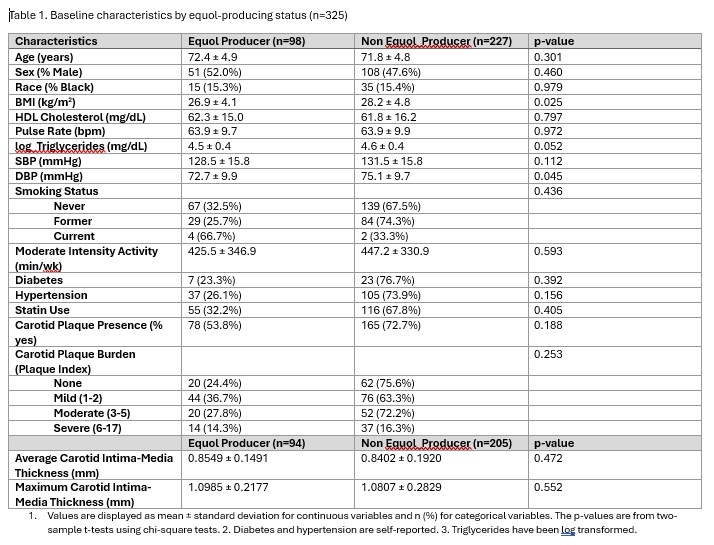
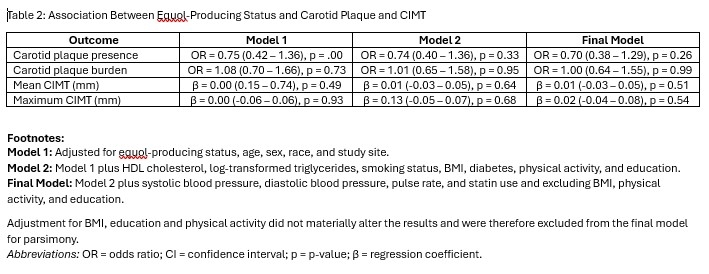
Abstract Body: Background: Carotid plaque and carotid intima-media thickness (CIMT) are established subclinical markers of atherosclerosis and predictors of cardiovascular events. Equol, a metabolite of the soy isoflavone daidzein produced by the gut microbiome, binds to estrogen receptor β (ERβ) in vascular endothelial and smooth muscle cells. ERβ activation promotes vasodilatory, anti-inflammatory, and anti-proliferative effects that may slow arterial aging. While 50-70% of East Asian adults produce equol after consumption of soy isoflavones, only 20-30% of Western adults do, and its vascular significance remains unclear. Objective: To examine whether equol producers have less carotid plaque presence and burden and lower CIMT, a marker of vascular aging, compared with non-producers at baseline. Methods: The Arterial Stiffness, Equol, and Cognition (ACE) trial, a multicenter, double-blind, placebo-controlled clinical trial, included 325 older adults aged 65-85 years (mean age 72.0 ± 4.9, 51% female, 15% African American) from the University of Pittsburgh and Wake Forest sites. Participants consuming soy products or soy isoflavones ≥2 times per week were excluded. Equol-producing status was defined after a 3-day soy challenge as urinary log10(Equol/Diadzein) ≥ -1.75. Carotid plaque and CIMT were compared by equol status using t-tests and chi-square tests. Associations were examined using multivariable linear and logistic regression, adjusting for demographics, lipids, blood pressure, diabetes, smoking, BMI, and physical activity. Results: Equol-producing status was not associated with carotid plaque presence (OR 0.71, p = 0.26) or plaque burden (all p > 0.30) at baseline. Age remained the only independent predictor of plaque burden. Equol-producing status was not associated with mean CIMT (β = 0.01, p = 0.54) or maximum CIMT (β = 0.02, p = 0.60) after adjustment. Age, sex, HDL cholesterol, and triglycerides were independently associated with CIMT (p < 0.05). Conclusions: In this cross-sectional cohort of older adults at baseline, equol-producing status was not associated with carotid plaque measures or CIMT. Although experimental studies suggest vascular benefits of equol, these findings indicate that producer status alone may not strongly influence vascular structure later in life. Further studies examining circulating equol levels, exposure duration, and dietary soy intake are warranted.
Coccari, Mindy
(
UNIVERSITY OF PITTSBURGH
, Pittsburgh , Pennsylvania , United States )