
Is occupational physical activity associated with cardiovascular health? Examining the physical activity paradox in Nepalese adults with high blood pressure.
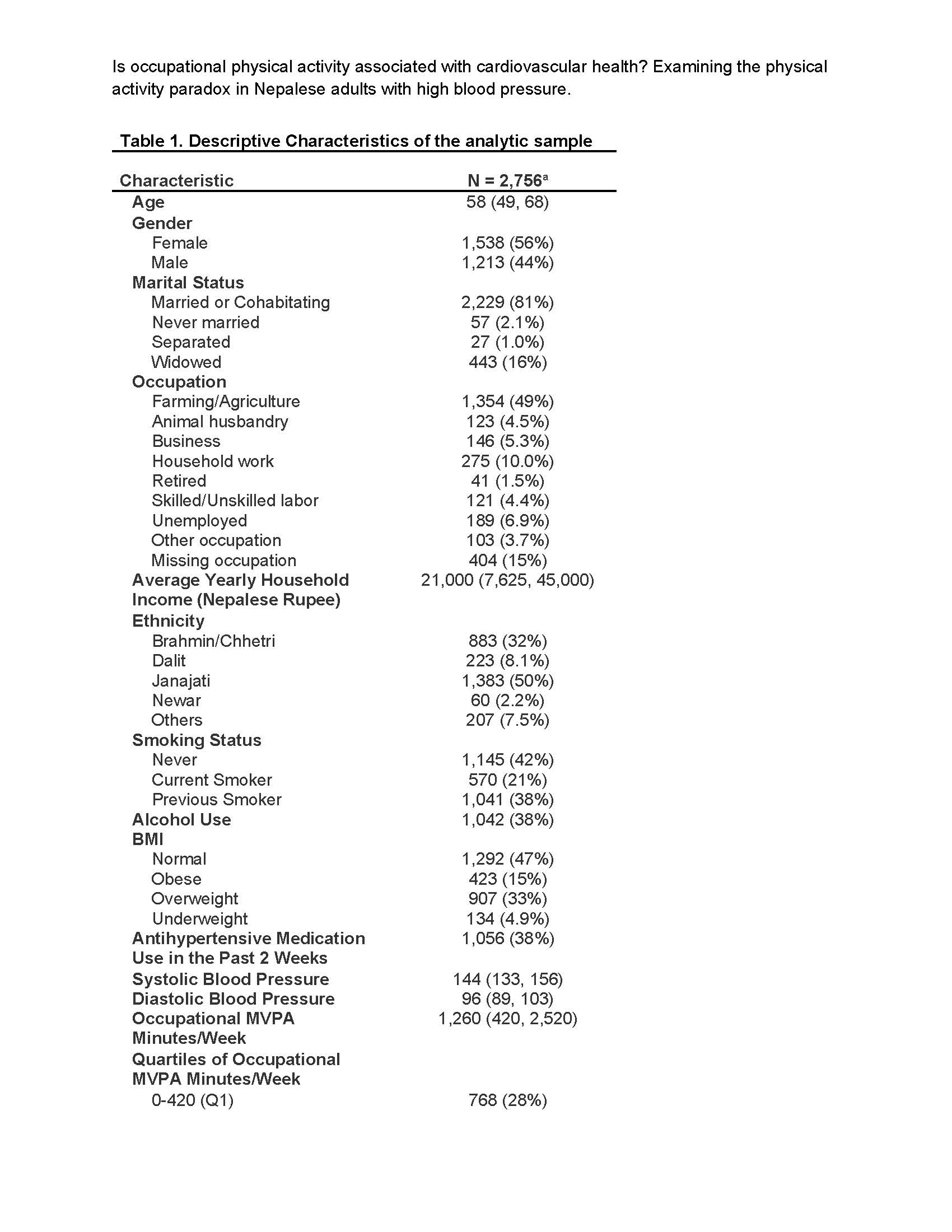
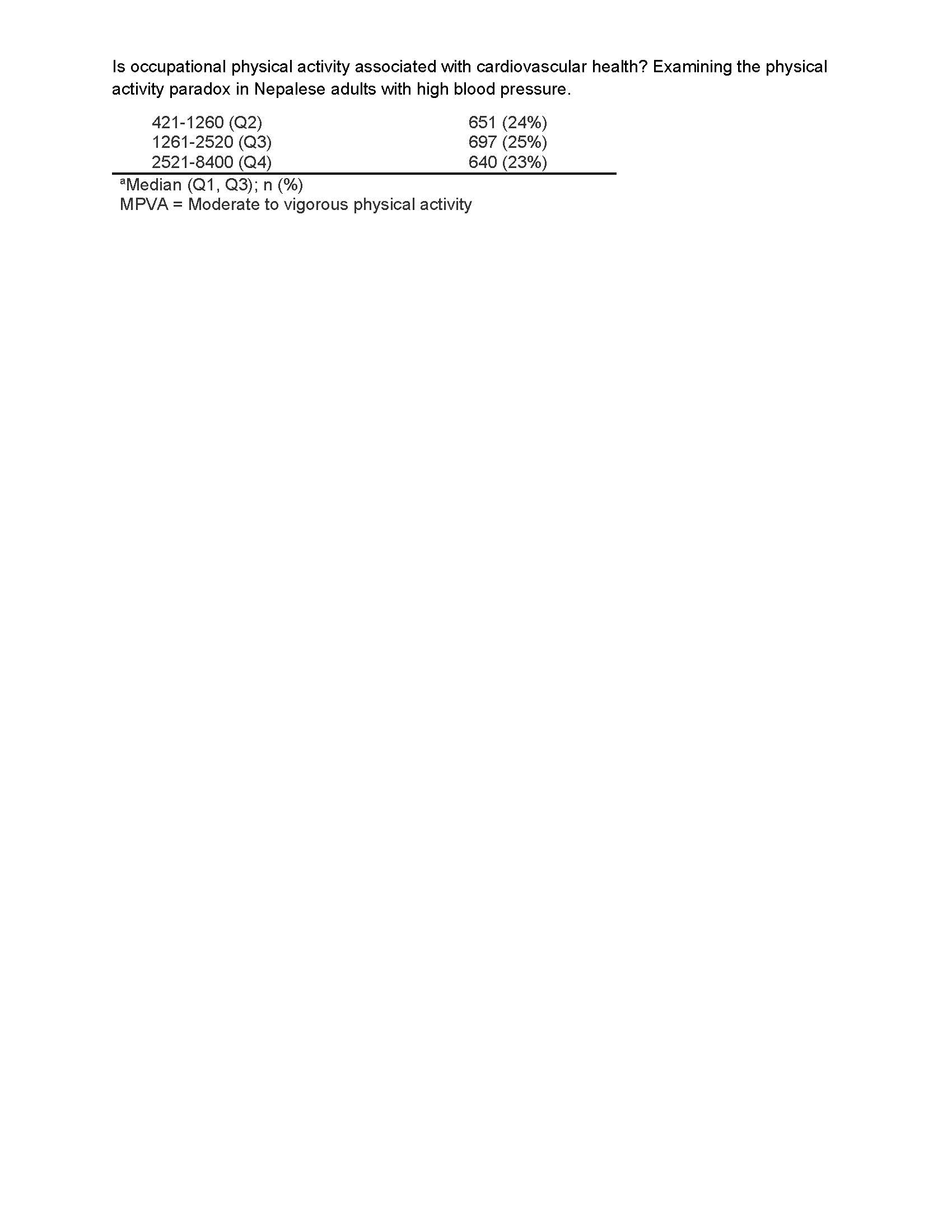
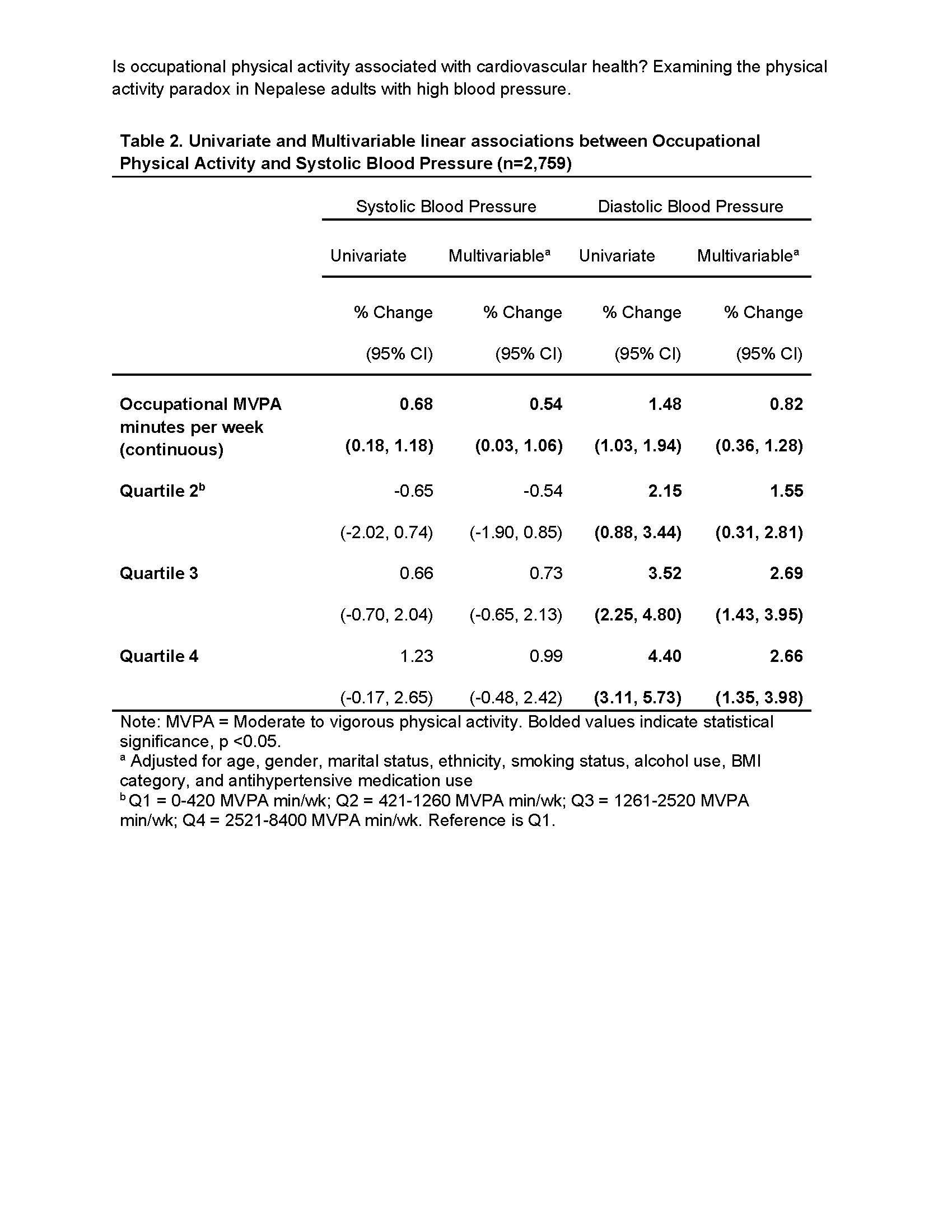
Abstract Body: Most of the evidence supporting the health benefits of physical activity (PA) is from activity performed during recreation. The PA paradox is a known phenomenon where individuals with high levels of PA from occupational work have a higher risk for certain health conditions. This paradox is particularly relevant in low- and middle-income countries, where total PA is high primarily due to occupation. The objective of this study was to examine the cross-sectional association of domain-specific PA with blood pressure among hypertensive adults in Nepal. Data are from the Community Health Worker-led Hypertension and Control (CHPC) in Nepal: An Implementation Trial. Individuals aged 30 years or older with high blood pressure (≥140/90 mmHg) were eligible for inclusion; exclusion criteria included severe illness or pregnancy. Data was collected via interviewer administered questionnaires and a physical exam. PA was measured with the Global Physical Activity Questionnaire (GPAQ). Domain specific physical activity was summarized as moderate to vigorous physical activity minutes per week (MVPA) continuously and by quartiles. Systolic (SBP) and diastolic blood pressure (DBP) were objectively measured using standard procedures three times in one occasion; the average of the second and third readings was used for analyses. Univariate and multivariable linear models were used to assess the cross-sectional associations between domain specific MVPA, occupation and recreation, and SBP and DBP. A total of 2,957 participants took part in the baseline assessment; after excluding missing data, 2,756 were included in analyses. Average age was 57 years (SD=40), and 56% were female (Table 1). Occupational PA was reported by 86% (n=2,369) of participants, while only 1% (n=39) reported recreational PA. Mean occupation MVPA was 1260 minutes/week (SD=1509). Due to the low participation of recreational physical activity, only occupational physical activity was examined in models. In multivariable models, one standard deviation increase in occupational MVPA was associated with a 0.54% increase in SBP (95% CI 0.03, 1.06), and a 0.82% increase in DBP (95% CI 0.36, 1.28). When examined as quartiles, there was evidence of a significant dose response relationship with DBP, but not SBP (Table 2). In summary, there is evidence of the physical activity paradox in this sample of Nepalese adults with high blood pressure, but examination of non-linear associations and effect modification is needed.
Porter, Anna
( Yale University
, New Haven
, Connecticut
, United States
)
Sapkota, Parash
( Yale University
, New Haven
, Connecticut
, United States
)
Neupane, Dinesh
( Johns Hopkins University
, Baltimore
, Maryland
, United States
)