Early Metabolic Imbalance in Lean Young Adults is a Risk Factor for Midlife Obesity
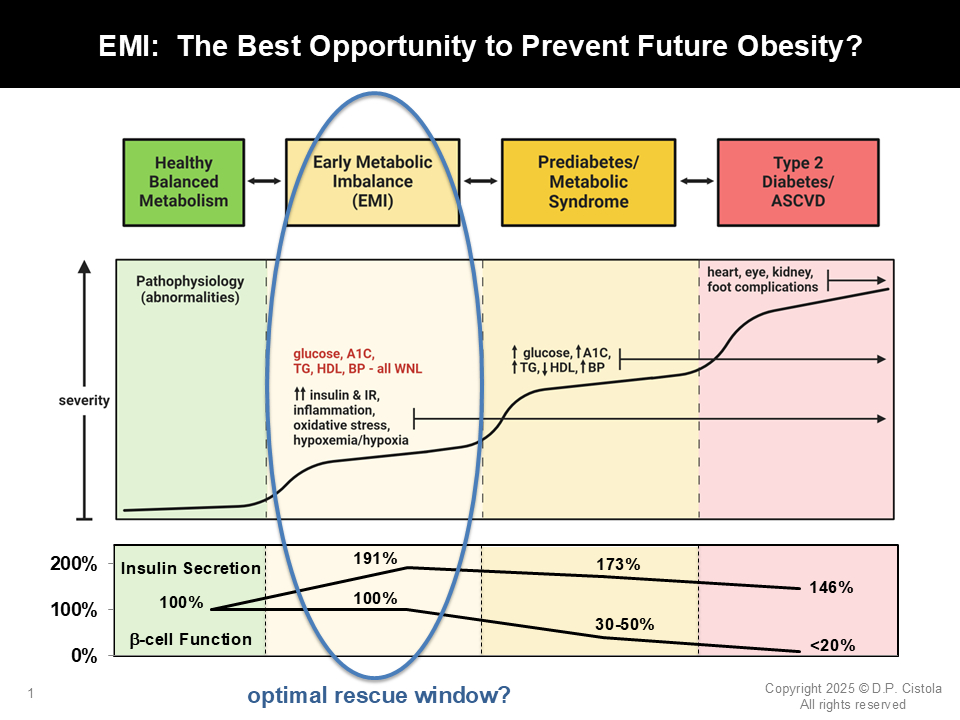
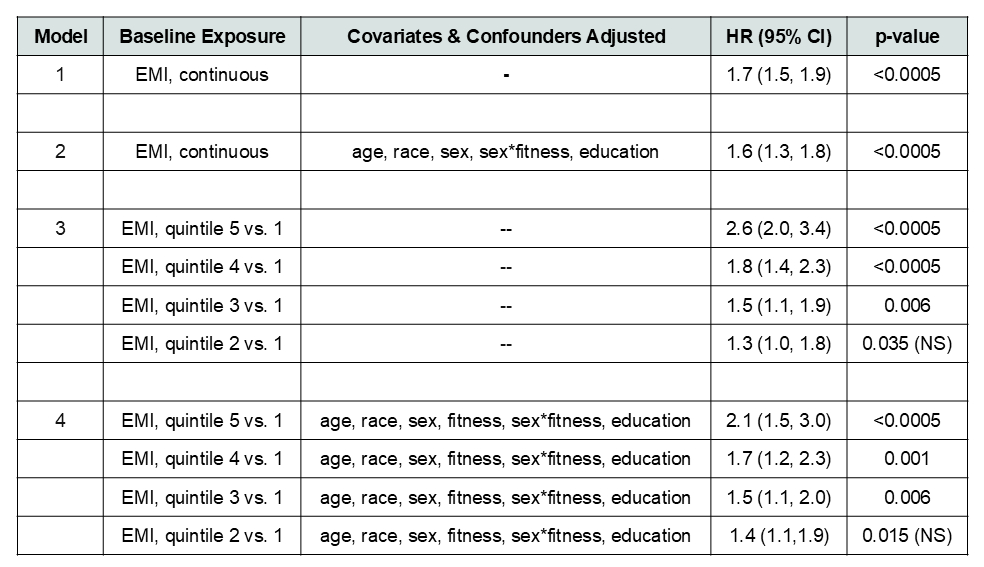
Abstract Body: Background: Early metabolic imbalance (EMI) is an overlooked condition characterized by compensatory hyperinsulinemia in the face of normal fasting glucose, triglycerides, hemoglobin A1c, and HDL. Also, EMI is associated with subclinical inflammation, oxidative stress, and hypoxemia/hypoxia (Figure 1). Individuals with EMI do not meet the criteria for prediabetes or metabolic syndrome and elude detection during routine screening for chronic disease risk. Previously, we reported that EMI is a risk factor for prediabetes, type 2 diabetes, metabolic syndrome, and cardiovascular disease (CVD). Hypothesis: EMI in lean young adults is an independent risk factor for midlife obesity. Methods: This was a retrospective cohort analysis of CARDIA: Coronary Artery Risk Development in Young Adults. The parent study began in 1985, enrolling 5,114 young adults ages 18-30, with follow-up visits every 5 years. For this retrospective analysis, the baseline exclusion criteria were fasting hyperglycemia, hypertriglyceridemia, low HDL, BMI>=25 kg/m2, elevated waist circumference, pregnancy, diabetes, or CVD; n=2,371. Cox proportional hazards regression models were explored using Stata v19.5. The exposure was EMI, a latent variable generated from fasting insulin, globulin/albumin ratio, hemoglobin & resting pulse rate. The outcome was time to incident obesity: BMI≥30. Results were reported as a Cox hazard ratio (HR) with 95% confidence interval (CI) and p-value. All reported models met the proportional hazards and linearity assumptions. Results: Over the 30-year follow-up, there were 632 cases of incident obesity (26.7%). Cox Model 1 included continuous EMI as the exposure, without adjustment (Table 1). Model 2 adjusted for age, sex, race, fitness, sex-fitness interaction, and education level. Model 3 included EMI categorized by quintiles without adjustment. Model 4 categorized by quintiles and adjusted for the same covariates as Model 2. In all models, EMI was an independent risk factor for incident obesity (HR range: 1.5-2.6). Similar results were obtained in parallel Cox analyses where the observed EMI variables were entered individually, with fasting insulin as the 1° exposure. Conclusions: Compared with the lowest quintile, lean young adults in the fifth quintile of EMI had double the risk for future obesity, even after adjustment. If validated, the results could inform efforts to screen young people for hidden EMI, offering the best opportunity to prevent future obesity.
Cistola, David
(
UT Health Houston
, El Paso , Texas , United States )
Cistola, Andrew
(
University of Florida
, Gainesville , Florida , United States )
Dwivedi, Alok
(
University of Missouri
, Columbia , Missouri , United States )