Net and configurational effects of determinants on health-promoting lifestyles among young and middle-aged adults with metabolic risk factors
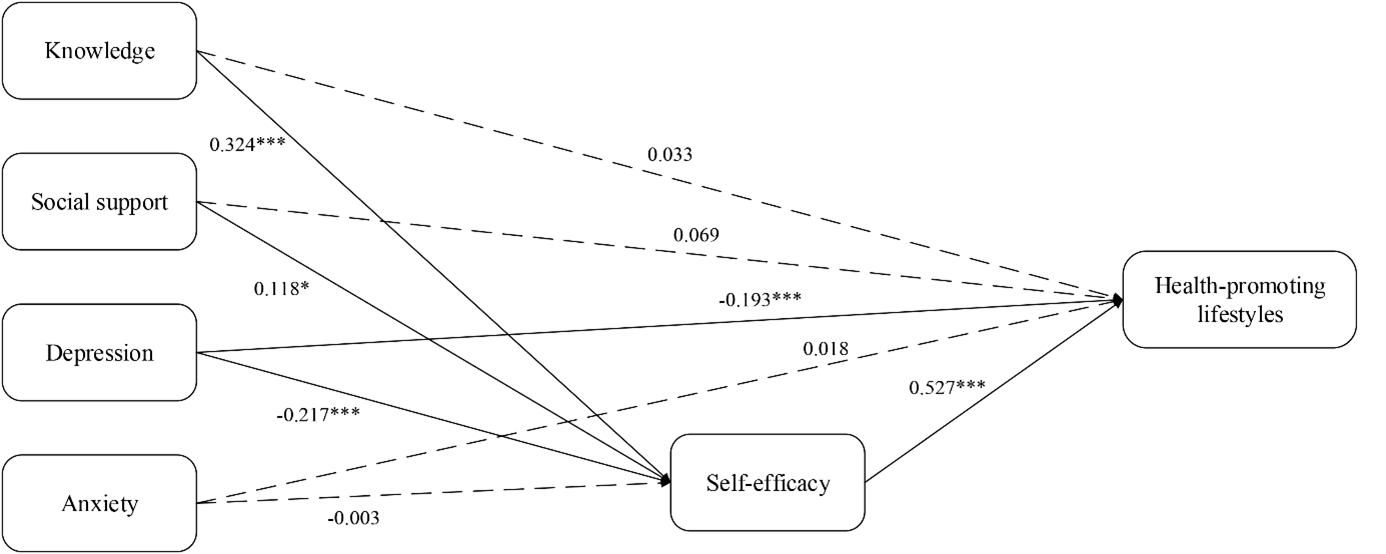
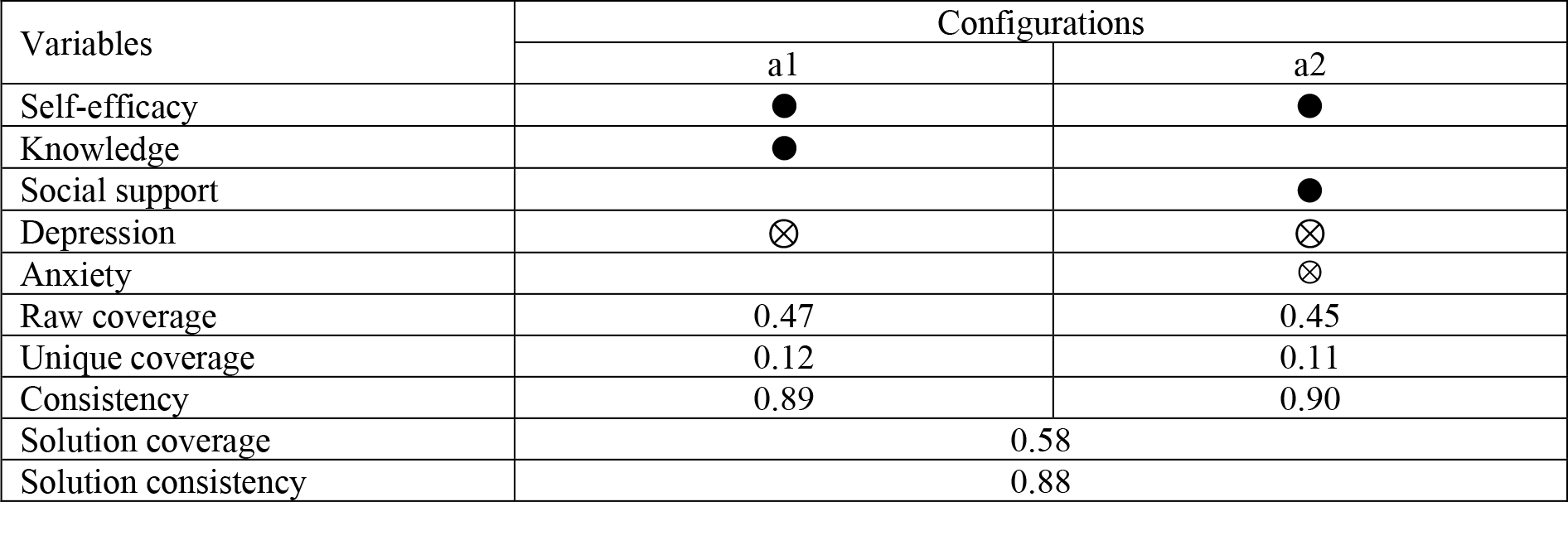
Abstract Body: Introduction: Identifying the predictors of healthy lifestyles among young and middle-aged adults with metabolic risk factors is of paramount importance for designing effective lifestyle interventions to manage this clinical cohort. This study aimed to examine the impact of self-efficacy, knowledge, social support, depression, and anxiety on health-promoting lifestyles among young and middle-aged adults with metabolic risk factors. Methods: A cross-sectional study was conducted in China from October 2022 to April 2024. Data were collected from 402 participants using the Self-Rated Abilities for Health Practices Scale, Metabolic Syndrome Knowledge Scale, Social Support Rating Scale, Hospital Anxiety and Depression Scale, Health-Promoting Lifestyle Profile II, and a self-designed form. The study explored the roles of self-efficacy, knowledge, social support, depression, and anxiety in relation to health-promoting lifestyles via structural equation modeling (SEM) and fuzzy-set qualitative comparative analysis (fsQCA). Results: SEM showed that self-efficacy and depression directly affect health-promoting lifestyles in this population. Moreover, self-efficacy mediated the effects of knowledge, social support, and depression on health-promoting lifestyles. However, no significant impact of anxiety on health-promoting lifestyles was found. The fsQCA indicated two different configurations that are sufficient for contributing to a high level of health-promoting lifestyles: one characterized by high levels of self-efficacy and knowledge alongside low levels of depression, and another with high levels of self-efficacy and social support, combined with low levels of depression and anxiety. Conclusions: The SEM identified significant predictors of health-promoting lifestyles, which were reinforced and complemented by fsQCA results. These findings offer practical implications for healthcare professionals in developing effective interventions to promote health-promoting lifestyles among young and middle-aged adults with metabolic risk factors.
Huang, Zehao
(
The Chinese University of Hong Kong
, Hong Kong , China )
Wang, Qun
(
Shenzhen University
, Shenzhen , China )
Chair, Sek Ying
(
The Chinese University of Hong Kong
, Hong Kong , China )