Culturally Concordant Nutrition Education Leads to Heart-Healthy Dietary Improvements in South Asian Adults Following the South Asian Healthy Lifestyle Intervention
Abstract Body: Background: South Asian Americans face disproportionately high rates of cardiovascular disease but remain underrepresented in behavioral nutrition research. Culturally adapted dietary interventions for this population are scarce. The South Asian Healthy Lifestyle Intervention (SAHELI) was among the first community-based, randomized control trials in the U.S. to deliver culturally adapted education focused on dietary change in this high-risk population.
Objective: To evaluate the effectiveness of the SAHELI intervention in improving diet quality among South Asian adults and identify pedagogical features that facilitated change.
Methods: This secondary analysis included 190 South Asian adults with elevated cardiometabolic risk in the SAHELI intervention arm who completed baseline and 12-month dietary assessments. Participants underwent a 16-week program incorporating culturally relevant dietary guidance taught in native languages. Changes in diet were measured using the Healthy Heart Score, and paired t-tests assessed within-subject changes. Twenty-four interviews were analyzed using an inductive, iterative coding framework to explore facilitators of dietary change.
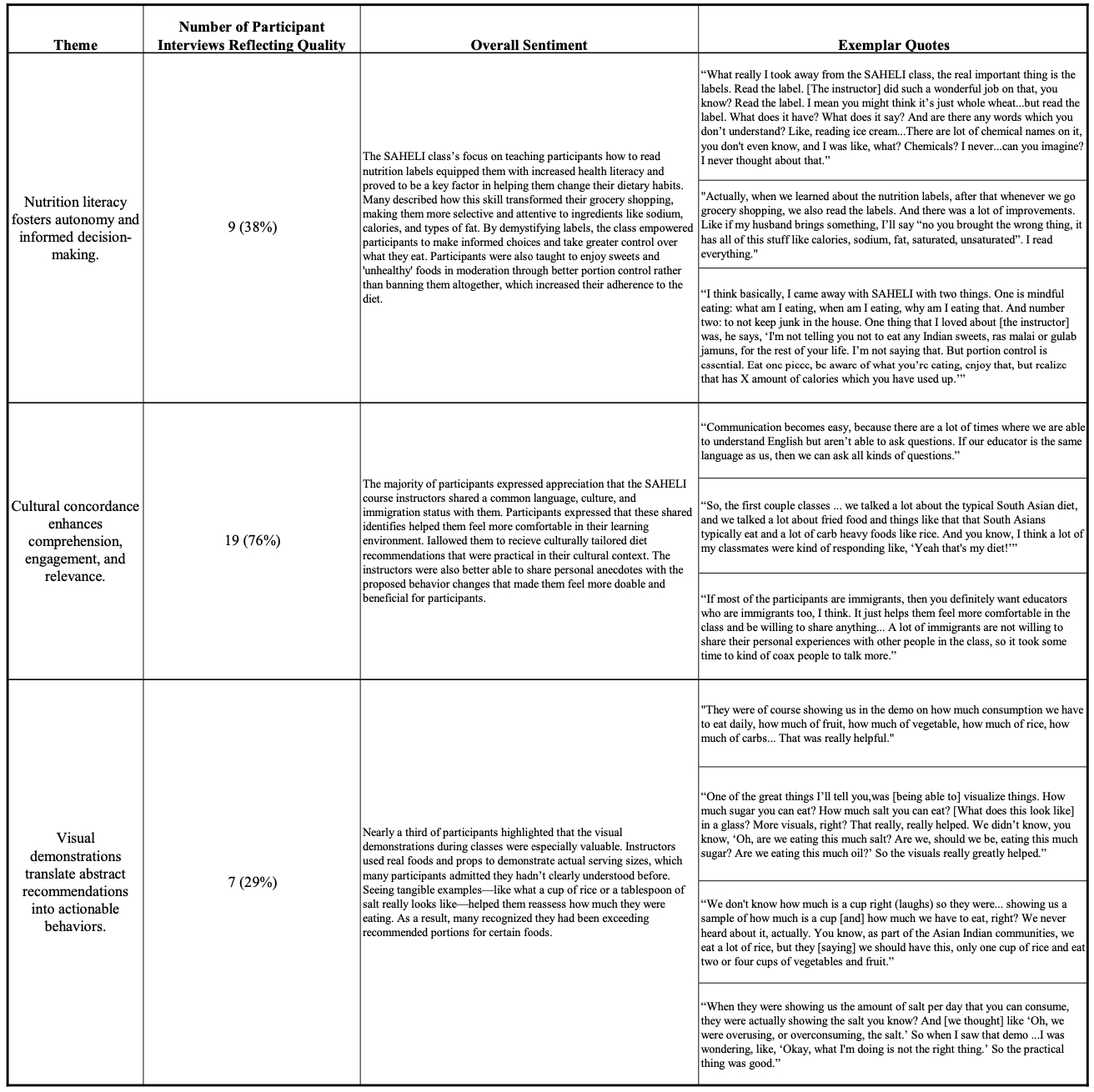
Results: Participants demonstrated improvement in mean overall diet score from baseline to 12 months (+0.35, p<0.05), with healthier intake of vegetables (+0.34 servings per day, p<0.01), fruits (+0.23, p<0.01), whole wheat (+0.21, p<0.05), brown rice (+0.04, p<0.05), healthy grains like millet and quinoa (+0.04, p<0.05), cooked cereals (+0.05, p<0.05) and processed meat (-0.02, p<0.05). Interview analysis identified three core drivers of success: (1) practical training in reading nutrition labels and making heart-healthy diet decisions, (2) instructors who shared language and culture with participants, and (3) visual demonstrations that made portion recommendations tangible and actionable.
Conclusion and Implications: This study strengthens the evidence that culturally adapted interventions integrating nutritional literacy, hands-on demonstrations, and native language instruction with culturally concordant educators can improve dietary behaviors in immigrant communities. These findings support expanding similar strategies to other high-risk ethnic groups. Clinicians can adopt these principles in lifestyle counseling, while policymakers can prioritize investment in community-based, culturally adapted nutrition education to reduce chronic disease disparities and improve long-term public health outcomes.
Hariharan, Syona
(
Northwestern University Feinberg School of Medicine
, Chicago , Illinois , United States )
Laddu-patel, Deepika
(
Northwestern University Feinberg School of Medicine
, Chicago , Illinois , United States )
Jia, Jenny
(
Northwestern University Feinberg School of Medicine
, Chicago , Illinois , United States )
Lancki, Nicola
(
Northwestern University Feinberg School of Medicine
, Chicago , Illinois , United States )
Anderson, Emily
(
Northwestern University Feinberg School of Medicine
, Chicago , Illinois , United States )
Bharucha, Himali
(
Metropolitan Asian Family Services
, Chicago , Illinois , United States )
Kandula, Namratha
(
Northwestern University Feinberg School of Medicine
, Chicago , Illinois , United States )