Psychosocial and Behavioral Correlates of Weight Management Interest: Analysis of Self-Screening Data from a Large Integrated Health System
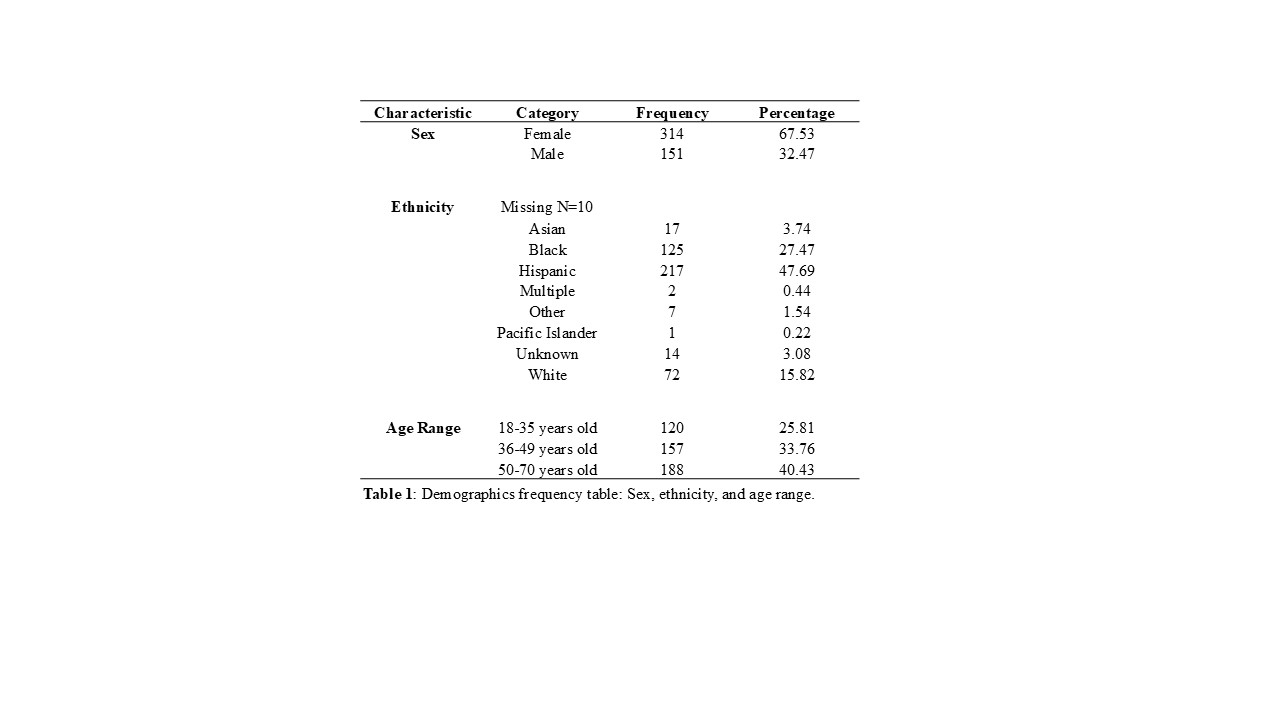
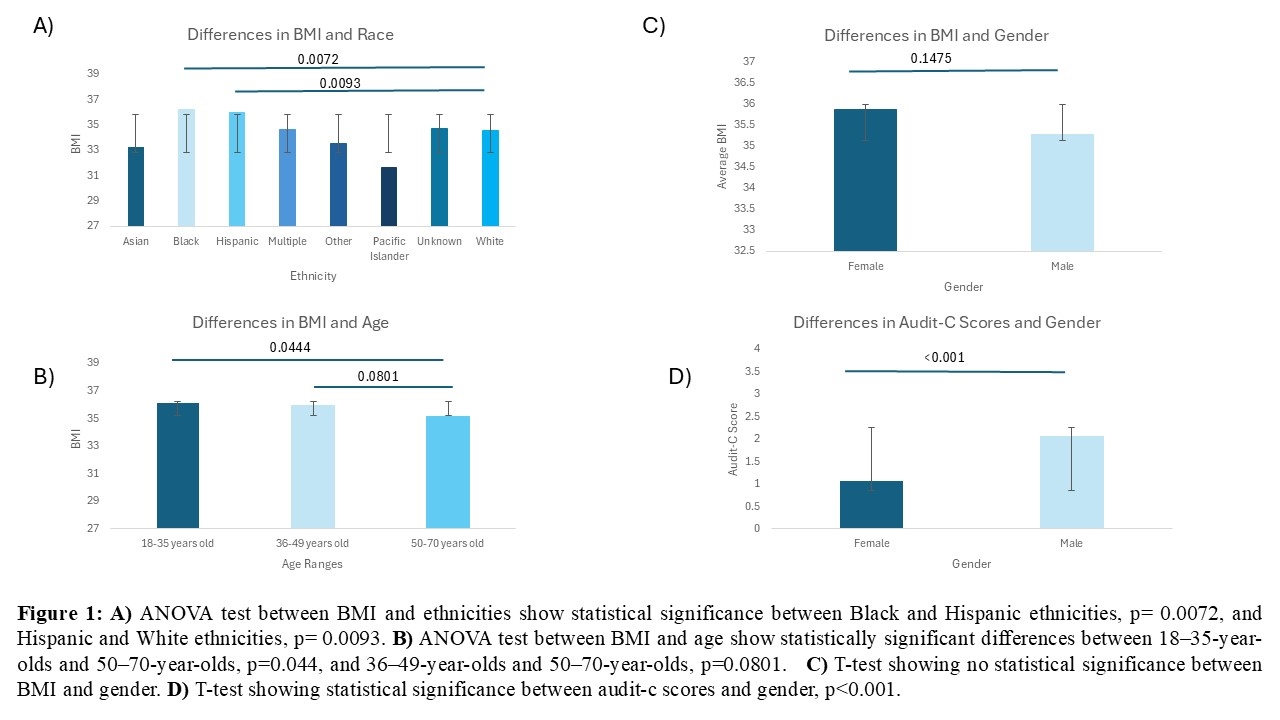
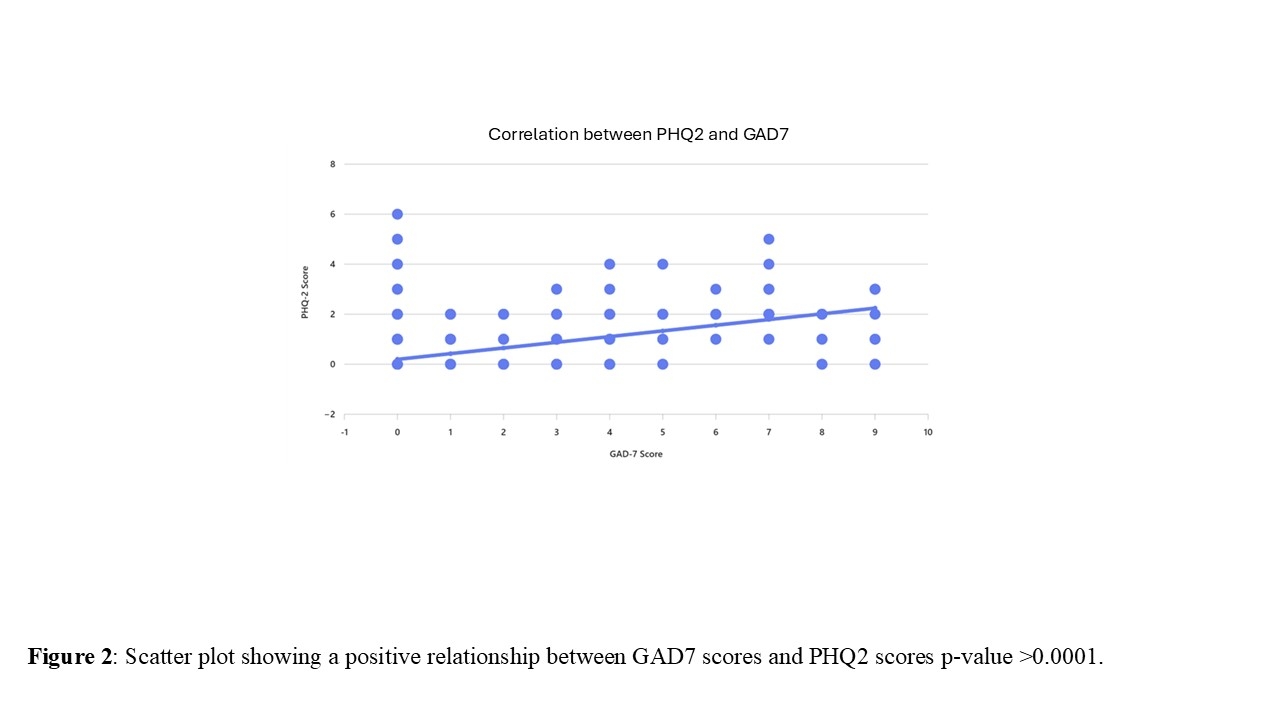
Abstract Body: Introduction:Effective weight management interventions require an understanding of the psychosocial and behavioral profiles of individuals seeking support. This study explores themes from a self-administered screening tool used within Kaiser Permanente, aiming to uncover how psychological factors, demographics, and behavioral patterns intersect with BMI. By examining these dimensions, the research supports personalized, culturally responsive, and clinically relevant approaches to weight management and health care delivery. Methods:A cross-sectional design was used to analyze data collected via REDCap from 465 adults aged 18–70. The sample included 67.53% females and 32.47% males who completed assessments on demographics, psychological well-being (GAD7, PHQ2), and alcohol use (AUDITC), along with self-reported height and weight to calculate BMI. Statistical analyses included independent samples t-tests, one-way ANOVA, and Pearson correlations to examine relationships between BMI and sex, race/ethnicity, age, and psychological variables. SAS software was used for all analyses. Results:No significant difference in mean BMI was found between males and females (p>0.05). However, BMI varied significantly across racial/ethnic groups (p=0.0082), with White individuals showing lower BMI than Black and Hispanic participants. BMI also differed across age categories (p=0.08), with individuals aged 18–35 having significantly higher BMIs than those aged 50–70 (p<0.05). Pearson correlations showed no significant associations between BMI and psychological measures (GAD: p=0.80; PHQ-2: p=0.20; AUDITC: p=0.85). A strong positive correlation was found between GAD and PHQ2 scores (p<0.0001), indicating a link between anxiety and depression. Males reported significantly higher AUDITC scores than females (p<0.0001), suggesting sex-based differences in alcohol use. Conclusion:Findings highlight the importance of racial/ethnic and age-related factors when evaluating BMI in clinical settings. The lack of association between BMI and psychological measures suggests BMI alone is not a reliable indicator of mental health. However, the strong correlation between anxiety and depression underscores the value of psychological screening. Clinicians should be aware of demographic disparities in BMI and alcohol use, particularly elevated AUDITC scores among males, which may warrant targeted behavioral health interventions. These insights support more personalized and culturally sensitive care.
Young, Deborah
(
KAISER PERMANENTE
, Pasadena , California , United States )
Cedeno, Martha
(
Kaiser Permanente
, Pasadena , California , United States )
Bacerdo, Julliane
(
Kaiser Permanente
, Pasadena , California , United States )
Quinones, Samantha
(
Kaiser Permanente
, Pasadena , California , United States )
Barton, Lee
(
Kaiser Permanente
, Pasadena , California , United States )
Inzhakova, Galina
(
KAISER PERMANENTE
, Pasadena , California , United States )
Velazquez, Amanda
(
Kaiser Permanente
, Pasadena , California , United States )