Association between post-traumatic stress disorder and hypertension among adults in Puerto Rico
Abstract Body: Background: Research on military and refugee populations has connected post-traumatic stress disorder (PTSD) to an increased risk of hypertension, but little is known about this link in civilians. Adults in Puerto Rico experience a high rate of hypertension and face chronic stressors, making this an important population to study.
Hypothesis: Adults in Puerto Rico with PTSD have higher odds of hypertension and related outcomes—such as being undiagnosed, uncontrolled, or using antihypertensive medications—compared with those without PTSD.
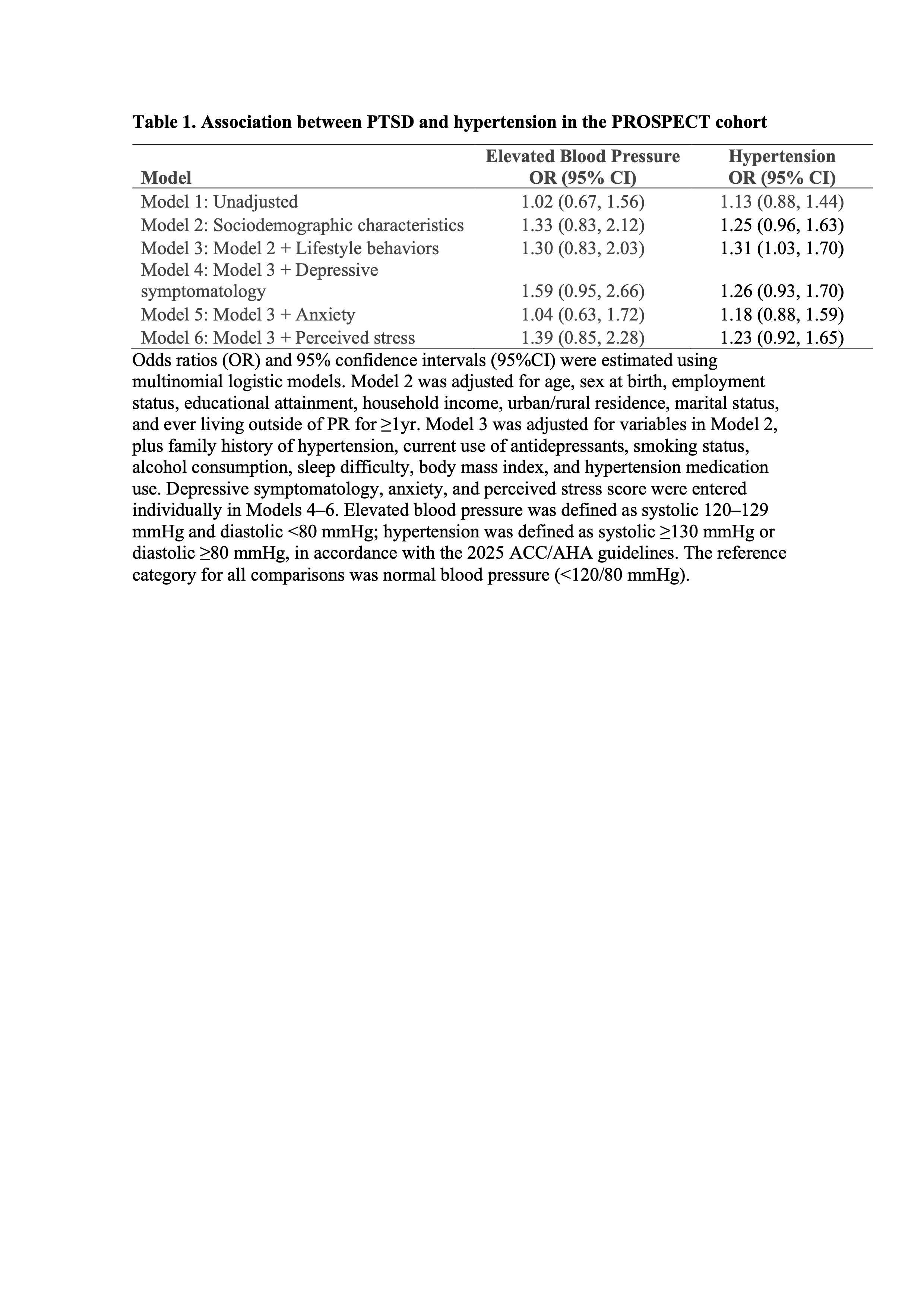
Methods: We used cross-sectional data from 1,516 adults (aged 30-75 years) in the Puerto Rico Observational Study of Psychosocial, Environmental, and Chronic Disease Trends (PROSPECT) cohort. PTSD was assessed using the abbreviated PTSD Checklist–Civilian Version. Hypertension was defined according to the 2025 ACC/AHA guidelines, using measured systolic and diastolic blood pressures. Secondary outcomes included diagnosis, control, medication use, and awareness of hypertension. Adjusted logistic regression models estimated the odds ratio (OR; 95%CI) for the association between PTSD and hypertension, adjusting for age, sex at birth, employment status, educational attainment, household income, urban/rural residence, marital status, ever living outside of Puerto Rico for ≥1 year, family history of hypertension, current use of antidepressants, smoking status, alcohol consumption, sleep difficulty, body mass index, and hypertension medication use. Psychological factors (i.e., symptoms of depression, anxiety, and perceived stress) were subsequently added individually.
Results: PTSD prevalence was 27.1%, and hypertension prevalence was 54.0%; 33.6% were uncontrolled, and 55.3% undiagnosed. After adjustment, PTSD was associated with higher odds of hypertension vs. normal blood pressure (1.31; 1.03, 1.70). Associations were attenuated after accounting for psychological stressors (Table 1). PTSD was further related to undiagnosed vs. diagnosed hypertension (1.52; 1.19, 1.96), antihypertensive medication use vs. no use (1.37; 1.07, 1.77), and uncontrolled vs. normal blood pressure (1.77; 1.26, 2.49).
Conclusions: In this study of adults in Puerto Rico, PTSD was consistently associated with hypertension-related outcomes, particularly being undiagnosed and uncontrolled. The role of other psychosocial factors should be explored. Mental health should be an integral part of hypertension prevention and management strategies.
Tamez, Martha
(
Harvard University
, Boston , Massachusetts , United States )
Acosta, Briana
(
Vital CxNs
, Boston , Massachusetts , United States )
Koenen, Karestan
(
Harvard
, Boston , Massachusetts , United States )
Sampson, Laura
(
Stony Brook University
, Stony Brook , New York , United States )
O'neill, June
(
Harvard Pilgrim Health Care Institute
, Boston , Massachusetts , United States )
Rodriguez-orengo, Jose F
(
FDI Clinical Research
, San Juan , Puerto Rico )
Kaplan, Robert
(
ALBERT EINSTEIN COLLEGE OF MEDICINE
, Seattle , Washington , United States )
Falcon, Luis
(
University of Massachusetts Lowell
, Lowell , Massachusetts , United States )
Mattei, Josiemer
(
HARVARD CHAN SCHOOL PUBLIC HEALTH
, Boston , Massachusetts , United States )