Proteomic Architecture of Early Menopause and Association with Cardiometabolic and Mortality Risk
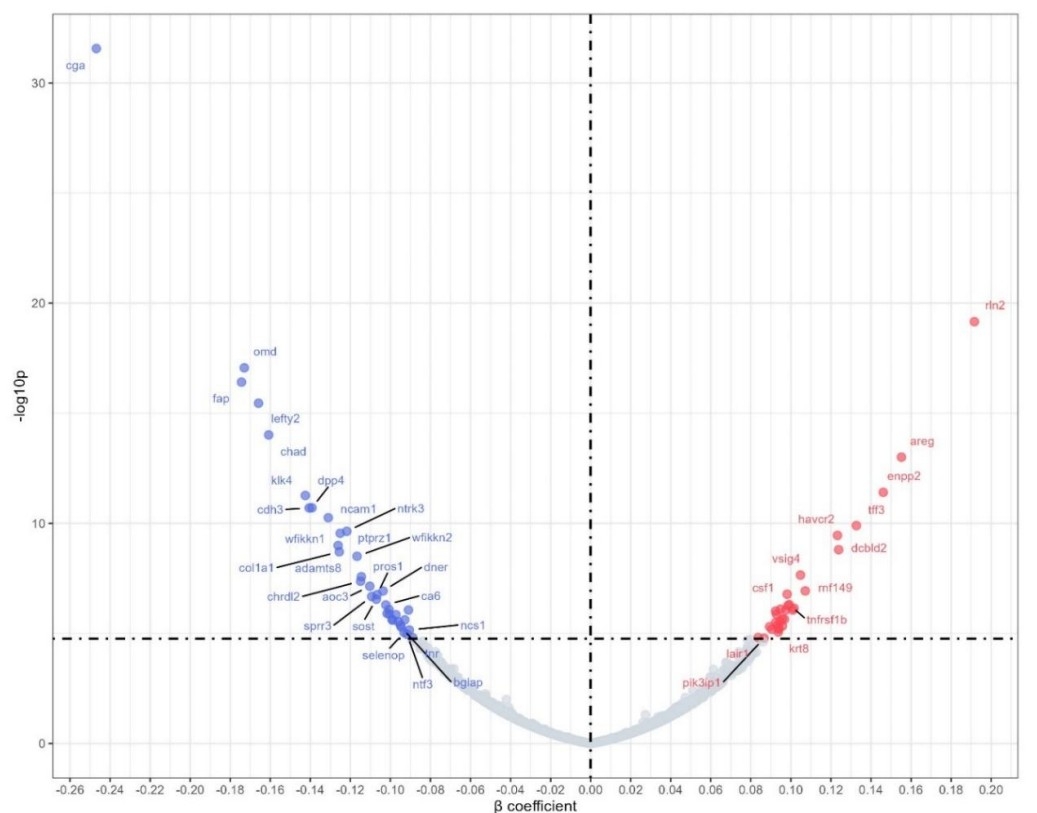
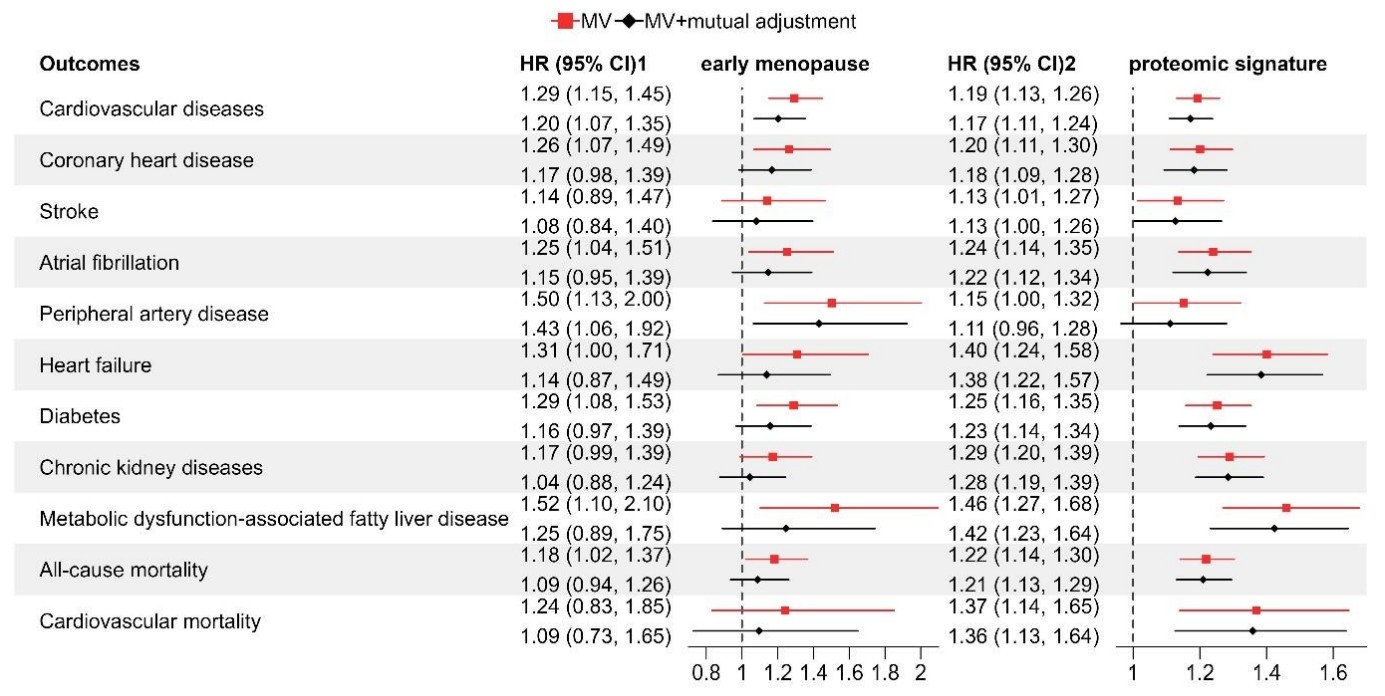
Abstract Body: Background Early menopause is associated with an increased risk of cardiovascular disease among women. However, the mechanisms underlying this association are not well-understood. We aimed to comprehensively evaluate the proteomic architecture of early menopause and examine the association of a derived proteomic signature with cardiometabolic and mortality risk. Methods This cohort study included 14,774 post-menopausal women from the UK Biobank. Multivariate-adjusted linear regression was used to identify proteins associated with early menopause (defined as natural or surgical menopause occurring before 45 years of age). A proteomic signature was constructed using least absolute shrinkage and selection operator (LASSO) regression. Associations with incident cardiometabolic diseases [cardiovascular disease (CVD, which included coronary artery disease, stroke, heart failure, atrial fibrillation, and peripheral artery disease), diabetes, chronic kidney disease (CKD), and metabolic dysfunction-associated fatty liver disease (MAFLD)] and mortality were assessed using multivariable-adjusted Cox models. Results Among 14,774 postmenopausal women (mean age 59.8 years), 2,964 (20.1%) experienced early menopause. Of 2,911 proteins examined, 67 were significantly associated with early menopause after correcting for multiple testing, mainly involved in pathways and processes related to cellular adhesion, extracellular matrix organization, and tissue remodeling. The proteomic signature of early menopause was associated with greater cardiometabolic risk and mortality (HR ranged from 1.14 to 1.46), with most associations remaining statistically significant even after adjustment for self-reported history of early menopause. Addition of the proteomic signature to clinical models modestly improved their predictive abilities (ΔHarrell’s C-index ranged from +0.003 to +0.013). Conclusions Early menopause is associated with significant changes in the circulating proteome, which may in turn mediate its relationship with long-term cardiometabolic and mortality risks. Further research is needed to understand the mechanisms underlying these associations and to identify potential novel pathways for personalized prevention and therapeutics in this population.
Qian, Frank
(
Boston Medical Center
, Boston , Massachusetts , United States )
Xia, Jiawei
(
Huazhong University of Science and Technology
, Wuhan , China )
Ge, Zhenghao
(
Huazhong University of Science and Technology
, Wuhan , China )
Liu, Gang
(
Huazhong University of Science and Technology
, Wuhan , China )