Physical Activity Levels and Cardiovascular Health Profiles among First-year Medical Students: A Cross-Sectional study
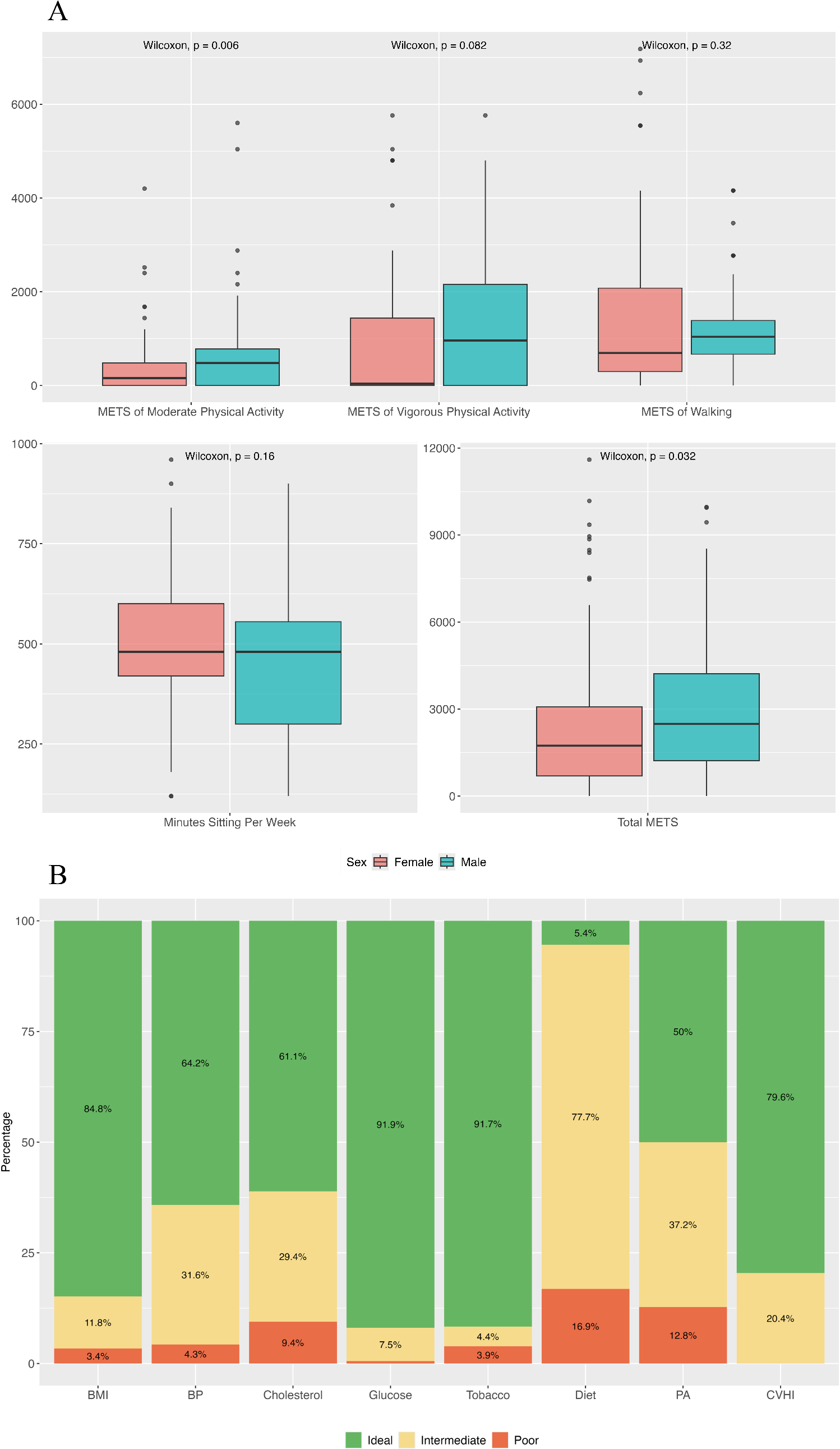
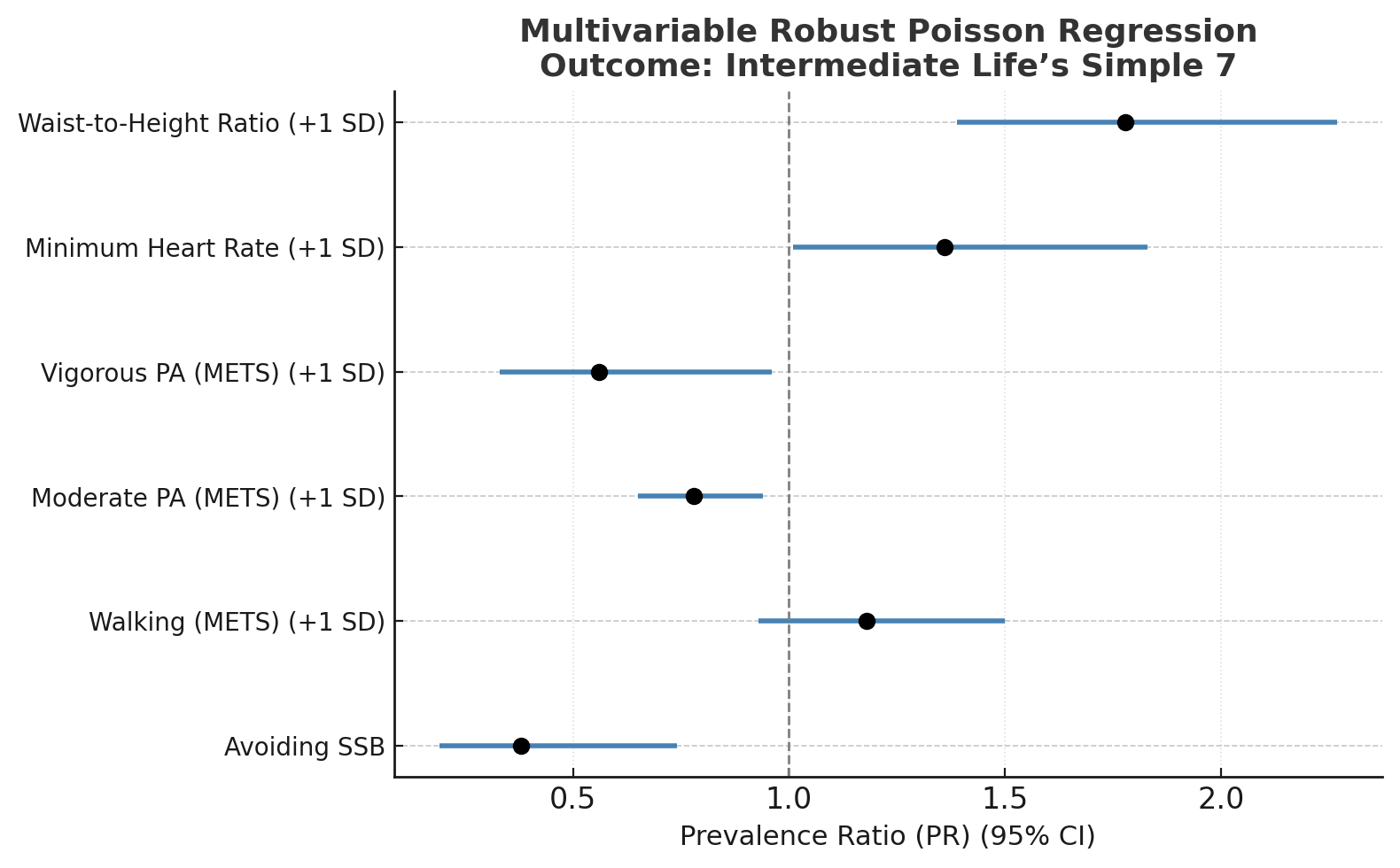
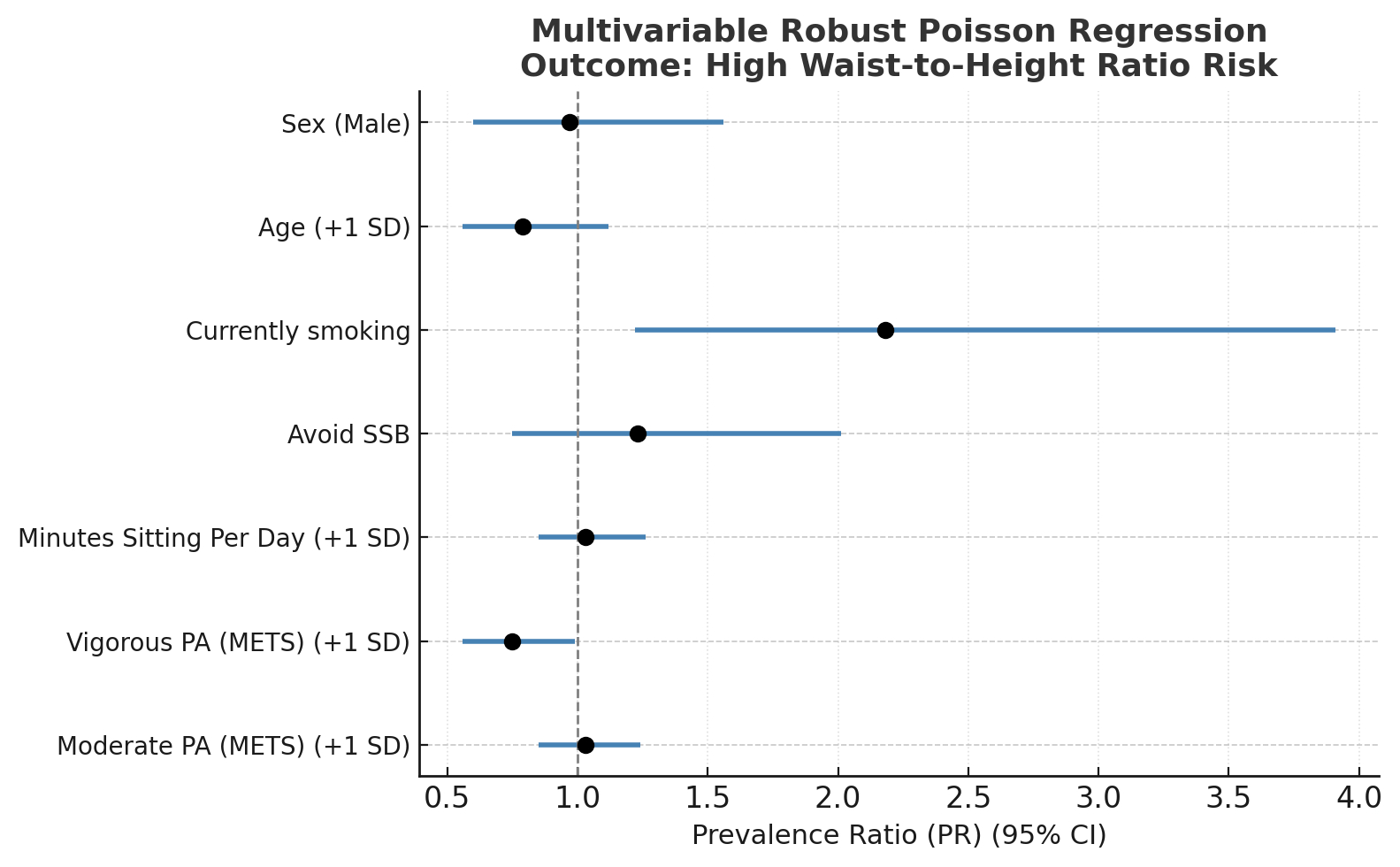
Abstract Body: Background: Cardiovascular disease (CVD) is the leading cause of death globally, and risk factors often manifest during adolescence and young adulthood. Medical students undergo significant lifestyle changes that can elevate their cardiometabolic risk. Therefore, we conducted an evaluation to determine the associations between physical activity (PA), cardiovascular health profile among first-year medical students. Methods: We performed a cross-sectional study at a Colombian medical school (2019–2020). PA was evaluated with the International Physical Activity Questionnaire, cardiovascular health with the AHA’s Life’s Simple 7 (LS7), and CVD risk through Waist-to-Height Ratio (WHtR). Predictors of intermediate LS7 and high WHtR-based CVD risk were identified using robust Poisson regression models. Results: We included 188 participants (61.2% female; median age 18 years). Most achieved ideal LS7 scores (79.6%), yet 43.3% of those with complete WHtR data (n=178) were categorized as high CVD risk. Intermediate or poor L7S outcomes were especially frequent for diet (94.6%), PA (50.0%), cholesterol (38.8%), and blood pressure (35.9%). Male students reported greater moderate PA and energy expenditure. In multivariable models, higher WHtR (PR 1.78, 95% CI 1.39–2.27) and resting heart rate (PR 1.36, 95% CI 1.01–1.83) predicted intermediate LS7. Protective factors included vigorous PA (PR 0.56, 95% CI 0.33–0.96), moderate PA (PR 0.78, 95% CI 0.65–0.94), and avoiding sugar-sweetened beverages (PR 0.38, 95% CI 0.19–0.74). Current smoking more than doubled the prevalence of high WHtR-CVD risk (PR 2.18, 95% CI 1.22–3.91), whereas vigorous PA reduced it (PR 0.75, 95% CI 0.56–0.99). Conclusions: This study shows that cardiovascular vulnerability is already detectable in young medical students. The findings support WHtR as a practical screening marker and emphasize the importance of incorporating structured physical activity and lifestyle education into medical curricula to strengthen long-term cardiovascular health and counseling.
Cespedes, Jaime
(
Fundación Cardioinfantil - Instituto de Cardiologia
, Bogota , Bogota , Colombia )
Sanchez-sanchez, Elizabeth
(
Fundación Cardioinfantil - Instituto de Cardiologia
, Bogota , Bogota , Colombia )
Tovar, Gustavo
(
Universidad del Rosario
, Bogota , Colombia )
Ladino-marin, Erika
(
Universidad del Rosario
, Bogota , Colombia )
Briceno, German
(
Fundación Cardioinfantil - Instituto de Cardiologia
, Bogota , Bogota , Colombia )
Camacho Carvajal, Tatiana
(
Universidad del Rosario
, Bogota , Colombia )
Guerrero, Sara
(
Universidad del Rosario
, Bogota , Colombia )
Tordecilla, Alejandra
(
Universidad del Rosario
, Bogota , Colombia )
Trompetero Gonzalez, Andrea-catalina
(
Universidad del Rosario
, Bogota , Colombia )
Ramos-caballero, Diana
(
Universidad del Rosario
, Bogota , Colombia )