Association between Dynapenic Obesity and Cardiovascular Outcomes and Mortality: A Systematic Review and Meta-analysis
Abstract Body: Background:
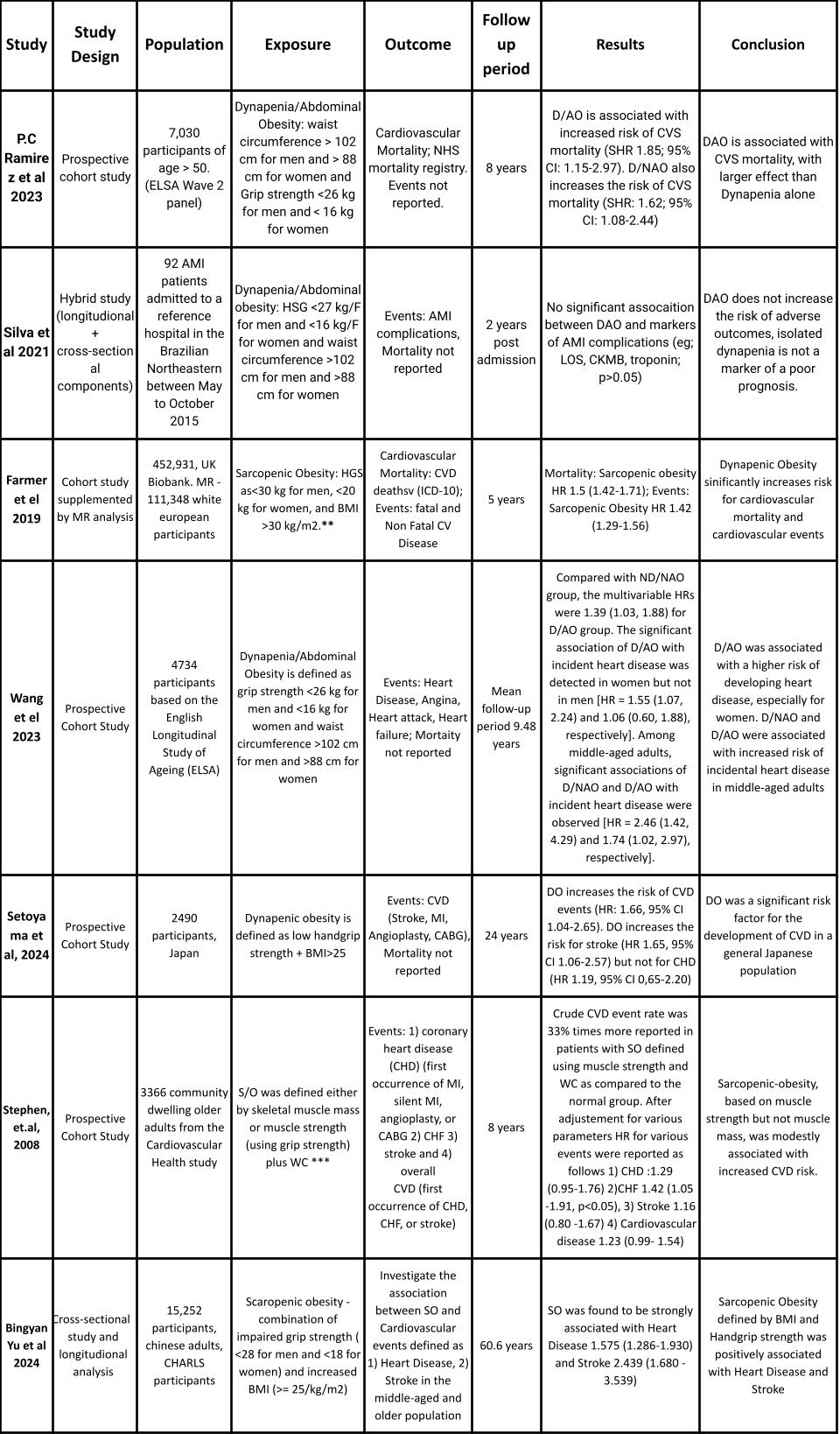
Dynapenic obesity (DAO) is increasingly recognized as a potential risk factor for cardiovascular (CV) disease. However, its impact on CV events and mortality remains underexplored. This systematic review and meta-analysis aimed to quantify the association between DAO and CV outcomes, including major CV events and CV-specific mortality.
Methods:
Literature search was conducted through May 2025 using PubMed, Scopus, and Google Scholar, with terms related to dynapenia, obesity, and CV outcomes. Eligible studies were observational cohort studies reporting adjusted effect sizes (e.g. odds ratios [ORs] or hazard ratios [HRs]) for DAO and CV events (e.g., heart disease, stroke, myocardial infarction [MI], heart failure [HF]) or CV mortality. DAO was consistently defined as reduced handgrip strength (<26 kg for men, <16 kg for women) combined with obesity, assessed by body mass index (BMI >25 or >30 kg/m2) or abdominal obesity (waist circumference >102 cm for men, >88 cm for women, or ≥85 cm and ≥80 cm in some studies). Random-effects meta-analysis calculated pooled ORs with 95% confidence intervals (CIs). Heterogeneity was assessed using the I2 statistic, and leave-one-out sensitivity analyses tested result robustness.
Results:
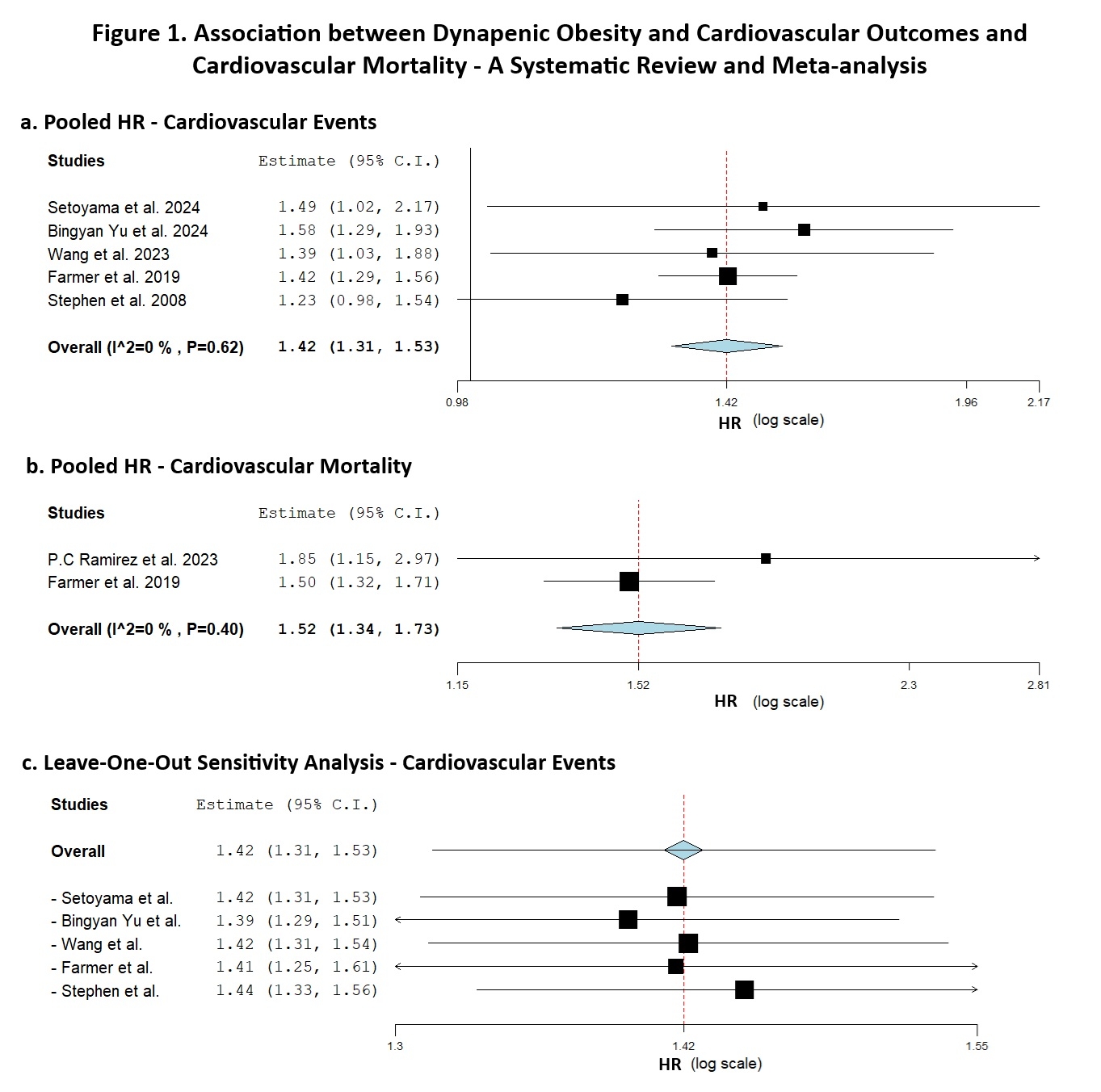
5 studies, involving over 45,000 participants, provided data on composite CV events, showing a significant association with DAO (pooled OR: 1.42, 95% CI: 1.31–1.53, p<0.01). Similarly, the association with CV mortality was significant, with a pooled OR of 1.52 (95% CI: 1.34–1.73, p< 0.01). Heterogeneity across studies was low. Leave-one-out sensitivity analyses confirmed that no single study disproportionately influenced the pooled estimates. Incident heart disease risk was higher in women (HR: 1.55, 95% CI: 1.07–2.24) than men (HR: 1.06, 95% CI: 0.60–1.88), with middle-aged adults showing elevated risks (HR 1.74–2.46). In a Japanese cohort, DAO increased CV event risk (HR 1.66), particularly for stroke (HR 1.65). Another study reported a modest CV event association (HR 1.23), most notably for HF (HR: 1.42). A Chinese cohort showed strong associations with heart disease (OR: 1.58) and stroke (OR: 2.44).
Conclusions:
This meta-analysis shows that DAO is associated with significantly higher CV events and mortality risk. Unlike BMI alone, DAO reflects both metabolic and functional decline, capturing inflammation, insulin resistance, and frailty. These findings support DAO as a stronger cardiometabolic risk marker than obesity alone.
Patel, Darsh
(
Mercy Catholic Medical Center
, Aldan , Pennsylvania , United States )
Yartha, Sai Goutham Reddy
(
Centinela Hospital Medical Center
, Inglewood , California , United States )
Patel, Sanskar
(
Government medical college, Surat
, Surat , India )
Bhojani, Tirth
(
B.J. Medical College
, Surat , India )
Katta, Lahari
(
Osmania Medical College
, Columbia , Maryland , United States )
Thota, Akhila
(
Alluri Sitarama Raju Academy of Medical Sciences
, Eluru , India )
Reddy, Rasya
(
Kasturba Medican College, Manipal
, Ellicott City , Maryland , United States )
Kondadasula, Poshitha
(
SUNY Upstate Medical University
, Syracuse , New York , United States )
Popat, Apurva
(
Marshfield Clinic Health System
, Marshfield , Wisconsin , United States )
Desai, Rupak
(
Independent Researcher
, Atlanta , Georgia , United States )