Partnering with Community Members to Address Regional Serious Cardiac Illness Care Needs and Research Priorities: A Pilot Project to Develop a Community Advisory Board
Abstract Body: Background: Institutions that provide care for serious cardiac illness (SCI; e.g. advanced heart failure, transplant, adult congenital heart disease) often draw patients from wide geographic areas. Geography influences patients’ needs and access to care. Addressing geographic and other challenges is best done in collaboration with those experiencing them firsthand, such as through a Community Advisory Board (CAB). The University of Washington (UW) is the largest and one of only two providers of advanced therapies for SCI in the five-state WWAMI region (Washington, Wyoming, Alaska, Montana, and Idaho) and prior to this project, did not have an SCI CAB. The aim of this project was to engage SCI community members to identify: 1) priority research topics, and 2) participants’ interests, barriers, and facilitators to CAB participation.
Methods: We convened patients with SCI, their caregivers, and clinicians to participate in a series of workshops (January - June 2025) focused on discovery, design, and prioritization. Qualitative discussions iteratively informed future workshops. Notes, transcripts, polls, and other products from three virtual and one in-person workshop were analyzed using mixed methods.
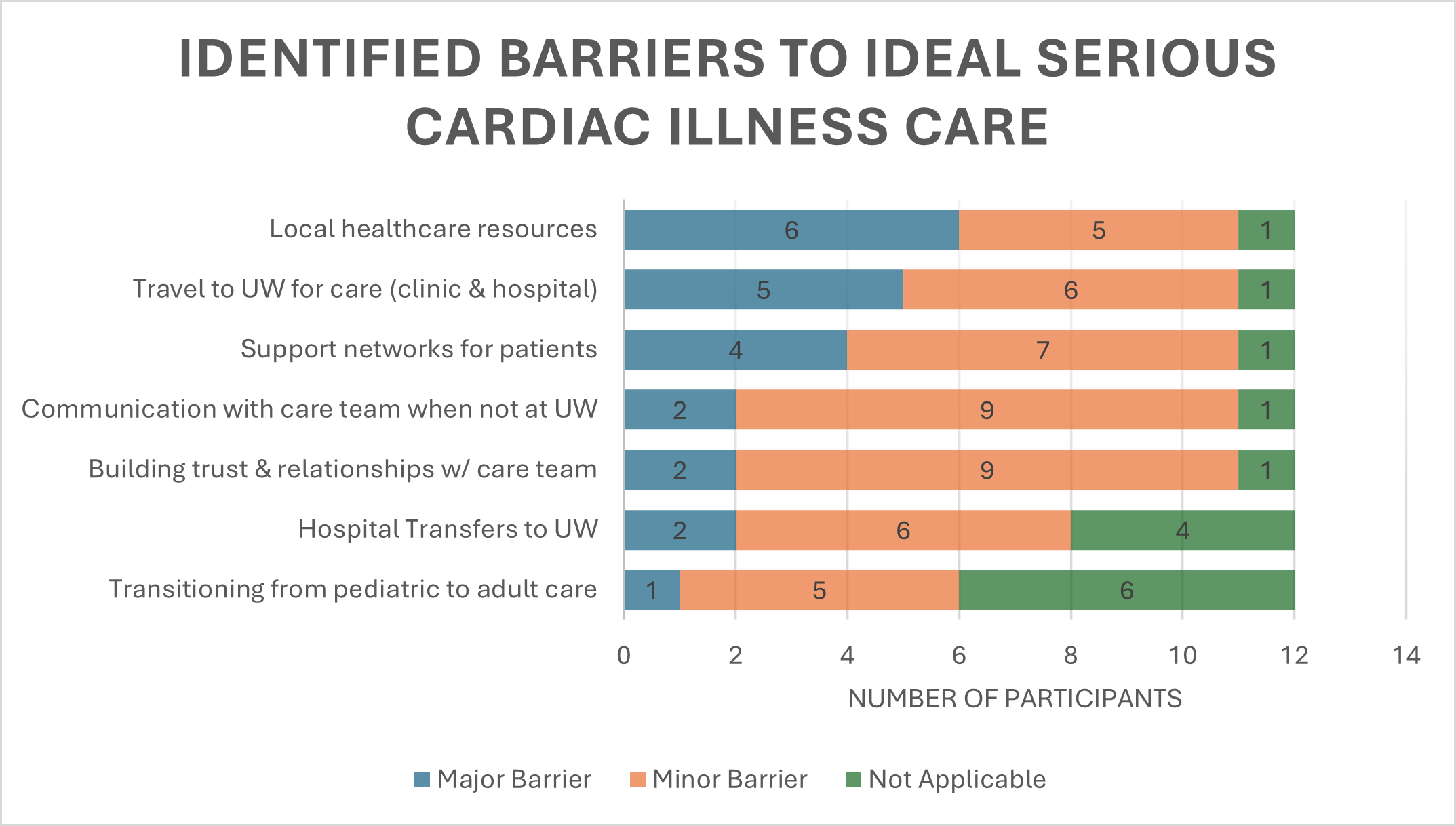
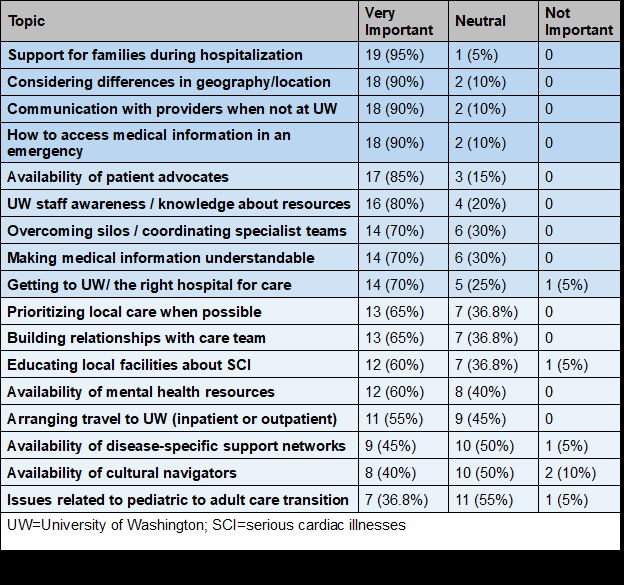
Results: Adults with SCI (n=9), their caregivers (n=5), and clinicians (n=7; nurses, physicians, advance practice providers) participated in this pilot project. Discussions of major challenges to ideal SCI care (Figure 1) and how a CAB might shape responsive efforts yielded a ranked list of priorities (Table 1). The top priority was Support for Families During Hospitalization, rated “very important” by over 90% of participants. The next 3 priorities were all ranked “very important” by over 80% of participants: Considering Differences in Geography/Location; Communication with UW Providers When Not at UW; and How to Access Medical Information in an Emergency. Participants unanimously agree that a CAB focused on SCI care in the WWAMI region has great potential to improve care and outcomes and therefore should be an institutional priority.
Conclusion: This project yielded key information to guide the development of a sustainable SCI CAB and a co-produced, ranked list of priority research topics. Next steps include proposals to support research and quality improvement efforts. This pilot project is a promising example of response to epidemiologically-related cardiovascular disease challenges using an innovative, community-engaged approach.
Blakeney, Erin
(
University of Washington
, Seattle , Washington , United States )
Millar, Alta
(
University of Washington
, Seattle , Washington , United States )
Ramirez, Maggie
(
University of Washington
, Seattle , Washington , United States )
Pamboukian, Salpy
(
University of Washington
, Seattle , Washington , United States )
Deen, Jason
(
UW Center for Indigenous Health
, Seattle , Washington , United States )
Steiner, Jill
(
University of Washington
, Seattle , Washington , United States )