UPF Intake Patterns in the Context of Overall Diet are Differently Associated with Self-Reported Health Status
Abstract Body: Introduction Excess ultra-processed food (UPF) intake has been consistently associated with adverse health. Yet, UPFs are heterogeneous ranging from possibly beneficial (e.g., whole-grain bread) to harmful (e.g., sugary drinks). Dietary guidance should consider UPF subgroups’ contribution to diet, as their convenience, affordability, and shelf stability may support healthy eating, especially in low income households.
Objectives To evaluate how patterns of UPF subgroups intake relate to diet quality and self-reported health status.
Methods We conducted a secondary cross-sectional analysis of 1,118 Supplemental Nutrition Assistance-participating adults in New England in Summer 2023. Using a 155-item FFQ, we calculated Healthy Eating Index (HEI) 2015 total and component scores and categorized foods into 4 NOVA groups and 19 mutually exclusive UPF subgroups. We used k-means cluster analysis to group UPF subgroups and 12 Dietary Guidelines-based food groups, selecting 4 clusters based on relevant metrics. We compared UPF subgroups, food groups, diet quality, and health status across clusters using chi-square and Kruskal-Wallis tests; logistic regressions assessed associations between clusters and self-reported health status.
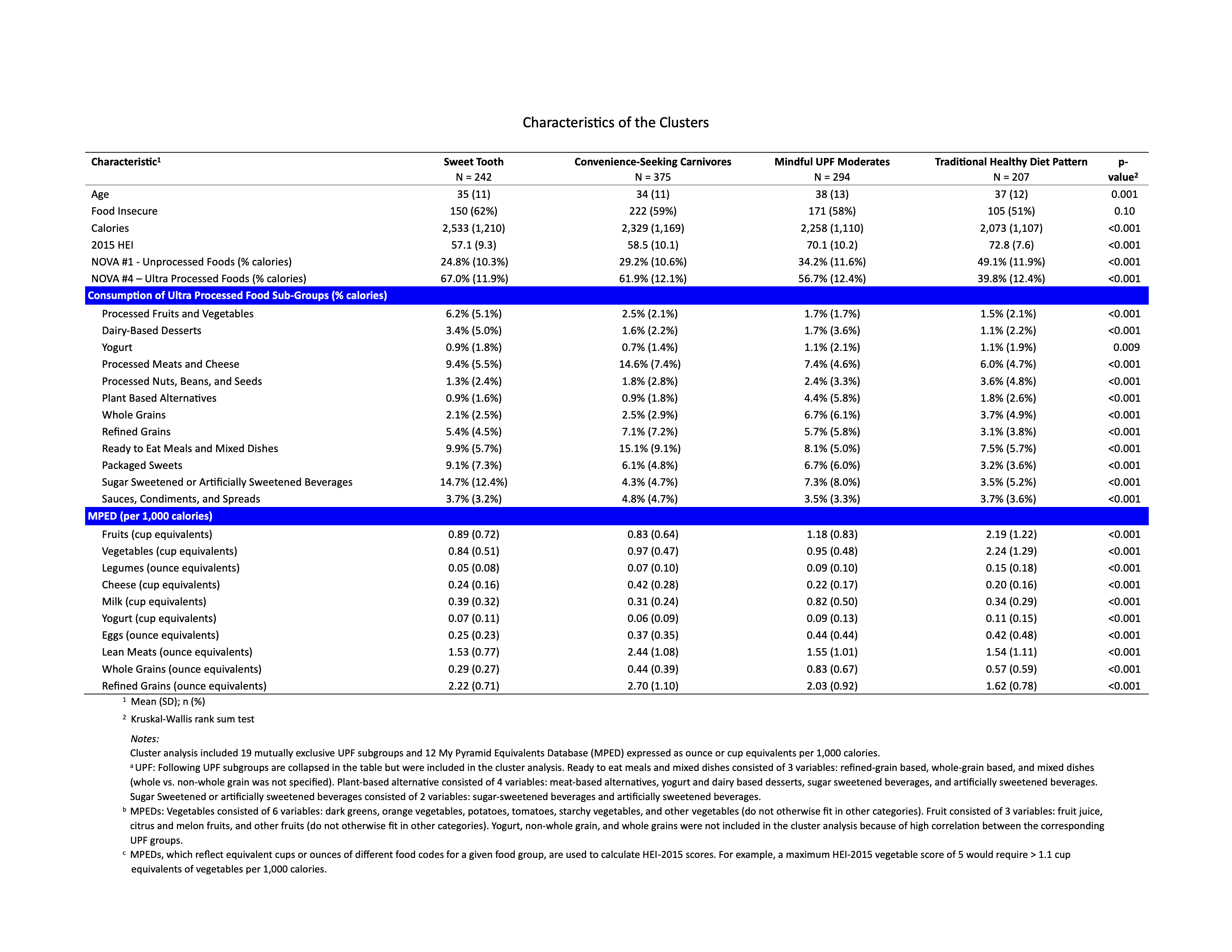
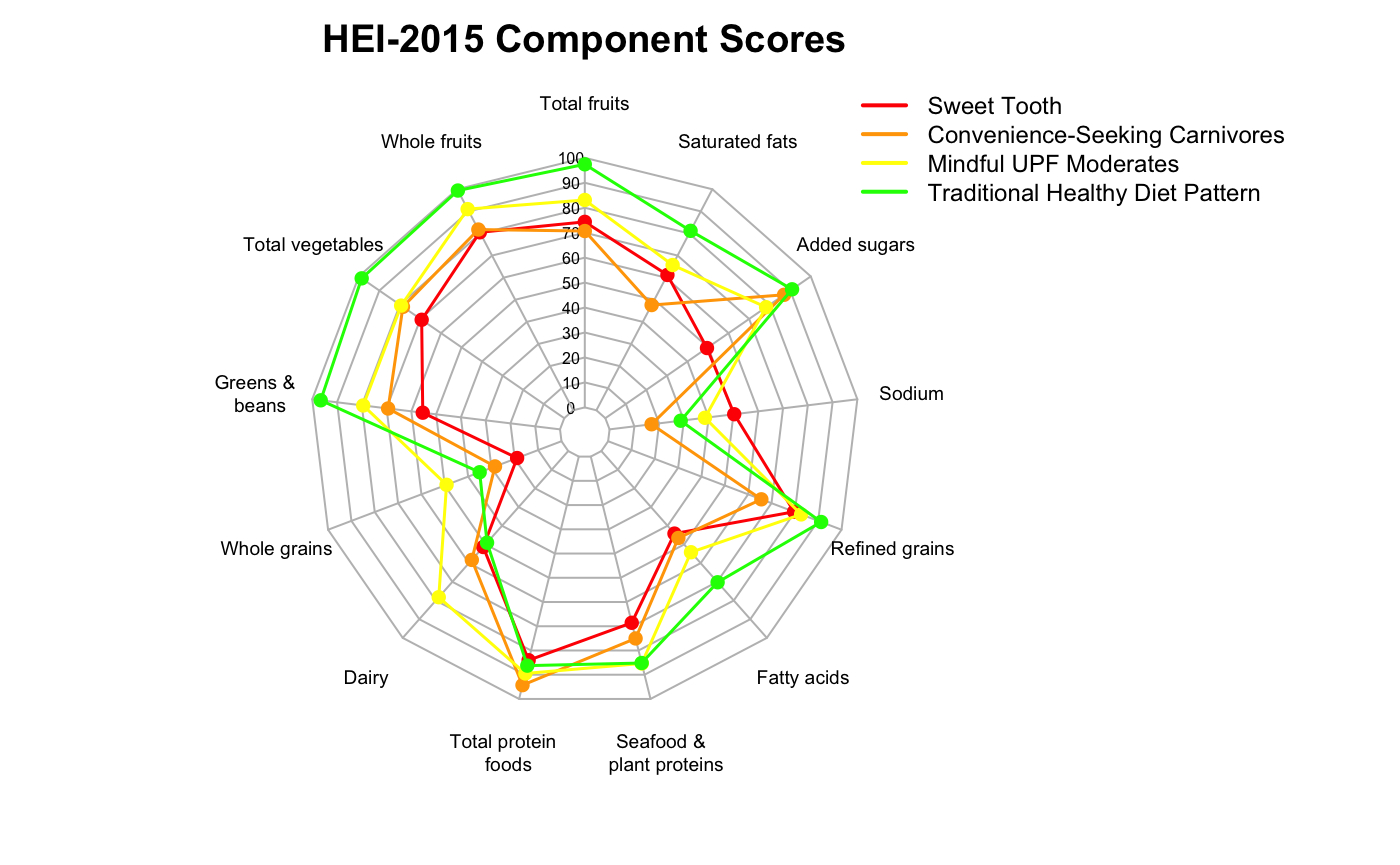
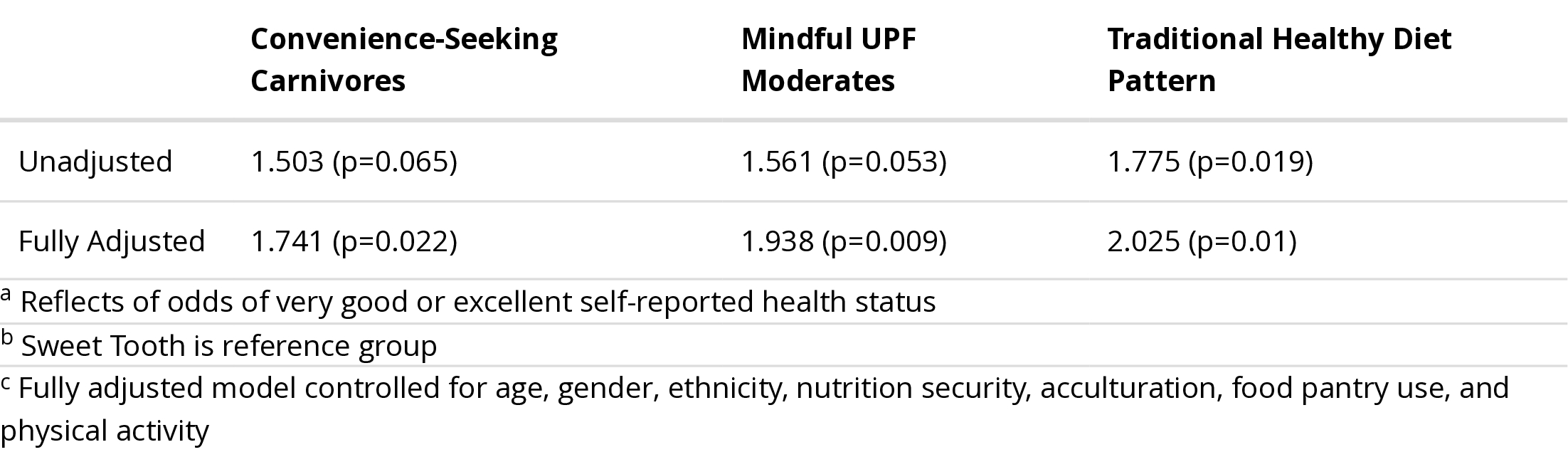
Results Across 4 clusters, participants in healthier clusters were older, but food insecurity was highest in the Sweet Tooth cluster (Tbl 1). HEI-2015 scores (57-73) and UPF intake (40-70% of calories) varied. The Sweet Tooth and Convenience-Seeking Carnivores clusters had the lowest HEI-2015 scores and highest UPF intake, characterized either by high intake of sugary UPFs (e.g. sugary drinks/dairy based desserts) or ready-to-eat UPFs, processed meats/cheeses, and lean meat, respectively. Despite differing UPF intake, Mindful UPF Moderates and Traditional Healthy clusters had higher HEI-2015 scores, with the former reporting the highest dairy and whole grain sub-scores (Fig 1). Compared to the Sweet Tooth cluster, the 3 other clusters had 1.7-2.0 greater odds of very good/excellent health (Tbl 2).
Conclusion We identified 4 clusters with varied intake of UPF subgroups. Despite high UPF intake in 3 clusters, only the Sweet Tooth cluster was associated with worse health compared to the healthiest cluster, indicating that the pairing of UPF subtypes and less processed foods may be important to consider for UPF dietary guidance. Our findings suggest not all UPF patterns carry equal health risks and that UPF subgroup intake may modify health effects.
Elenio, Emily
(
Brown University
, Ridgefield , New Jersey , United States )
Tovar, Alison
(
Brown University
, Ridgefield , New Jersey , United States )
Vadiveloo, Maya
(
UNIVERSITY RHODE ISLAND
, Kingston , Rhode Island , United States )