
Logo

American Heart Association

  12
  0


Final ID: Mon034

FDA-approved ROCK Inhibitor Functions as a New Drug to Treat Sinus Node Dysfunction

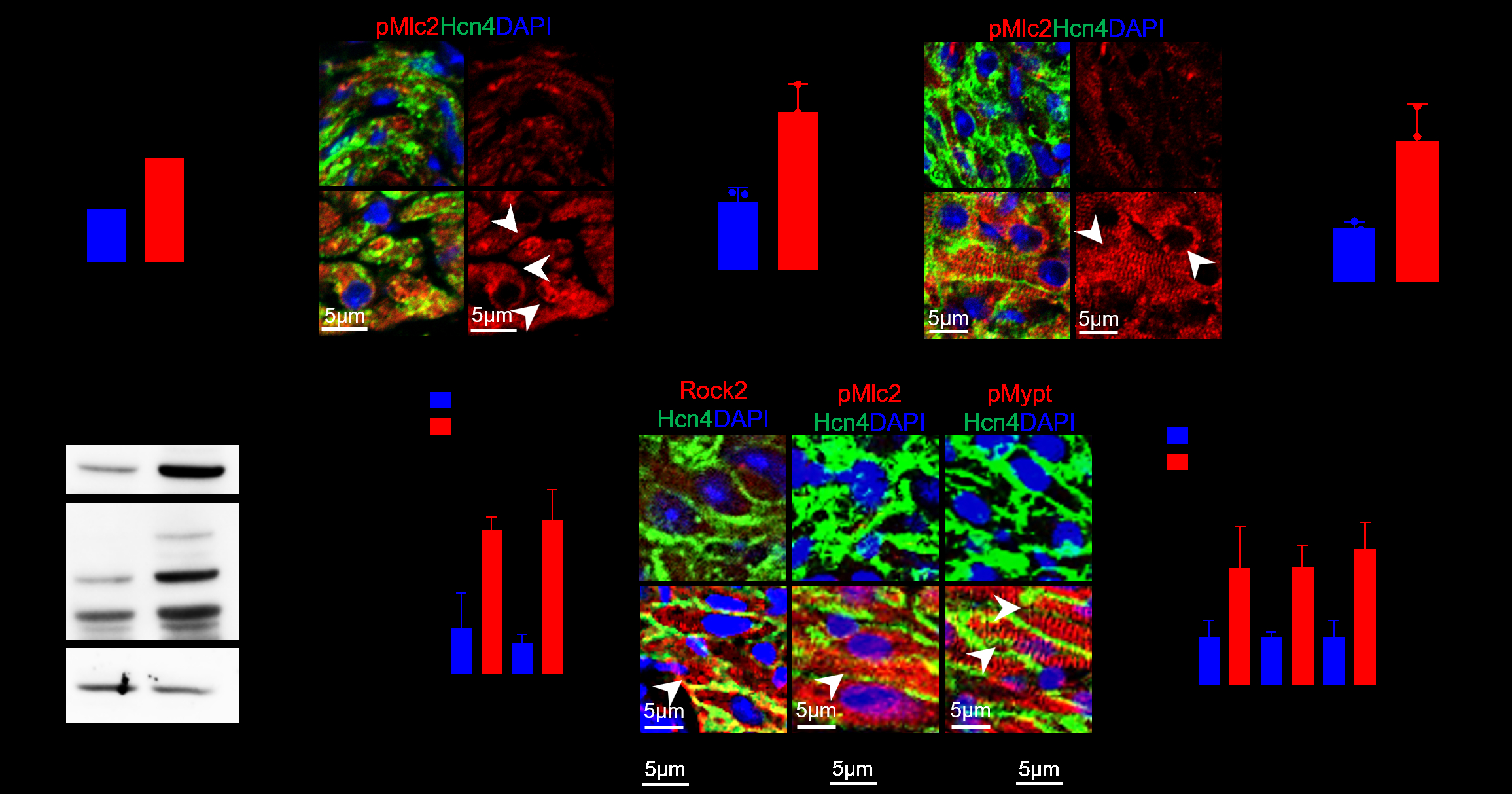
Abstract Body: Sinus node dysfunction (SND), also called sinoatrial node dysfunction, is a disorder characterized by impaired pacemaker activity of the sinoatrial node (SAN), leading to manifestations such as arrhythmias, sinus arrest, and even sudden death. Fibrosis represents a major cause of SND. To date, there is no approved pharmacologic therapy to treat SND, which causes a therapeutic gap. ROCK2 (Rho-associated coiled-coil-containing protein kinase 2) is a serine/threonine kinase that functions as a key regulator of the cytoskeleton and has been implicated in cardiac fibrosis and hypertrophy. Recently, the FDA approved ROCK2 inhibitor KD025 to treat chronic graft versus host disease. Meanwhile, it is under clinical trial for several fibrosis-related diseases, such as idiopathic pulmonary fibrosis. However, ROCK2 functions in SAN are largely unknown, and whether KD025 may represent a viable therapeutic strategy remains unknown. We found that KD025 can function as a new drug to treat SND and reduce SAN fibrosis.

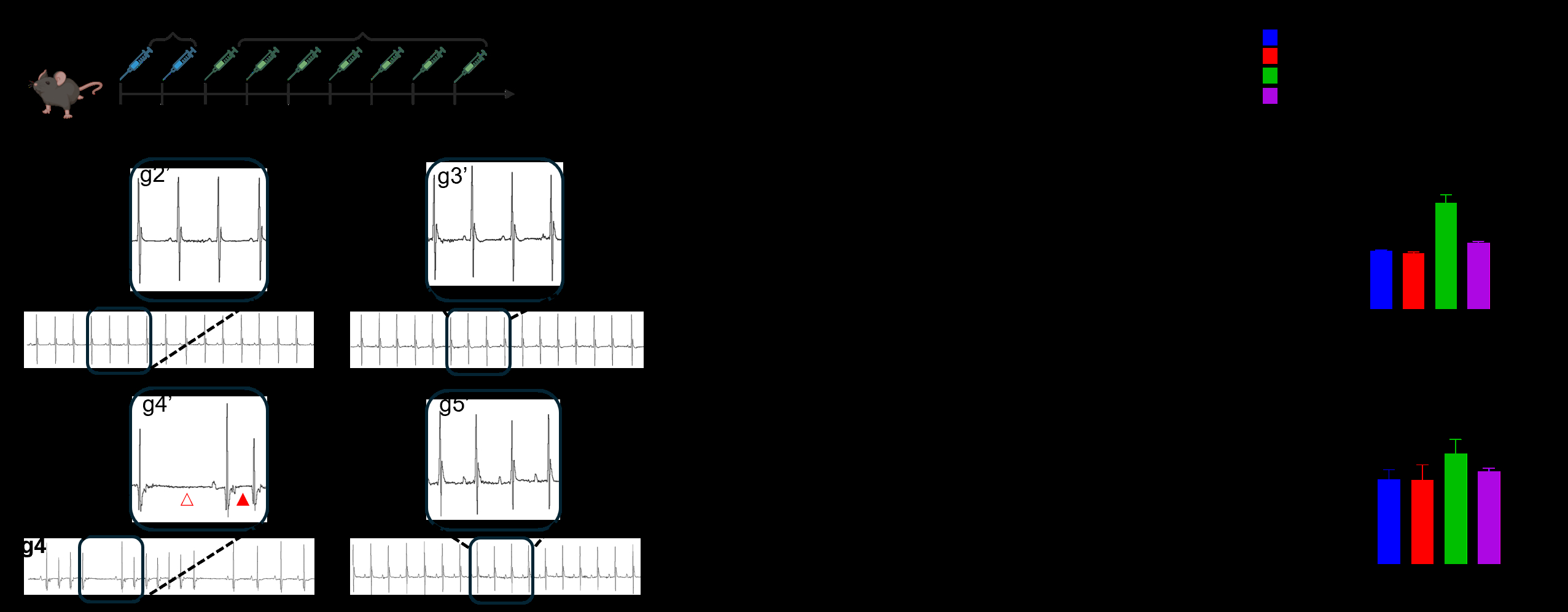
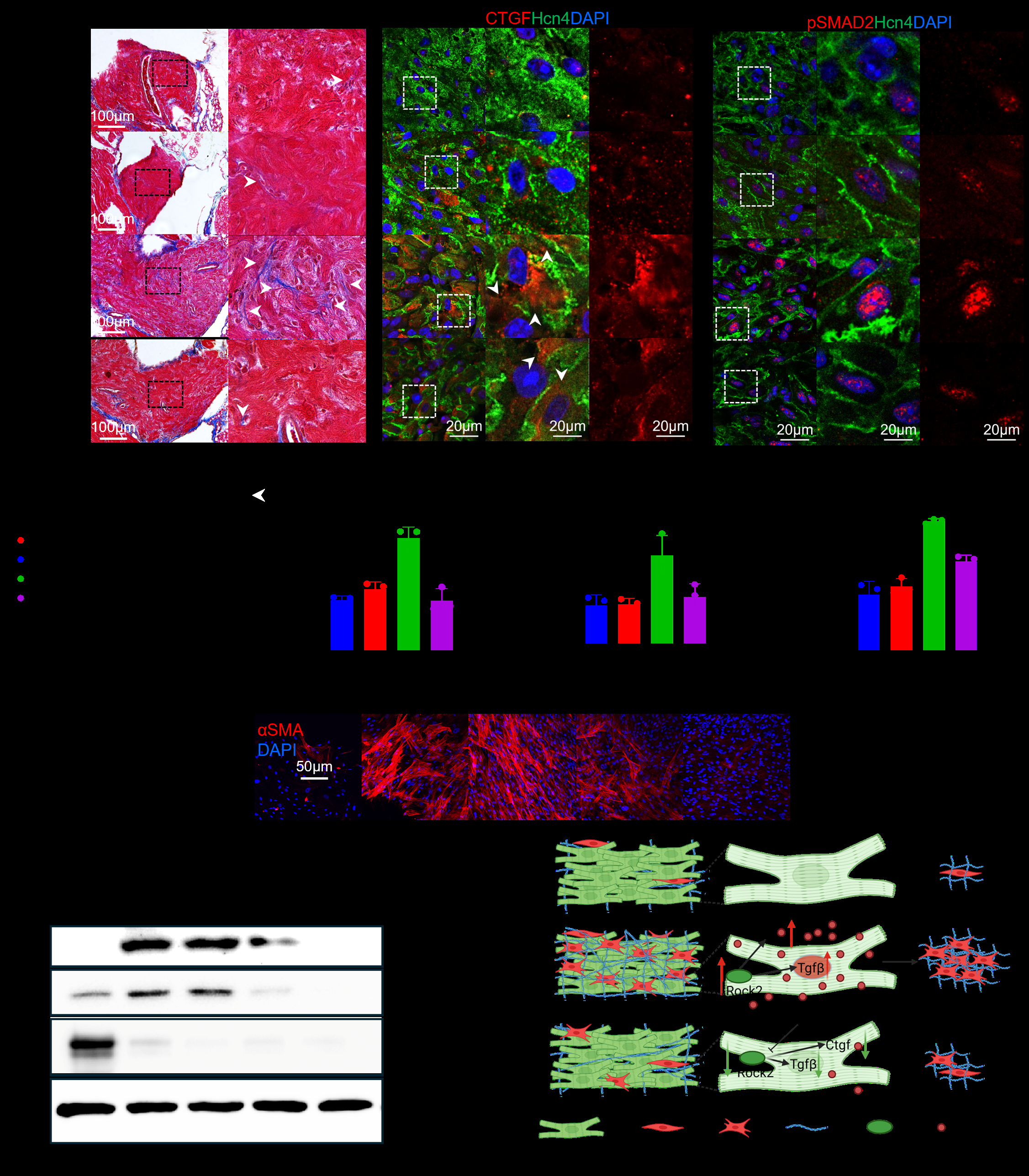
We treated 2-month-old control and Lats1/2 CKO mice with KD025 and vehicles by intraperitoneal injections and performed telemetry ECG recording. Male and female C57BL/6 mice were used in this study. No significant sex-linked differences were observed in the preliminary analysis; therefore, data from both sexes were pooled for subsequent experiments. Data are presented as mean ± SEM. Statistical significance was determined using one-way analysis of variance (ANOVA), followed by Tukey's post-hoc test for multiple comparisons. A p-value of less than 0.05 was considered statistically significant. All analyses were performed using Graphpad Prism 10. A minimum of 3 mice per group was used for all experiments to ensure reproducibility. Compared to controls, Lats1/2 CKO mice treated with vehicles exhibited hallmark features of SND , yet KD025 treatment (100 mg/kg) ameliorated SND. KD025-treated Lats1/2 CKO mice showed a significant restoration of PR and RR intervals, along with a substantial reduction in arrhythmia burden. We further found that KD025 alleviates fibrosis by inhibiting the CTGF and TGF-β pathways. We also confirmed these findings using human iPSC-derived pacemaker cells and human cardiac fibroblasts. In summary, our study identifies increased ROCK2 as a central pathogenic mediator of SND, and demonstrates that pharmacologic inhibition with the FDA-approved compound KD025 can ameliorate arrhythmia and fibrosis in a SND mouse model.
  • Cheng, Zixiu  ( University of Texas Health Center at Houston , Houston , Texas , United States )
  • Zheng, Mingjie  ( University of Texas Health Center at Houston , Houston , Texas , United States )
  • Xu, Ying  ( University of Houston , Houston , Texas , United States )
  • Truong, Nam Van  ( University of Texas Health Center at Houston , Houston , Texas , United States )
  • Quinn, Julianna  ( University of Texas Health Center at Houston , Houston , Texas , United States )
  • Cao, Yuhan  ( UT Health Houston , Houston , Texas , United States )
  • Chen, Wen  ( University of Texas Health Center at Houston , Houston , Texas , United States )
  • Li, Xiao  ( Baylor College of Medicine , Houston , Texas , United States )
  • Mcconnell, Bradley  ( University of Houston , Houston , Texas , United States )
  • Wang, Jun  ( University of Texas Health Center at Houston , Houston , Texas , United States )
  • Author Disclosures:
Meeting Info:

Basic Cardiovascular Sciences 2026

2026

Boston, Massachusetts

Session Info:

Poster Session 1

Monday, 07/13/2026 , 04:30PM - 07:00PM

Poster Session and Reception

More abstracts on this topic:
Association of alternating PR intervals with paroxysmal atrioventricular block in patients with right bundle branch block following cardiac surgery

Olleik Farah, Istvanic Filip, Pacifici Stefano, Ceron Carlos, Liu Tong, Gao Chuanyu, Yan Gan-xin

Cardiac unloading via a transvalvular pump reduces arrhythmia burden following myocardial ischemia / reperfusion by preserving coronary microcirculation and cardiomyocyte nanostructure

Ammon Madison, Melo Pedro, Nowak Kacper Czeslaw, Burkhoff Daniel, Kaluza Grzegorz, Kyrollos Alfred, Curran Jerry, Unudurthi Sathya, Veeraraghavan Rengasayee

More abstracts from these authors:
A Human Pacemaker Cell Aging Model Reveals Conserved Molecular and Functional Remodeling of the Sinoatrial Node

Truong Nam, Manwani Bharti, Mcconnell Bradley, Lee Dung-fang, Wang Jun, Zheng Mingjie, Xu Ying, Cheng Zixiu, Quinn Julianna, Phan Trinh, Chen Xiaotong, Zhu Jiajun, Chen Shuibing

Decoding Chamber-Specific Cardiac Microenvironments and Macrophage Heterogeneity

Wang Xin, Tsai Chang-ru, Zhao Yi, Meng Fansen, Steimle Jeffrey, Wang Jun, Martin James, Li Xiao

You have to be authorized to contact abstract author. Please, Login
Not Available