
Logo

American Heart Association

  5
  0


Final ID: Tue170

The Role of Small Proline Rich Protein 2B in Regulating Cardiac Plasticity and Fibrosis

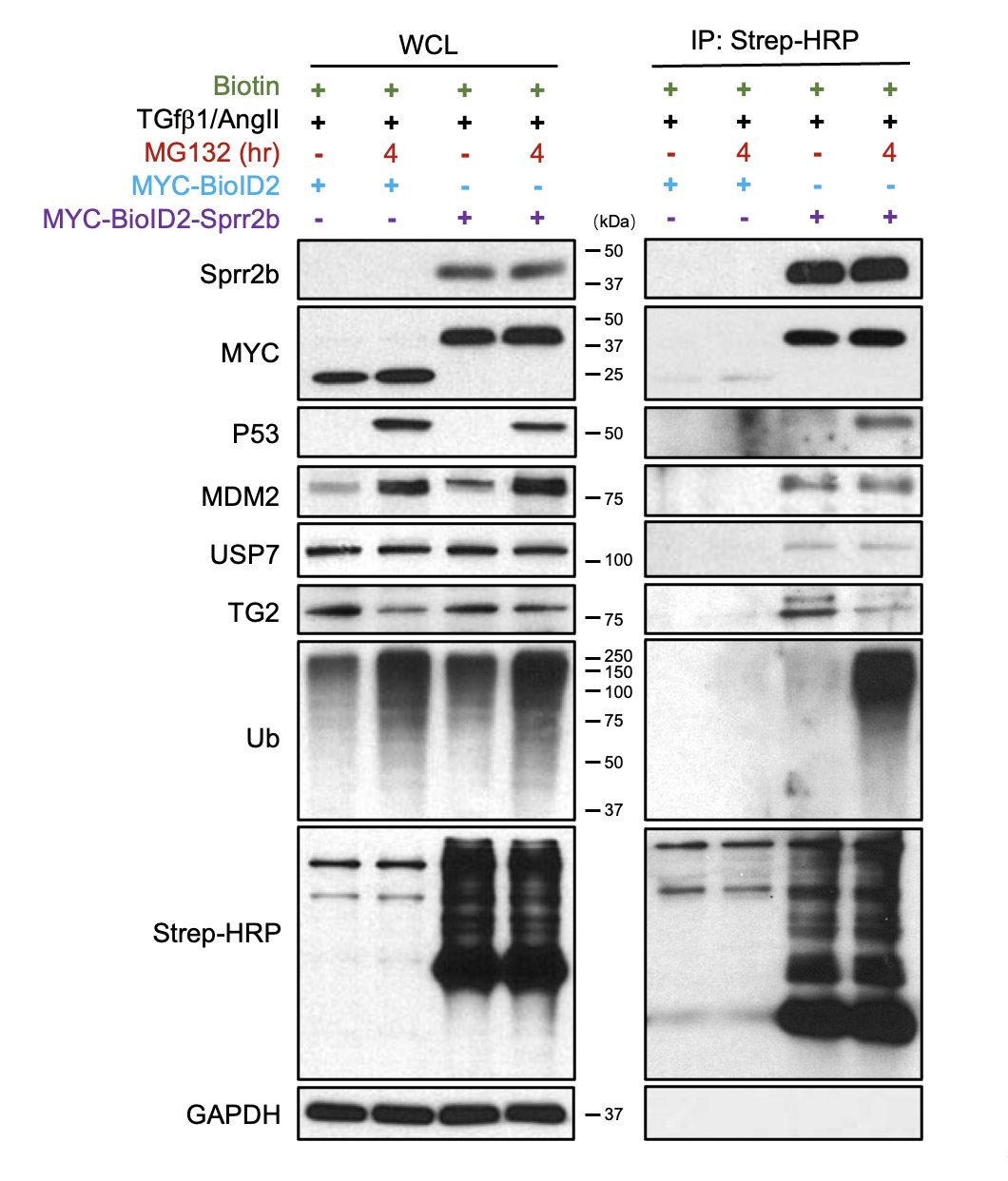
Abstract Body: Introduction: Cardiac fibrosis is characterized by cardiac fibroblasts (CFs) accumulation, which mediates scar formation. Mechanisms controlling CF plasticity remain unclear, limiting effective therapies development. Our lab found that the Small Proline-Rich Protein 2B (SPRR2B) is induced in pressure overload and promotes CF proliferation and fibrosis via interaction with P53. Preliminary data further suggest that SPRR2B is engaged in histone modification, including interaction with P53 epigenetic reader BRD4. This study aimed to define the in vivo role and mechanisms of SPRR2B in CF plasticity and fibrosis.

Hypothesis: SPRR2B regulates epigenetic events in CF, leading to downstream fibrosis-related gene expression and cardiac fibrosis progression.

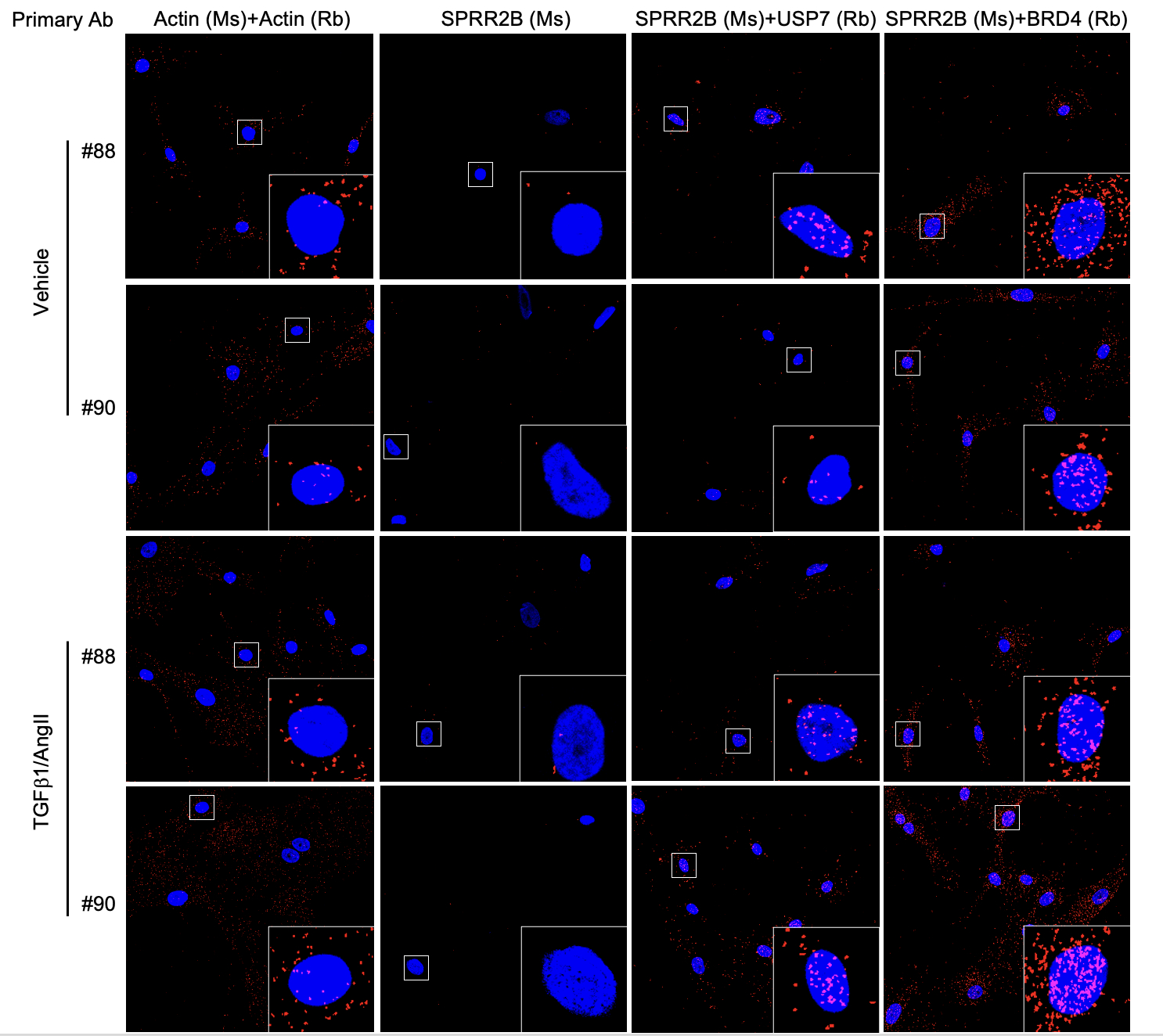
Methods: SPRR2B overexpression (OE) and knockout (KO) mice were subjected to TAC surgery to induce pressure overload. Post-TAC proliferation level was measured by Ki67 staining and BrdU pause-chase assay, and fibrosis by picrosirius red staining. Hypertrophy was quantified by HW/TL ratio and WGA staining. 3T3 cell lines stably expressing MYC-BioID2-SPRR2B or MYC-BioID2 were generated, and analyzed for SPRR2B interactome by IP-MS. Human primary heart failure fibroblasts were utilized to validate SPRR2B interactions with P53 and IP-MS candidate proteins by Co-IP and proximity ligation assay.

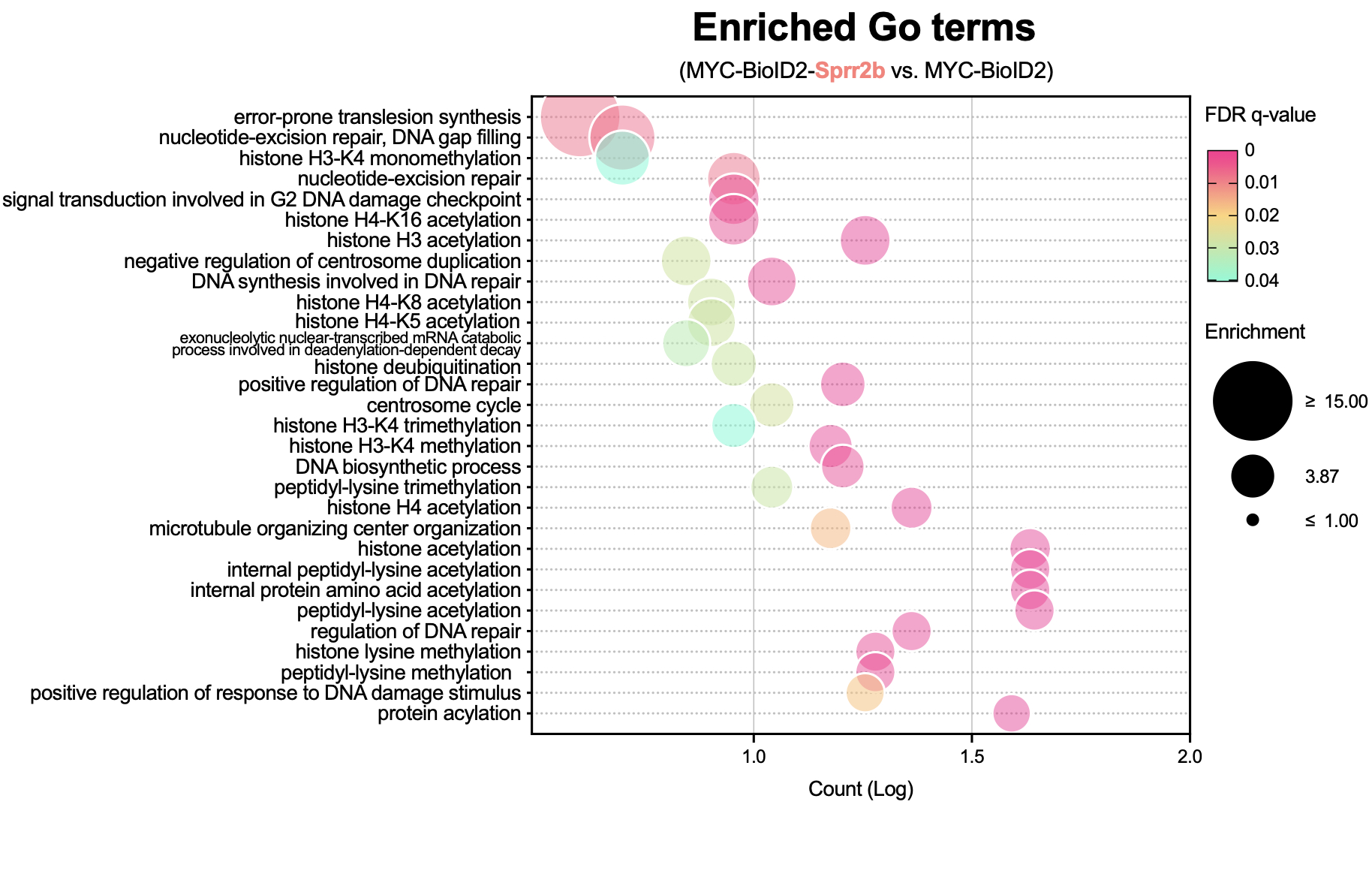
Results: OE mice exhibited elevated hypertrophy and proliferation, including increased HW/TL ratio, myocyte cross-sectional area, Ki67 nuclear translocation and BrdU incorporation versus controls. OE mice developed increased fibrosis, whereas KO mice partially reduced interstitial fibrosis but not perivascular fibrosis. The SPRR2B stable line showed increased proliferation and reduced aSMA secretion versus controls. IP-MS identified enrichment of proteins involved in histone modification, DNA binding, and peptidyl-lysine modification, suggesting SPRR2B may act as an epigenetic modulator. SPRR2B interaction with BRD4 and P53 were confirmed in stable lines, human patients and Alphafold3.

Conclusions: SPRR2B promotes cardiac fibrosis in vivo, while persistent fibrosis in KO mice suggests compensatory pathways may exist. IP-MS and human patient data support a role for SPRR2B in epigenetic regulation. Future studies will use CUT&RUN-seq to analyze histone modification targets, and determine whether SPRR2B affects histone regulator localization, competitive binding, complex assembly, or activity.
  • Liu, Xiaoyi  ( university of rochester , Rochester , New York , United States )
  • Small, Eric  ( UNIVERSITY ROCHESTER , Rochester , New York , United States )
  • Author Disclosures:
Meeting Info:

Basic Cardiovascular Sciences 2026

2026

Boston, Massachusetts

Session Info:

Poster Session 2

Tuesday, 07/14/2026 , 04:30PM - 07:00PM

Poster Session and Reception

More abstracts on this topic:
More abstracts from these authors:
Epicardial cell derivatives – regenerative and profibrotic responses

Small Eric, Sinha Sanjay

p53 Regulates the Extent of Fibroblast Proliferation and Fibrosis in Left Ventricle Pressure Overload

Liu Xiaoyi, Mello Stephano, Ashton John, Small Eric, Burke Ryan, Lighthouse Janet, Baker Cameron, Dirkx Ronald, Kang Brian, Chakraborty Yashoswini, Mickelsen Deanne, Twardowski Jennifer

You have to be authorized to contact abstract author. Please, Login
Not Available