DR10624, a Novel Triple Agonist, Exhibits Superior Anti-Atherosclerotic Effects and Promising Potential for Clinical Translation
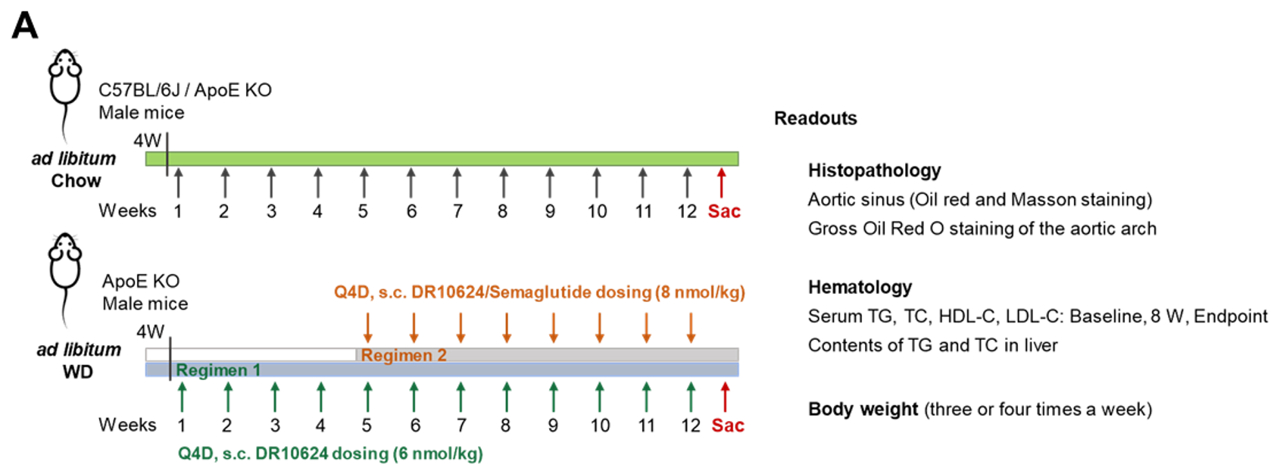
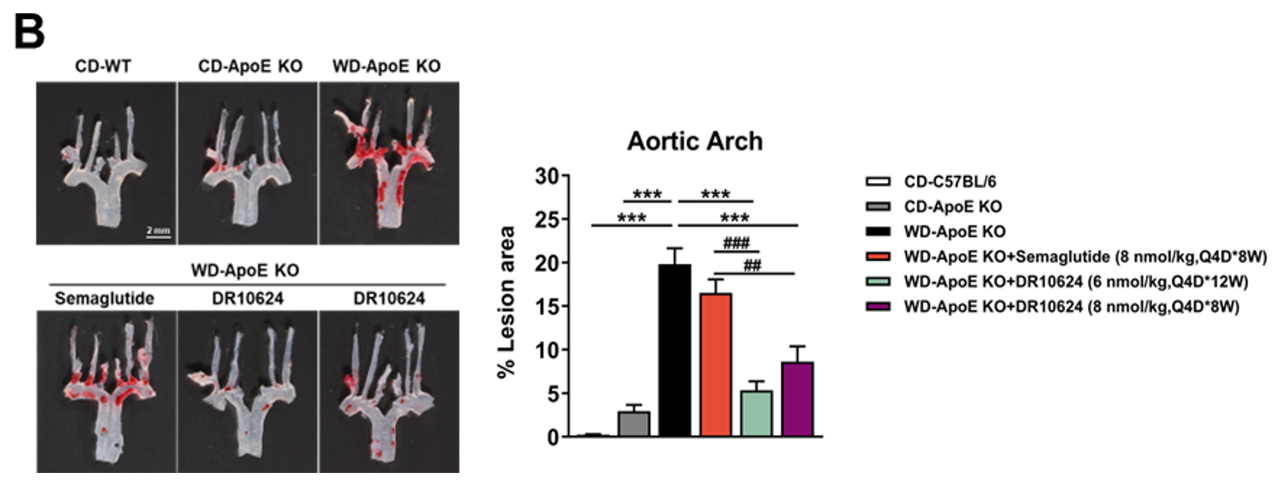
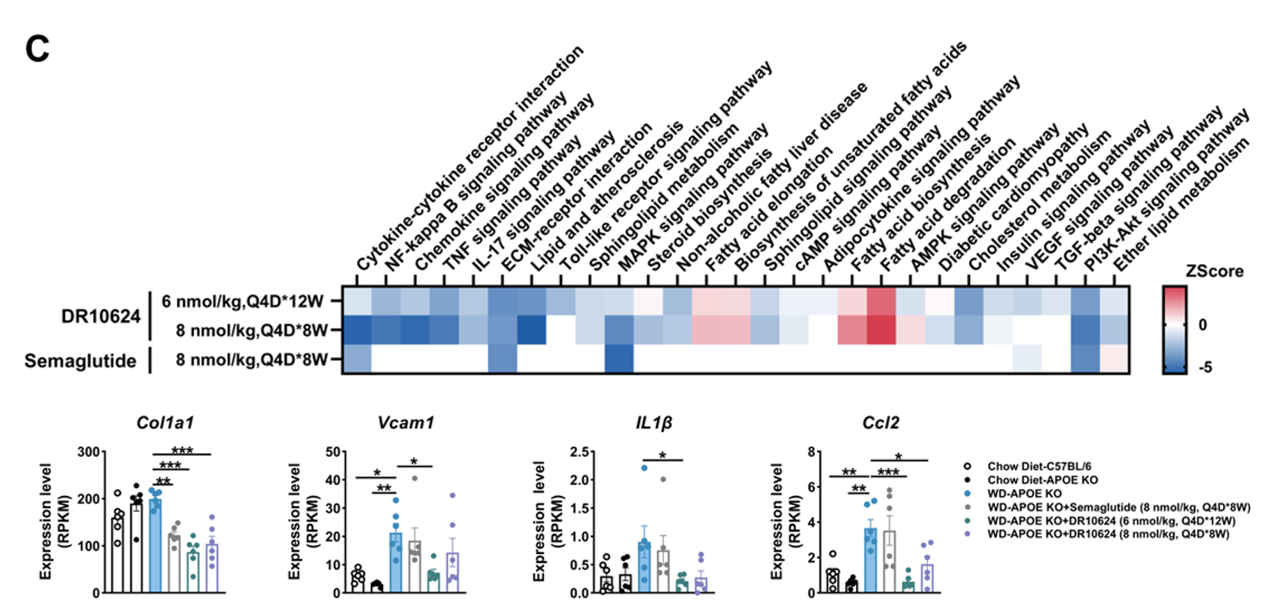
Abstract Body: Introduction DR10624, a first-in-class triple agonist against fibroblast growth factor 21 receptor (FGF21R), glucagon receptor (GCGR), and glucagon-like peptide-1 receptor (GLP-1R), has previously demonstrated potent lipid-lowering and hepatic fat-reducing effects in various clinical trials. Here, we further show that DR10624 holds substantial potential for the comprehensive treatment of atherosclerosis. Methods Atherosclerosis was induced in ApoE knockout (KO) mice fed a Western diet. Mice received subcutaneous injections of DR10624 at various doses for 8 or 12 weeks, with semaglutide used as a positive control. At the experimental endpoint, serum and hepatic lipid levels, plaque burden in the aortic arch and aortic sinus, and collagen content were measured. Aortic RNA sequencing was performed to investigate the underlying mechanisms (Figure 1A). Results DR10624 treatment significantly reduced body weight and serum levels of total cholesterol (TC), triglycerides (TG), and low-density lipoprotein cholesterol (LDL-C) in ApoE KO mice (n=7). It also markedly improved cardiovascular risk-related parameters, including non-high-density lipoprotein cholesterol (non-HDL-C) and related lipid ratios. Compared with semaglutide, a GLP-1R mono-agonist with established clinical cardiovascular benefits, DR10624 exhibited superior overall regulatory effects. Regarding vascular pathology, DR10624 significantly reduced aortic lipid deposition and decreased abnormal collagen accumulation within plaques (n=7; Figure 1B). Concurrently, it notably improved hepatic lipid profiles. Arterial transcriptomic analysis (n=6) further revealed that, as a multi-target agonist, DR10624 broadly modulates pathways involved in the pathogenesis of atherosclerosis, including inflammatory signaling, cholesterol metabolism, and extracellular matrix remodeling. Overall, DR10624 displayed greater regulatory efficacy and broader pathway coverage than semaglutide (Figure 1C). Conclusions This study demonstrates that DR10624 effectively regulates blood lipids, reduces body weight, and improves hepatic lipid metabolism. In addition, it acts directly on the vascular wall, significantly reducing plaque burden and abnormal collagen deposition. Notably, its therapeutic effects were consistent across different dosing regimens and surpassed those of semaglutide in several key parameters, highlighting DR10624 as a promising comprehensive therapeutic strategy with strong potential for clinical translation.
Duan, Wenwen
(
China Pharmaceutical University
, Nanjing , Jiangsu , China )