National Trends and Disparities in Myocardial Infarction Mortality Among Postmenopausal Women in the United States, 1999–2024.
Abstract Body: Introduction: Myocardial infarction is a major cause of death in the United States, particularly among postmenopausal women, due to increased cardiovascular risk after menopause. Although advances in cardiovascular care have reduced mortality over time, the COVID-19 pandemic has been linked to increased cardiovascular deaths.
Hypothesis: What are the long-term trends and disparities in myocardial infarction mortality among postmenopausal women in the United States from 1999–2024, and did the COVID-19 pandemic alter these trends?
Aims: To analyze trends and disparities in myocardial infarction mortality among postmenopausal women in the United States (1999–2024) and evaluate the impact of the COVID-19 pandemic.
Methodology: A retrospective analysis of the CDC WONDER Multiple Cause of Death database (1999–2024) was conducted to assess MI mortality in postmenopausal women (≥55 years) using ICD-10 codes I21–I22. Age-adjusted mortality rates (AAMRs) per 100,000 were standardized to the U.S population. Joinpoint regression estimated average annual percent change (AAPC) across age, race, urbanization, and geographic region, with p< 0.05 considered significant.
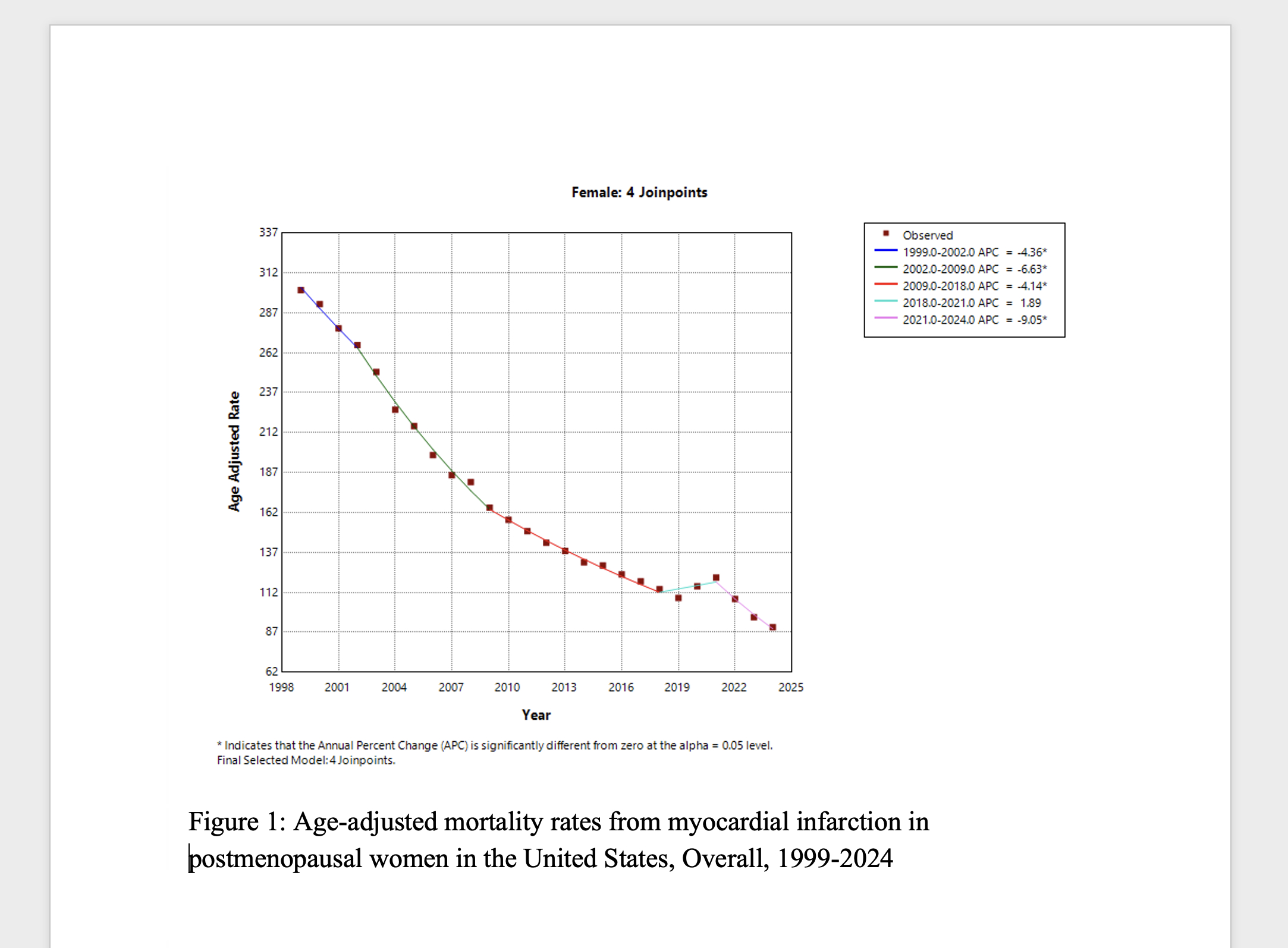
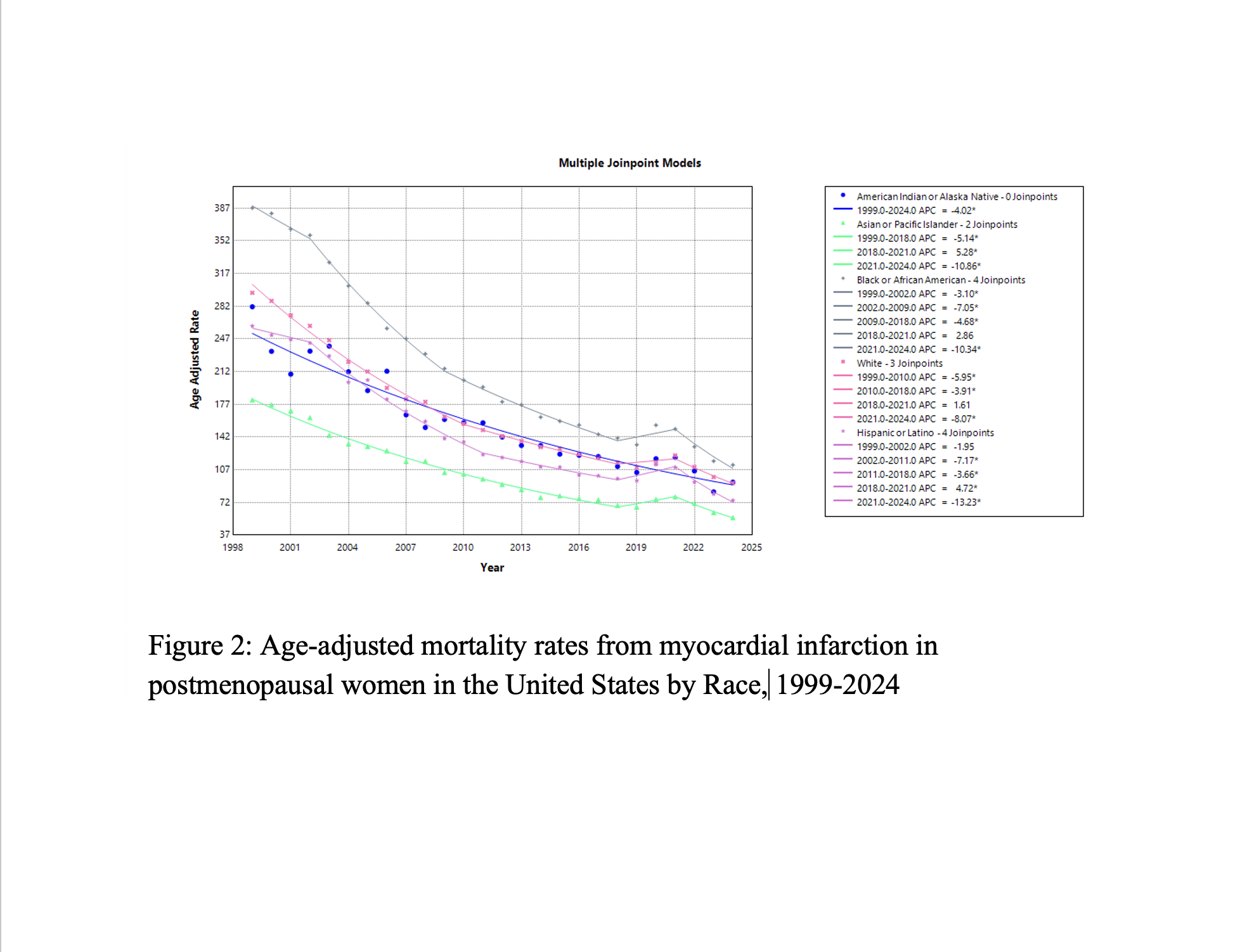
Results: Between 1999 and 2024, MI mortality among postmenopausal women in the United States declined substantially. The AAMR decreased from 301.10 to 90.17 per 100,000 (1999-2024), corresponding to an AAPC of −4.77% (95% CI −4.98 to −4.61; p < 0.001). Significant declines occurred during 1999–2002 (APC −4.36%), 2002–2009 (APC −6.63%), and 2009–2018 (APC −4.14%), followed by an increase during 2018–2021 (APC 1.89%) coinciding with the COVID-19 pandemic, and a subsequent decline during 2021–2024 (APC −9.05%) showing post-pandemic recovery. Greater declines were observed in older age groups, particularly among women aged ≥75 years. Black/African American women showed the highest mortality burden (AAPC −4.99%). Regionally, the Northeast exhibited the greatest decline in mortality (AAPC −5.45%), with larger reductions in urban areas than rural areas.
Conclusion: Although MI mortality among postmenopausal women declined from 1999–2024, a temporary reversal in this trend during the COVID-19 period suggests pandemic-related disruptions in cardiovascular care and healthcare access, emphasizing the need for timely cardiovascular interventions during future healthcare emergencies.
Usama, Muhammad
(
Atlanticare Regional Medical Center
, Atlantic City , New Jersey , United States )
Mahrukh, Mahrukh
(
University Medical and Dental College
, Faislabad , Punjab , Pakistan )
Zafar, Sahar
(
University of Medical and Dental College, Faisalabad
, Faisalabad , Pakistan )
Sohail, Shehryar
(
Jinnah Sindh Medical University
, Karachi , Punjab , Pakistan )
Kashif, Shiza
(
University of Medical and Dental College, Faisalabad
, Faisalabad , Pakistan )
Attiq, Zainab
(
University of Medical and Dental College, Faisalabad
, Faisalabad , Pakistan )
Umar Jaspal, Hajra
(
University College of Medicine and Dentistry (UCMD), The University of Lahore
, Lahore , Punjab , Pakistan )
Ihsan Ullah, Arooj
(
Fatima Jinnah Medical University
, Lahore , Punjab , Pakistan )
Nasir, Anas
(
Sheikh Zayed Medical College
, Multan , Pakistan )
Hussain, Dania
(
United Medical and Dental college
, Karachi , Pakistan )
Anwar, Zainab
(
Wellspan Good Samaritan
, Lebanon , Pennsylvania , United States )
Siddiqui, Salman
(
Atlanticare Regional Medical Center
, Atlantic City , New Jersey , United States )