
Logo

American Heart Association

  13
  0


Final ID: Tue010

A Non-Pyroptotic Nuclear Role of Gasdermin D in Skeletal Muscle Regeneration

Abstract Body: Backgroud: Skeletal muscle regeneration requires coordinated satellite cell activation. Gasdermin D (GSDMD) classically mediates pyroptosis, while its non-canonical roles in muscle repair remain unclear.
Hypothesis: GSDMD undergoes caspase-3-dependent, non-inflammatory processing during myogenesis to regulate muscle cell state transitions.
Aims: To determine the impact of GSDMD deficiency on muscle regeneration and characterize the functional roles of specific GSDMD cleavage products.
Mehods: Regeneration was assessed in GSDMD-/- and WT mice following cardiotoxin injury. Mechanistic studies utilized primary satellite cells and C2C12 myoblasts via histology, force assessment, subcellular localization, GSDMD-N13 overexpression, and transcriptomic/in silico analysis.
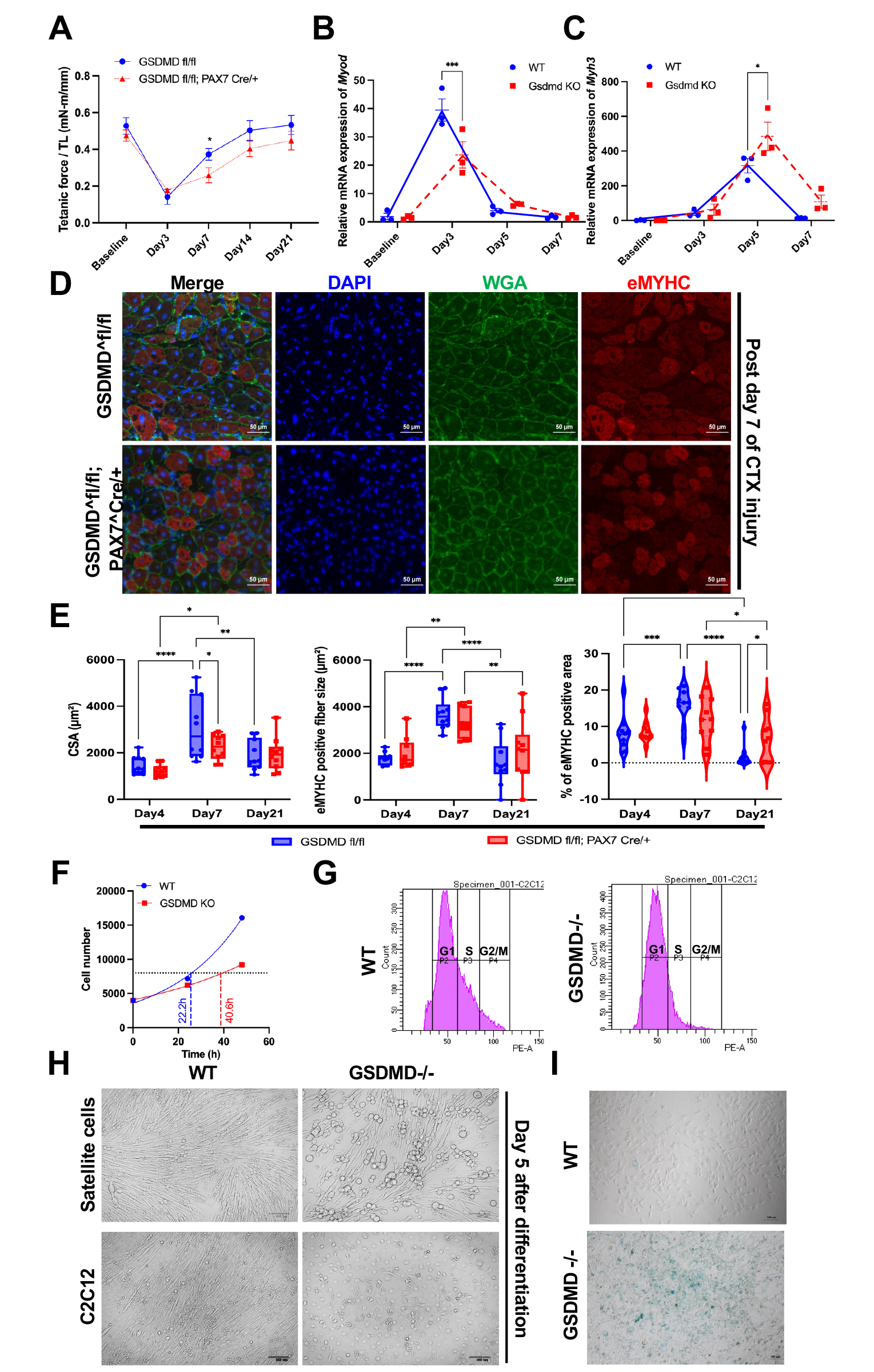
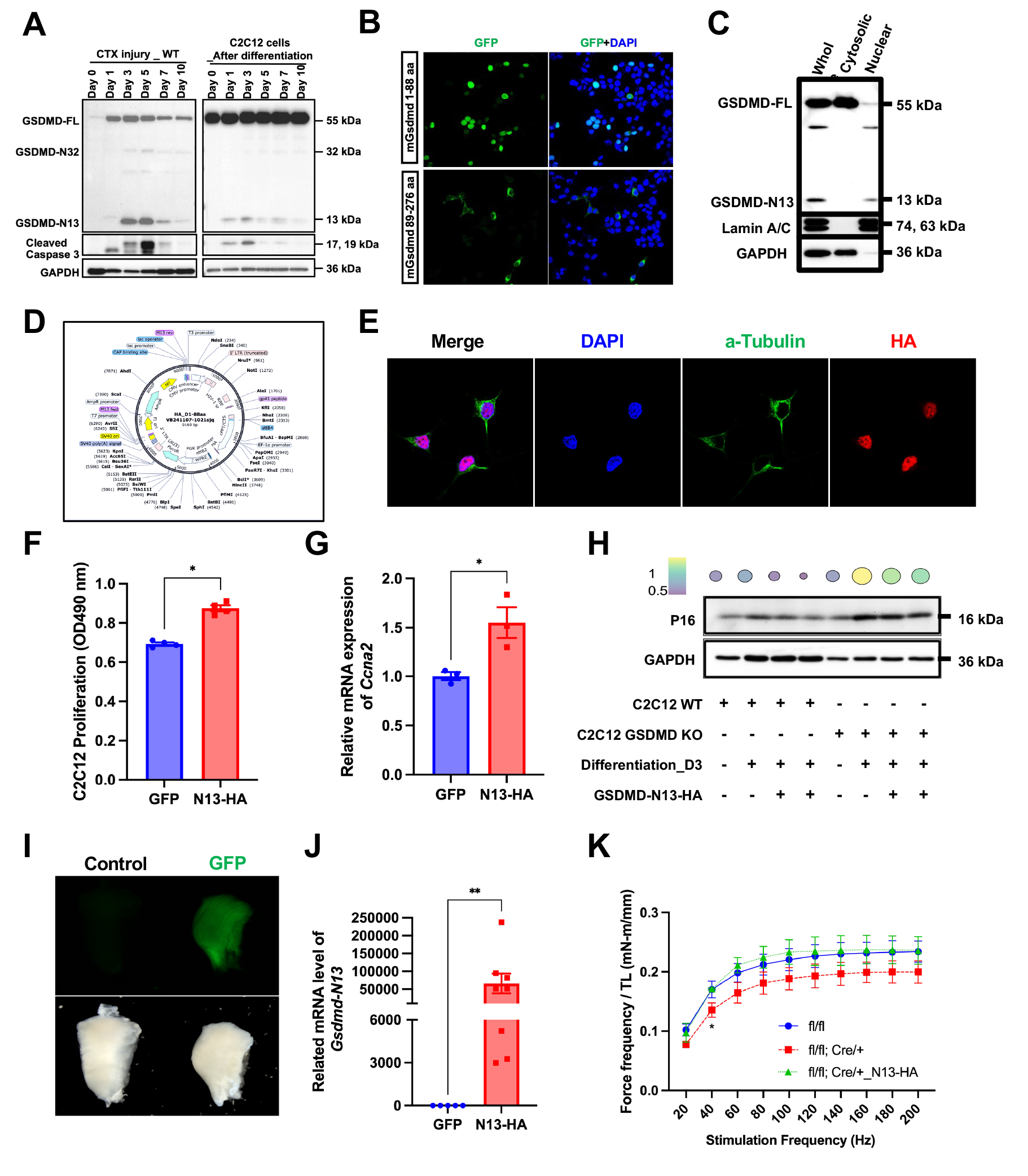
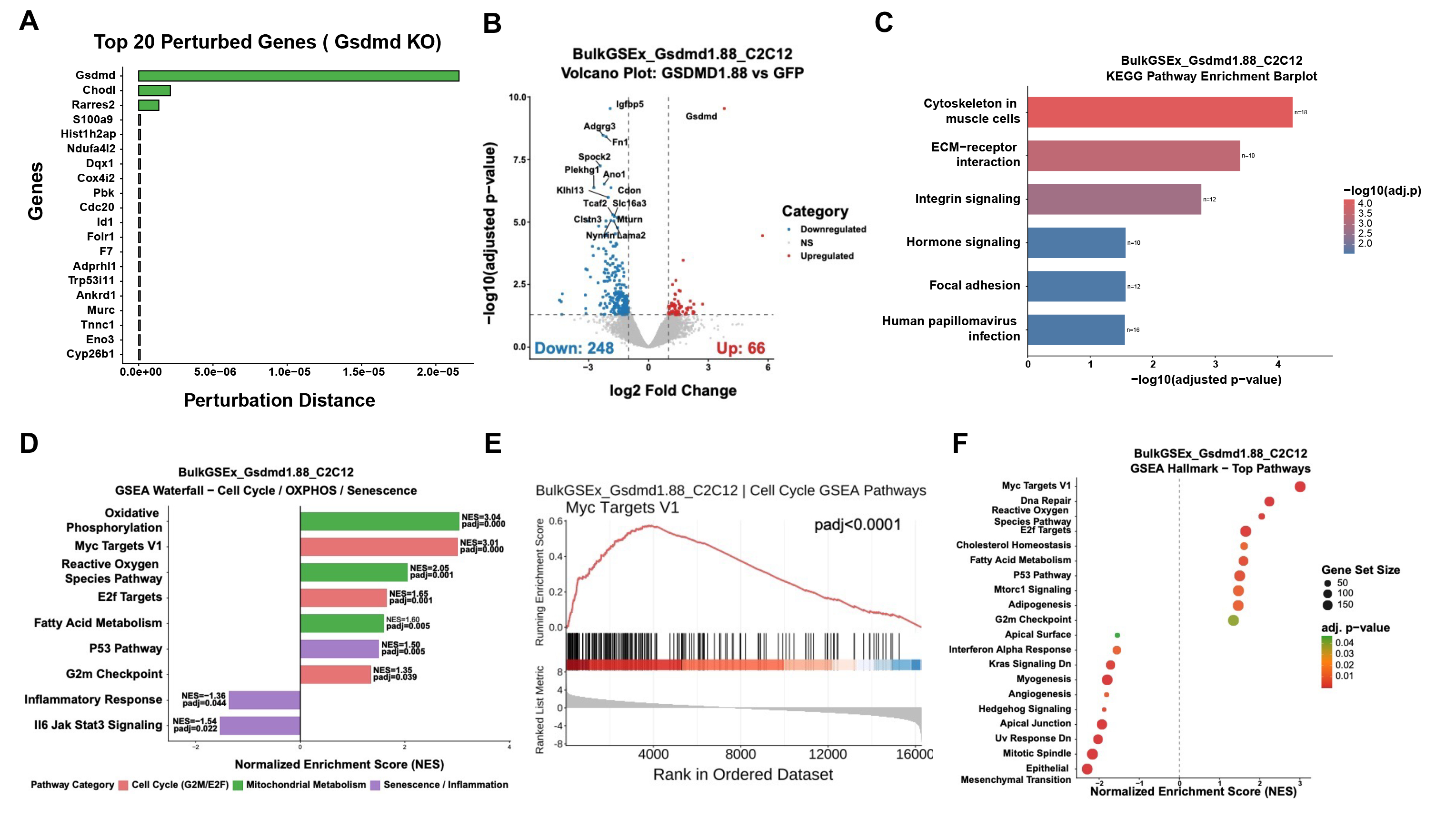
Results: GSDMD deficiency significantly impaired muscle regeneration. Functional assessment showed reduced force generation (P=0.04), while RT-PCR revealed delayed Myod and Myh3 expression. Histological analysis confirmed reduced myofiber cross section area (P=0.021) and decreased eMyHC+ fibers. In vitro, GSDMD knockout increased cell doubling time (40.6h vs 22.2h), induced G1 stage arrest, impaired differentiation, and increased senescence (β-galactosidase staining+). Mechanistically, a non-canonical ~13kDa N-terminal fragment (GSDMD-N13) was detected concomitant with caspase-3 activation. Subcellular localization revealed marked nuclear enrichment of GSDMD-N13, while the C-terminal remained cytoplasmic. GSDMD-N13 overexpression increased proliferation (P=0.029), up-regulated Ccna2 (P=0.027), and reduced senescence. Furthermore, GSDMD-N13 overexpression partially rescued the GSDMD-/- phenotype and improved in vivo force output. In silico perturbation identified GSDMD as a master regulator of myogenic gene programs. Transcriptomic analysis confirmed enrichment of cell cycle pathways (Myc/E2f targets; NES>1.5) and suppression of senescence/inflammatory pathways.
Conclusions: Caspase-3-dependent GSDMD processing generates a nuclear-translocating N13 fragment that promotes the myogenic cell cycle and prevents senescence. These findings highlight a novel, non-pyroptotic GSDMD function essential for effective muscle repair.
  • Xu, Yanping  ( The Ohio State University Wexner Medical Center , Columbus , Ohio , United States )
  • Wang, Jethro  ( The Ohio State University Wexner Medical Center , Columbus , Ohio , United States )
  • Zhang, Zhentao  ( The Ohio State University Wexner Medical Center , Columbus , Ohio , United States )
  • Chen, Peng  ( The Ohio State University Wexner Medical Center , Columbus , Ohio , United States )
  • Alizai, Usman  ( The Ohio State University Wexner Medical Center , Columbus , Ohio , United States )
  • Sathish, Keerthika  ( The Ohio State University Wexner Medical Center , Columbus , Ohio , United States )
  • Sollenberger, William  ( The Ohio State University Wexner Medical Center , Columbus , Ohio , United States )
  • Zhang, Qingning  ( The Ohio State University Wexner Medical Center , Columbus , Ohio , United States )
  • Pawlik, Timothy  ( The Ohio State University Wexner Medical Center , Columbus , Ohio , United States )
  • Zhu, Hua  ( The Ohio State University Wexner Medical Center , Columbus , Ohio , United States )
  • Author Disclosures:
Meeting Info:

Basic Cardiovascular Sciences 2026

2026

Boston, Massachusetts

Session Info:

Poster Session 2

Tuesday, 07/14/2026 , 04:30PM - 07:00PM

Poster Session and Reception

More abstracts on this topic:
More abstracts from these authors:
Membrane-Repairing LncRNA Masir Protects the Heart from Ischemic Injury

Yang Dandan, Zhu Hua, Deschenes Isabelle, Weisleder Noah, Fu Jidong, Tang Feng, Tamimi Nawal, Giarrano Gianni, Banford Kassidy, Xu Xianyao, Chorna Snizhana, Guo Chunlei, Hund Thomas

Age-Dependent Gata4 Decline in Cardiac Fibroblasts Drives Cellular Senescence and Cardiac Fibrosis

Zhang Zhentao, Zhang Luxi, Ye Han, Sathish Keerthika, Zhang Lucy, Whitson Bryan, Pawlik Timothy, Zhu Hua, Wang Jethro Zih-shuo, Xu Yanping, Chen Peng, Wang Xi, Yan Zhiyu, Alizai Usman, Ikeda Takahide, Sakai Lilian

You have to be authorized to contact abstract author. Please, Login
Not Available