
Nascent Matrix Targeted Interleukin-4 Bolsters Cardiac Repair After Myocardial Infarction
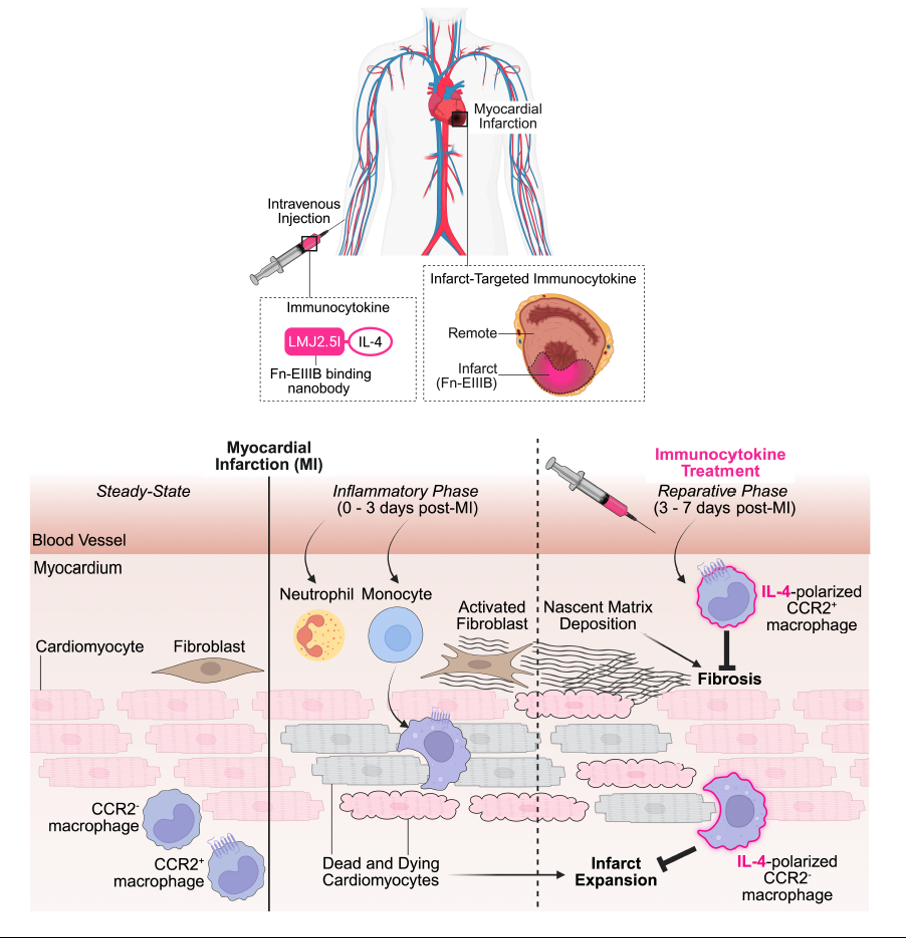
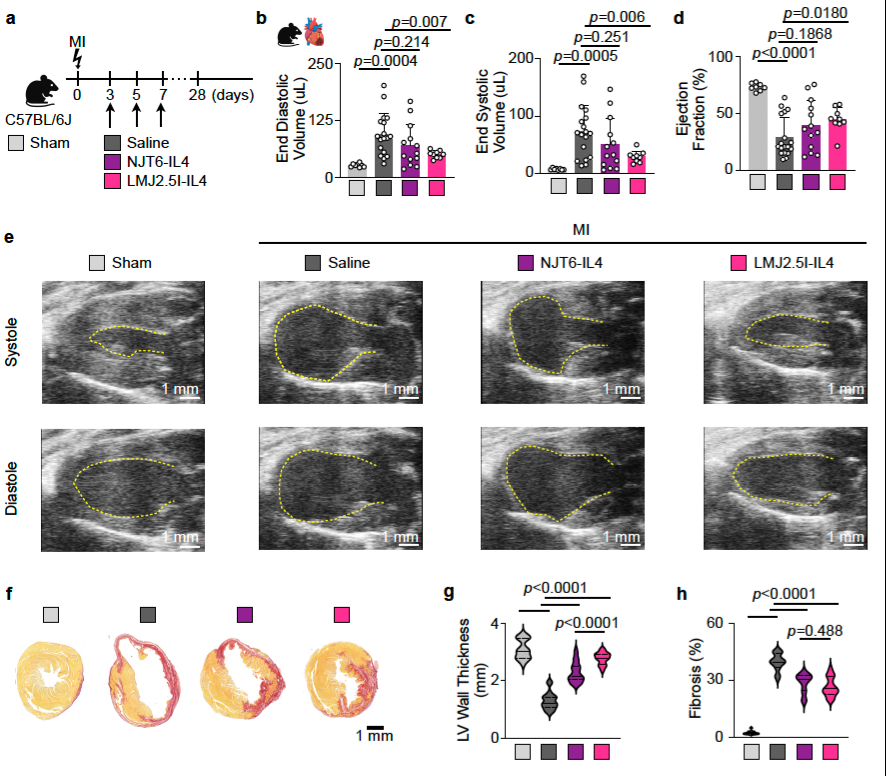
Abstract Body: Myocardial infarction (MI) is a leading cause of heart failure (HF), contributing to 695,000 deaths annually in the U.S. Despite advances in medical treatments, effective therapies to prevent HF following MI remain limited. After an MI, both infarct expansion and excessive fibrosis worsen cardiac function. Notably, inflammatory macrophages are key drivers in these pathological processes. We hypothesized that tuning macrophage phenotype could potentiate productive cardiac repair after MI. Here, we show that interleukin-4 (IL-4) safely redirects macrophages towards repair when targeted to the infarct. Specifically, we achieved infarct targeting by using a nanobody that binds fibronectin extra domain B (Fn-EIIIB), which is a component of the nascent matrix in an infarcted myocardium. Delivery of Fn-EIIIB-targeted IL-4, administered on days 3, 5 and 7 after permanent coronary artery occlusion in mice, significantly improved cardiac function, eliciting a 16% absolute improvement in left ventricular ejection fraction in treated mice relative to controls (n = 11-18 mice per group). Mechanistically, IL-4 robustly reprogrammed infarct zone macrophages, enhancing their ability to clear apoptotic cells via efferocytosis, thereby attenuating infarct expansion and fibrosis. Importantly, Fn-EIIIB targeted IL-4 shows minimal off-target effects in healthy tissues of these mice. In terms of clinical relevance, Fn-EIIIB was also detected in the myocardium of patients after MI but not healthy donors. Furthermore, a human analogue of Fn-EIIIB-targeted IL-4 likewise preserved efferocytosis in primary macrophages from healthy donors. In conclusion, our work demonstrates infarct-targeted IL-4 can indeed productively reprogram the endogenous macrophage responses towards cardiac repair in a mouse, and this strategy may be directly translatable to patients after MI.
Jacobs, Emily
(
University of Pennsylvania
, Philadelphia , Pennsylvania , United States )
Momin, Noor
(
University of Pennsylvania
, Philadelphia , Pennsylvania , United States )