
Logo

American Heart Association

  6
  0


Final ID: Tue003

Minimally Invasive Transplantation of Regenerative Cardiac Organoids Improves Regional Myocardial Function in Ischemic Cardiomyopathy

Abstract Body: Introduction
Ischemic cardiomyopathy (ICM) remains a leading cause of heart failure and cardiovascular mortality. Although transplantation of human induced pluripotent stem cell–derived cardiomyocytes (hiPSC-CMs) represents a promising regenerative strategy, clinical translation is limited by poor graft survival, inadequate vascularization, and arrhythmogenic risk.
Hypothesis
We hypothesized that structured regenerative cardiac organoids composed of hiPSC-CMs and hiPSC-derived mesenchymal stem cells (hiPSC-MSCs) at a defined ratio would enhance engraftment, augment paracrine signaling, promote neovascularization, and improve cardiac function in ICM.
Methods
hiPSC-CMs and hiPSC-MSCs were differentiated under GMP-compatible conditions. Organoids were generated at defined cellular ratios using a layered three-dimensional assembly strategy to promote spatial organization and cell–cell interaction, and optimized through proteomic profiling of secreted factors. Regenerative organoids were transplanted into the ischemic border zone in a nude rat ICM model (n=5 per group). Cardiac function, including global ejection fraction and regional radial strain of the ischemic anterior wall, was assessed serially by echocardiography up to 8 weeks. Engraftment and neovascularization were evaluated histologically at 8 weeks.
Results
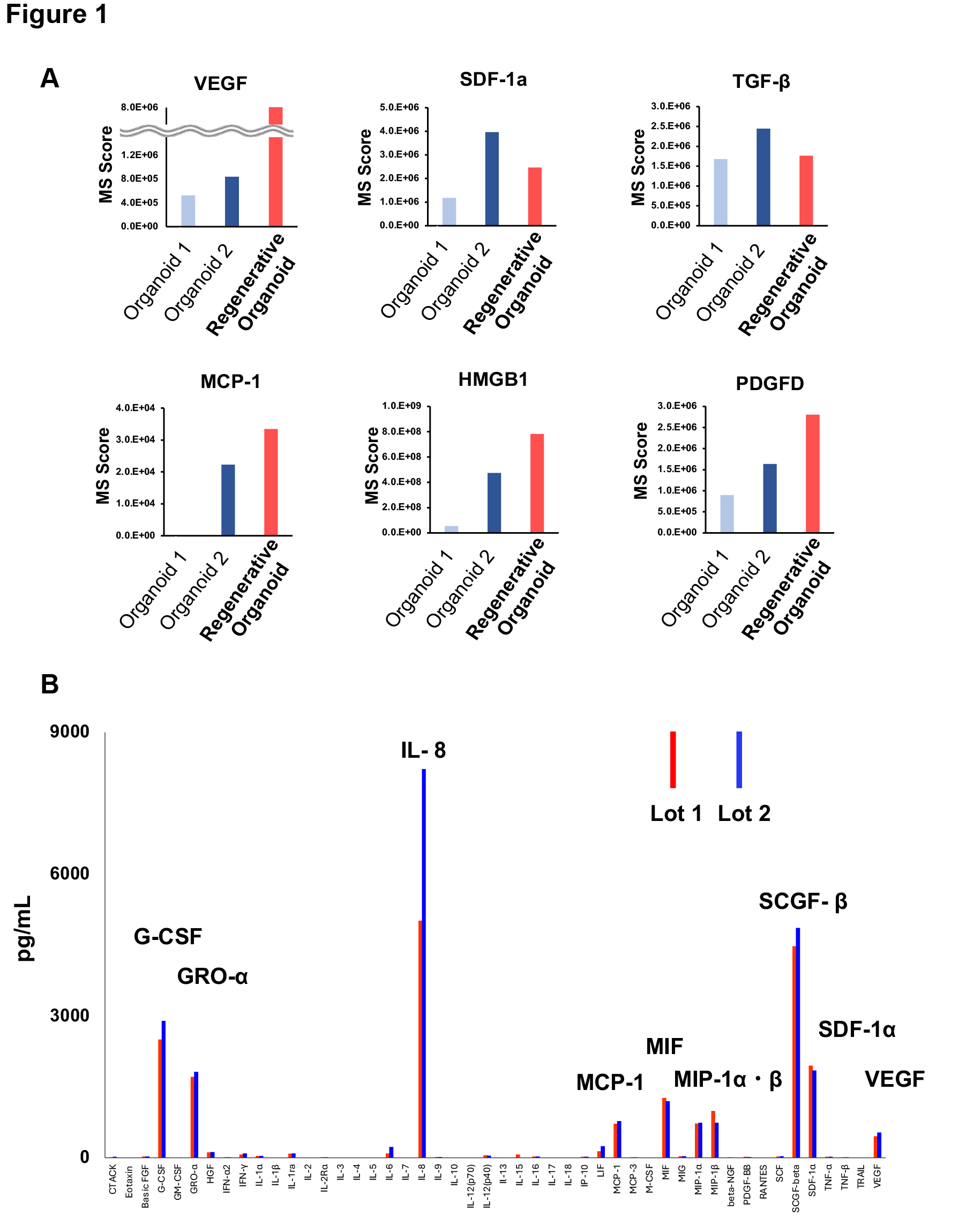
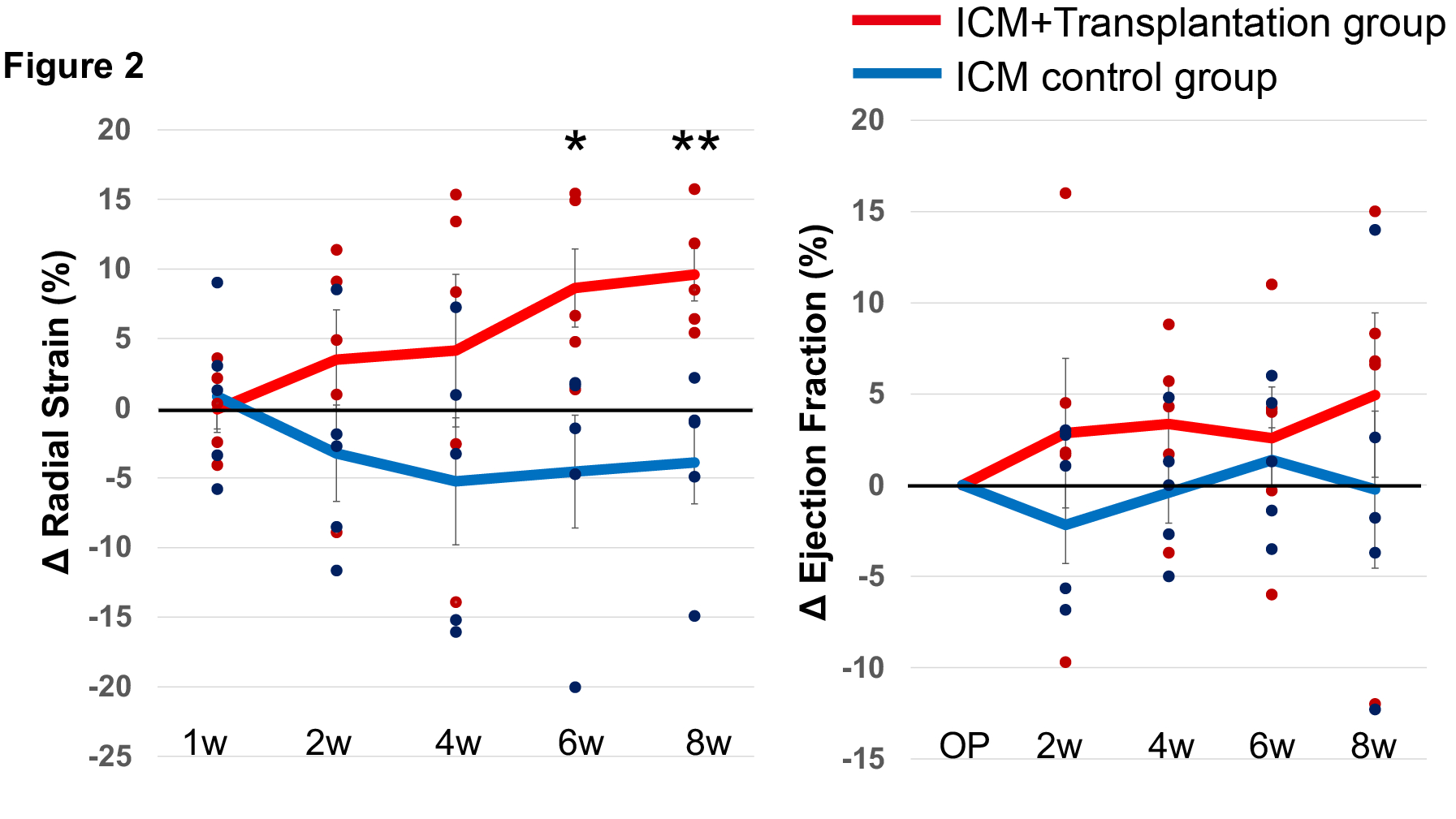
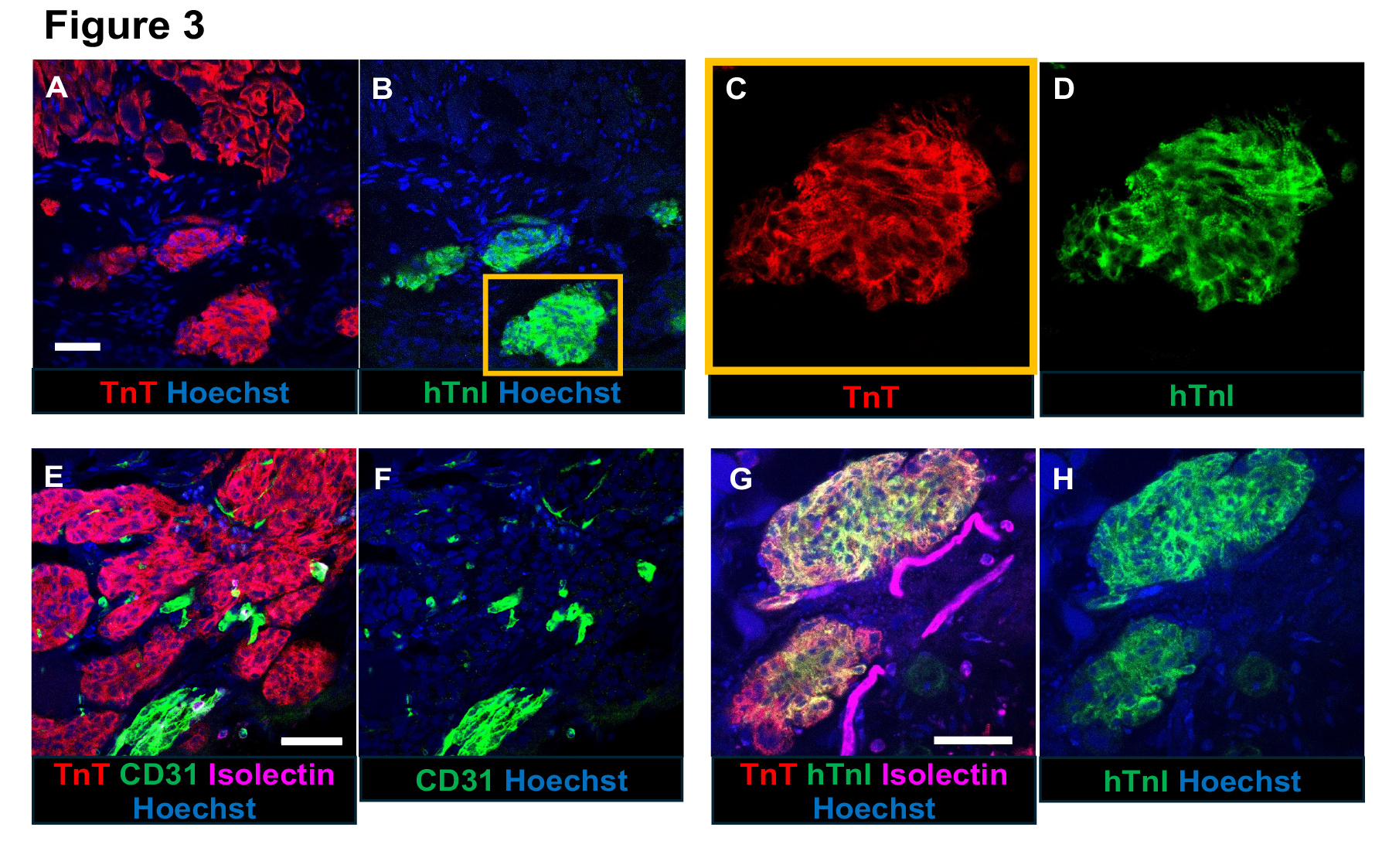
Proteome analysis and secretion profiling (Figure 1) identified an optimized organoid configuration with enhanced secretion of angiogenic and cardioprotective factors. Regenerative organoid transplantation resulted in progressive improvement in regional radial strain compared with ICM controls, reaching significance at 6 weeks (p=0.0282) and further strengthening at 8 weeks (p=0.005) (Figure 2). Global ejection fraction showed only a modest, non-significant increase. Histology confirmed durable graft survival and enhanced vascularization within the ischemic region at 8 weeks (Figure 3). Notably, regional mechanical improvement preceded detectable changes in global ejection fraction, consistent with localized myocardial recovery following engraftment.
Conclusion
Structured regenerative cardiac organoids improve regional myocardial function in ICM through enhanced vascularization and stable graft integration mediated by synergistic paracrine mechanisms. Ongoing studies include high-resolution arrhythmia assessment and translation to a porcine ICM model using a minimally invasive catheter-based delivery system.
  • Aoyama, Junya  ( The University of Osaka , Suita , Osaka , Japan )
  • Otsuka-okamoto, Haruna  ( The University of Osaka , Suita , Osaka , Japan )
  • Sato, Rika  ( The University of Osaka , Suita , Osaka , Japan )
  • Saito, Yuki  ( The University of Osaka , Suita , Osaka , Japan )
  • Takemura, Kazuaki  ( The University of Osaka , Suita , Osaka , Japan )
  • Ito, Emiko  ( The University of Osaka , Suita , Osaka , Japan )
  • Takeda, Maki  ( The University of Osaka , Suita , Osaka , Japan )
  • Harada, Akima  ( The University of Osaka , Suita , Osaka , Japan )
  • Hasegawa, Kouichi  ( The University of Osaka , Suita , Osaka , Japan )
  • Sawa, Yoshiki  ( The University of Osaka , Suita , Osaka , Japan )
  • Author Disclosures:
Meeting Info:

Basic Cardiovascular Sciences 2026

2026

Boston, Massachusetts

Session Info:

Poster Session 2

Tuesday, 07/14/2026 , 04:30PM - 07:00PM

Poster Session and Reception

More abstracts on this topic:
You have to be authorized to contact abstract author. Please, Login
Not Available