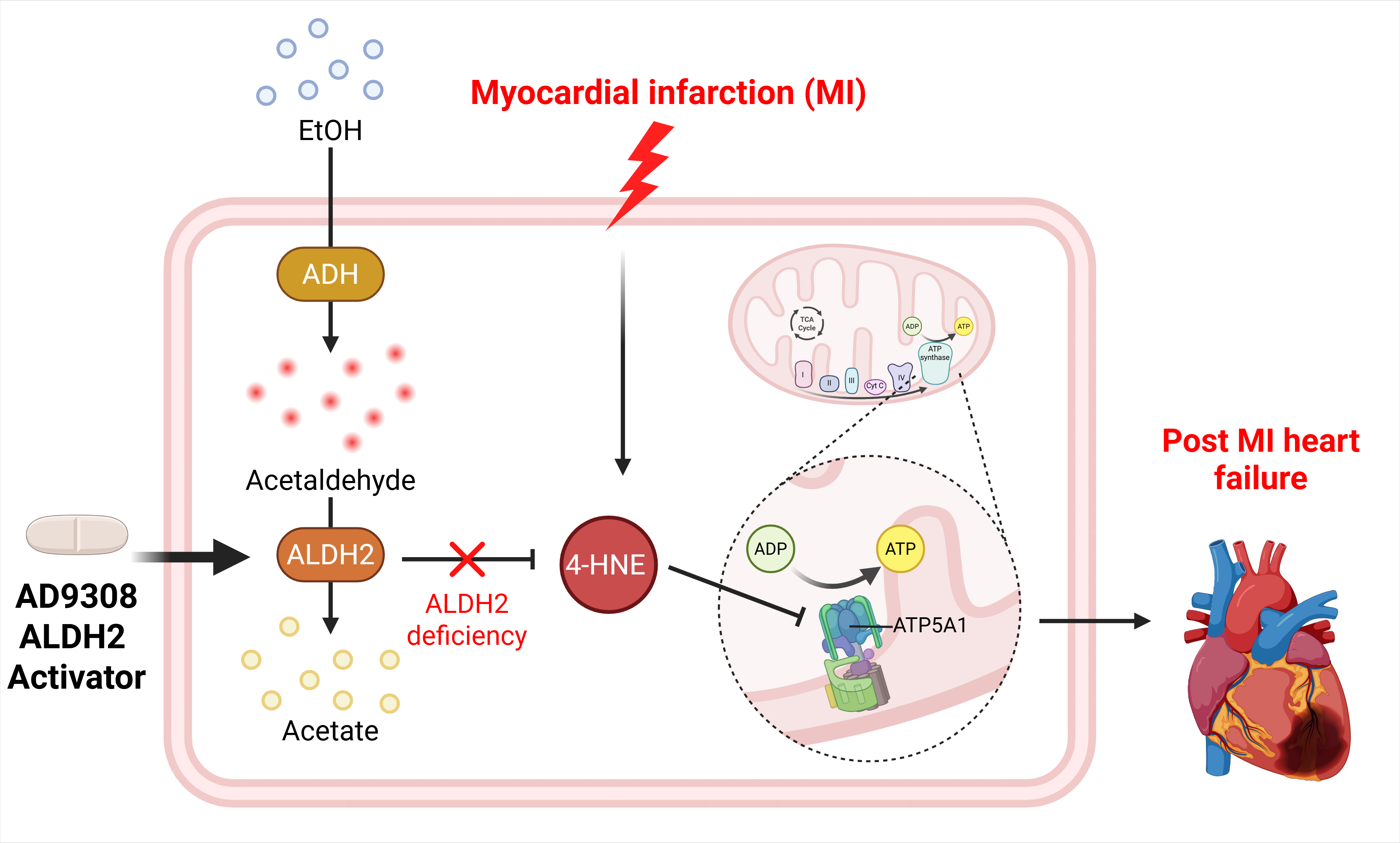
ALDH2 Deficiency Exacerbates Alcohol-Associated Post-Infarction Cardiac Remodeling Through Mitochondrial ATP Synthase Dysfunction
Abstract Body: Background: The cardiovascular effects of alcohol exhibit marked interindividual variability and depend on metabolic and genetic determinants. Aldehyde dehydrogenase 2 (ALDH2) detoxifies reactive aldehydes and protects the heart under ischemic stress. However, approximately 30–50% of East Asians carry the ALDH2*2 variant with markedly reduced enzymatic activity. How ALDH2 deficiency and alcohol-derived aldehyde accumulation jointly drive mitochondrial dysfunction and adverse post–myocardial infarction (MI) remodeling remains unclear. Methods: Complementary mechanistic studies were performed in ALDH2 knock-in mice and iPSC-derived cardiomyocytes subjected to MI, ethanol exposure, or oxygen–glucose deprivation. Mitochondrial function, oxidative stress, and electron transport chain activity were assessed. Proteomics was used to identify the downstream target and the next-generation ALDH2 activator AD-9308 were tested for functional rescue. Clinical outcomes were evaluated in patients with MI stratified by ALDH2 genotype and alcohol consumption. Results: In vivo, ALDH2 deficiency aggravated post-MI left ventricular dilation, infarct expansion, fibrosis, and mitochondrial respiratory failure. Proteomics identified multiple 4-hydroxynonenal (4-HNE) adducts on ATP5A1, impairing Complex V activity and ATP production. Carbonylation-resistant ATP5A1 mutants preserved mitochondrial bioenergetics under aldehyde stress. Pharmacologic ALDH2 activation reduced 4-HNE accumulation, restored ATP synthase abundance, improved mitochondrial function, and attenuated adverse remodeling. Among 135 patients with MI, ALDH2-deficient carriers (GA/AA, 32.6%) exhibited increased MI heart failure and major adverse cardiovascular events, particularly with alcohol exposure. Conclusions: ALDH2 deficiency amplifies alcohol- and ischemia-induced aldehyde stress, promoting ATP5A1 carbonylation, mitochondrial energy failure, and maladaptive remodeling. Targeting ALDH2 represents a precision therapeutic strategy for genetically susceptible populations.
Sykora Daniel, Giudicessi John, Cooper Leslie, Rosenbaum Andrew, Olson Nicole, Churchill Robert, Kim Boyoung, Bratcher Melanie, Elwazir Mohamed, Young Kathleen, Abou-ezzeddine Omar, Bois John