The disruption of cTnT-mediated sarcomere-mitochondrial communication results in dilated cardiomyopathy
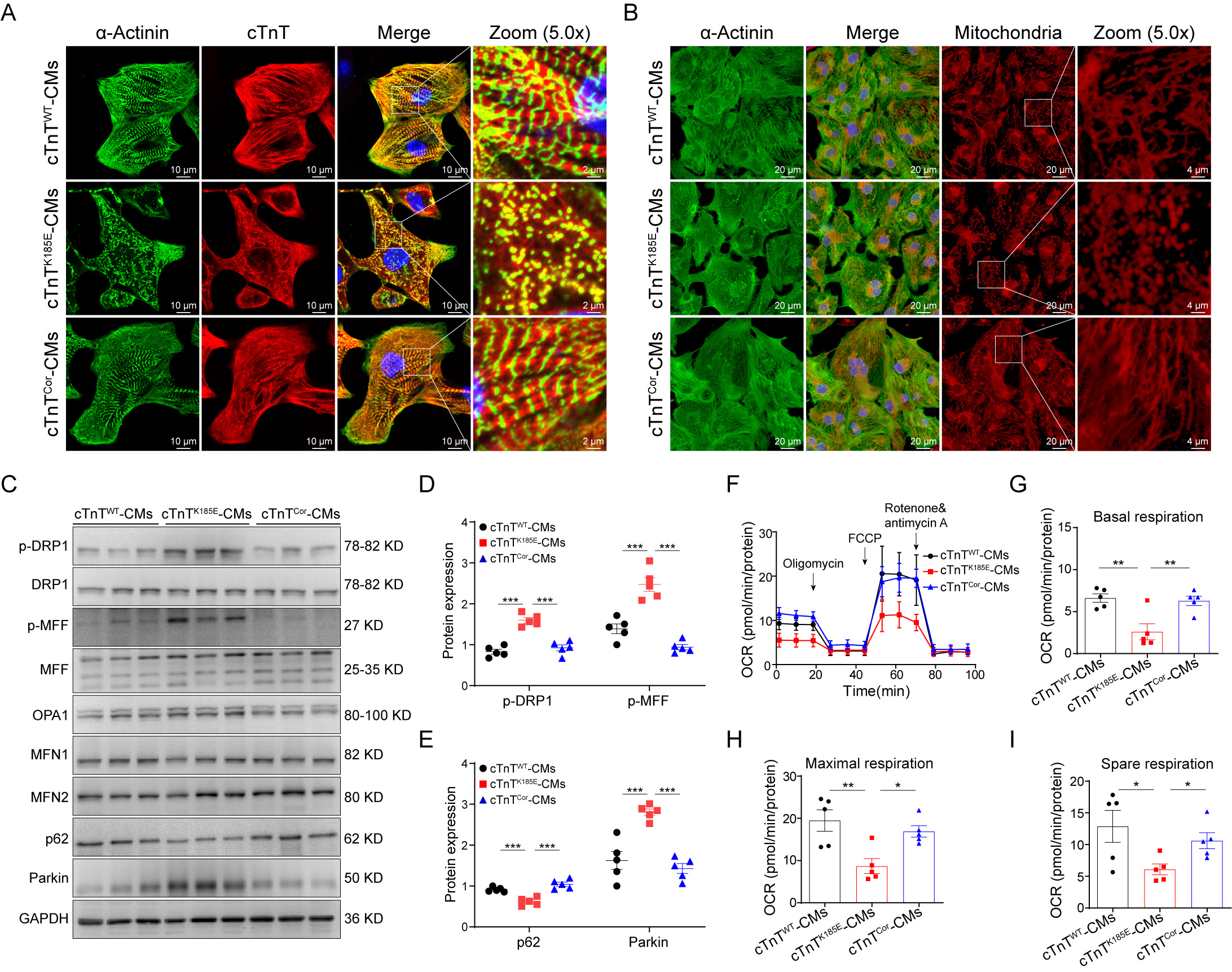
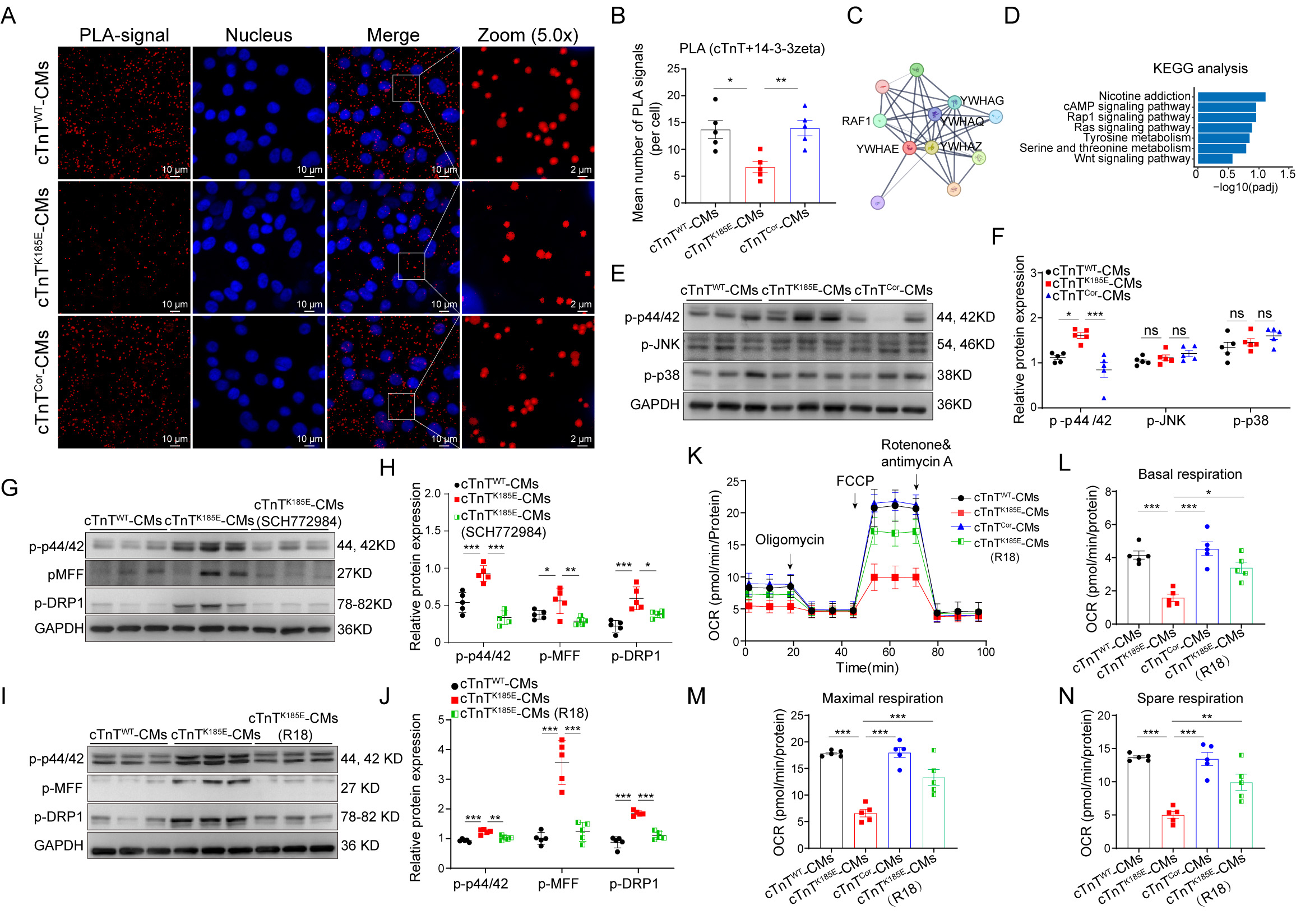
Abstract Body: BACKGROUND: Dilated cardiomyopathy (DCM) is significantly influenced by genetic factors. Sarcomere function is intricately related to other organelle, particularly the reciprocal regulation between sarcomere and mitochondria. While some studies have indicated that changes in mitochondrial stress response were related to DCM, the precise role of abnormalities in sarcomere-mitochondrial communication in DCM development remains largely unexplored. This study investigates the impact of the cardiac troponin T (cTnT) on sarcomere-mitochondrial communication in DCM. METHODS: We employed induced pluripotent stem cells (iPSCs) to investigate a DCM family, utilizing CRISPR-Cas9 genome editing to rectify the TNNT2 (c.A553G) mutation within the iPSCs. Our approach encompassed RNA sequencing, metabolite profiling, and mass spectrometry to unravel the molecular mechanisms underlying cTnT-mediated communication between the sarcomere and mitochondria. RESULTS: Through whole exome sequencing, we identified a novel mutation in cTnT, specifically p.K185E, as the disease-causing mutation in a familial case of DCM. In iPSC-derived cardiomyocytes from DCM patients, we observed significant sarcomere disorganization and mitochondrial fragmentation, along with severe impairments in mitochondrial respiration. The reduced interaction between cTnT (p.K185E) and 14-3-3 proteins led to the detachment of 14-3-3 proteins from the sarcomere. Consequently, the free 14-3-3 proteins became involved in the Ras/RAF1 signaling pathway, resulting in aberrant activation of p44/42 kinase activity and subsequent phosphorylation of DRP1 and MFF. Our study highlights the critical role of the molecular interaction between cTnT and 14-3-3 proteins in mediating communication between the sarcomere and mitochondria. Notably, treatment with R18, a 14-3-3 protein antagonist, demonstrated a significant therapeutic effect on DCM. These findings were further validated in iPSC-derived cardiac organoids. CONCLUSION: Our results unveil a novel role of cTnT mutation-mediated disruption of sarcomere-mitochondrial communication in DCM by 14-3-3 proteins-mediated Ras/RAF1-p44/42-DRP1 axis. This suggests that targeting 14-3-3 proteins and p44/42 kinase activity could be a promising therapeutic approach for DCM and other cardiac diseases characterized by mitochondrial dynamic disturbances.
Ye, Lingqun
(
Soochow University
, Suzhou , China )
Liu, Junwei
(
Huazhong University of Science and Technology
, Wuhan , China )
Lei, Wei
(
Soochow University
, Suzhou , China )
Ni, Baoqiang
(
Soochow University
, Suzhou , China )
Han, Xinglong
(
Soochow University
, Suzhou , China )
Zhang, Yan
(
Soochow University
, Suzhou , China )
Wang, Yong
(
Soochow University
, Suzhou , China )
Hao, Kaili
(
University of Alabama at Birmingham
, Birmingham , Alabama , United States )
Wu, Hongchun
(
Soochow University
, Suzhou , China )
Yu, Miao
(
Soochow University
, Suzhou , China )
Li, Huadong
(
Huazhong University of Science and Technology
, Wuhan , China )
Zhao, Zhen-ao
(
Hebei North University
, Zhangjiakou , China )
Shen, Zhenya
(
Soochow University
, Suzhou , China )
Zhang, Jianyi
(
UNIVERSITY OF ALABAMA AT BIRMINGHAM
, Birmingham , Alabama , United States )
Hu, Shijun
(
Soochow University
, Suzhou , China )