Scientific Sessions 2025
/
Vascular Basic Science
/
Functional Capacity, Average Daily Step Count, and Angina among Women with Coronary
Microvascular Dysfunction Compared to Obstructive Coronary Artery Disease and Healthy Control
American Heart Association
120
0
Final ID: Su3124
Functional Capacity, Average Daily Step Count, and Angina among Women with Coronary
Microvascular Dysfunction Compared to Obstructive Coronary Artery Disease and Healthy Control
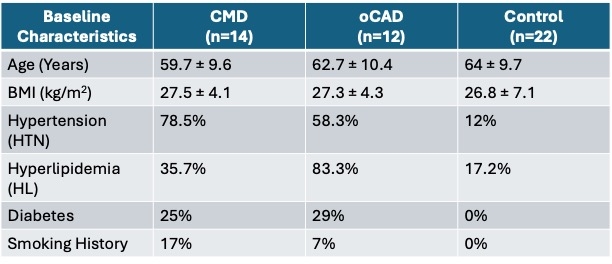
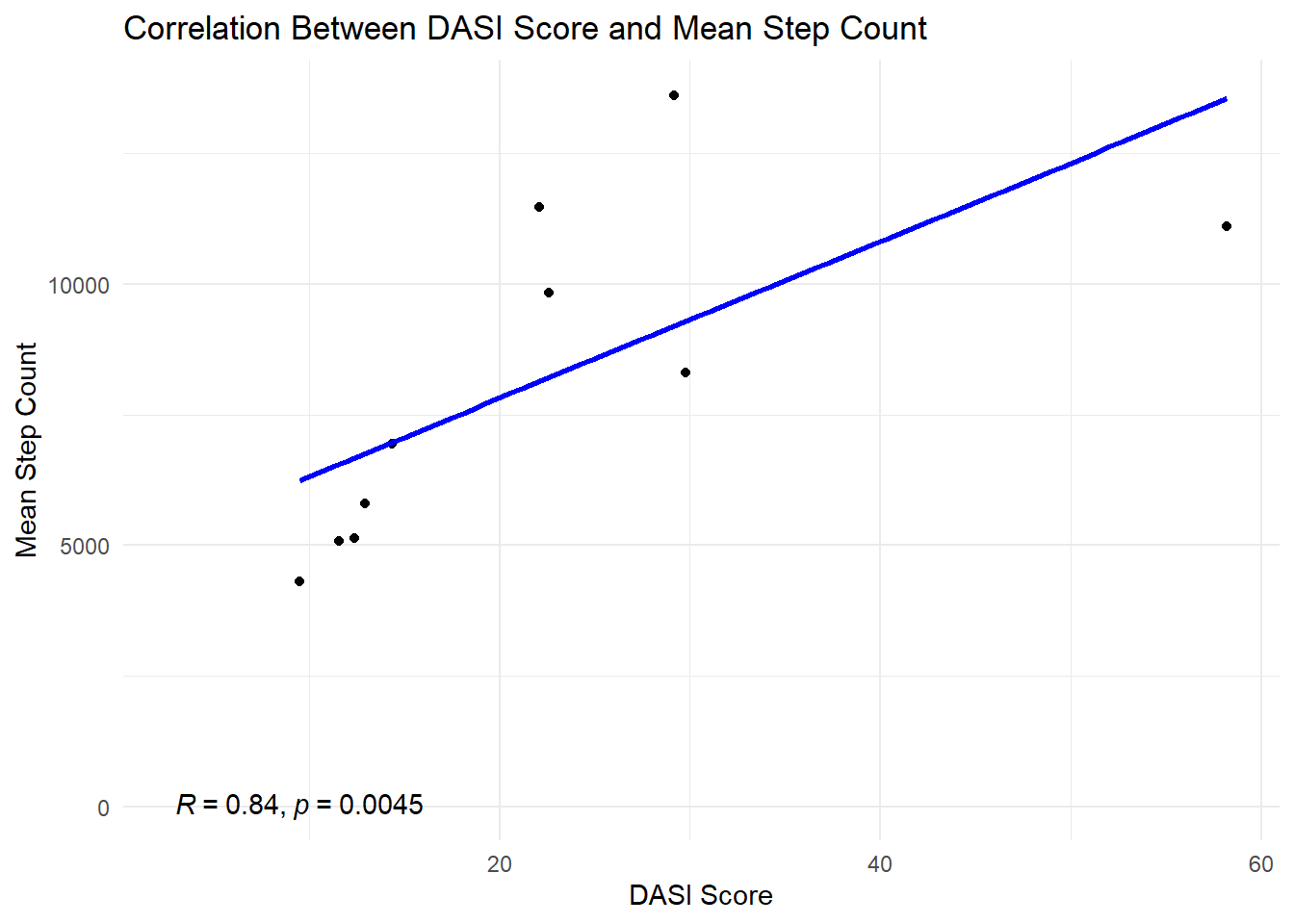
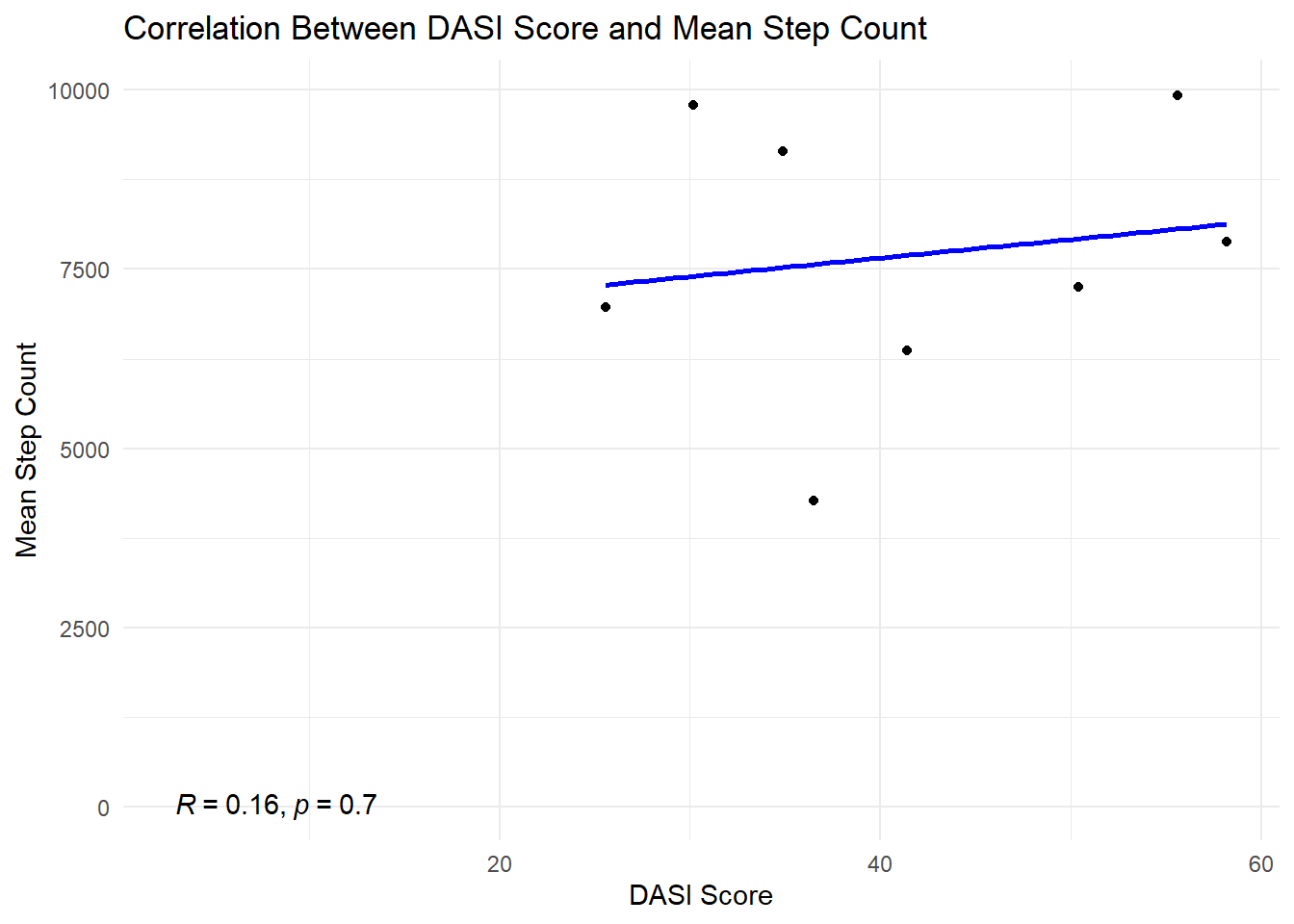
Abstract Body (Do not enter title and authors here): Background: Approximately 50% of women with ischemia but no obstructive coronary artery disease have coronary microvascular dysfunction (CMD), a condition associated with adverse cardiovascular outcomes. Postmenopausal women with CMD experience recurrent chest pain, reduced functional capacity, fatigue, and impaired quality of life (QoL), but direct comparisons of women with obstructive coronary disease (oCAD) or healthy controls are lacking. We therefore examined angina-related physical limitations and QoL across these three groups. Methods: A total of 48 postmenopausal women were grouped as follows: CMD (n=14, CFR or MFR ≤2.5), oCAD (n=12, >50% stenosis), and Controls (n=22, normal stress tests, no cardiac history or medications). Demographics, cardiac risk factors, and subscale scores from the validated Seattle Angina Questionnaire (SAQ)—including physical limitation, angina stability, angina frequency, treatment satisfaction, and QoL—were assessed. The Duke Activity Status Index (DASI) was used to assess functional capacity and a score ≤34 is prognostic of major adverse cardiac events. Total step counts for 7 days were measured by Actiwatch wrist actigraphy. Descriptive statistical analysis and Spearman rank correlations were performed for data analysis. Results: Baseline characteristics and cardiovascular risk factors were comparable among all three groups. However, there was a higher percentage of hypertension among CMD and a higher percentage of hyperlipidemia in oCAD as opposed to the other groups. The treatment satisfaction SAQ subscale demonstrated a lower satisfaction score in the CMD group compared to the oCAD group (p=0.012). Despite similar angina burden compared to oCAD, DASI score was significantly lower in CMD (20.5±14.0) as opposed to oCAD (37.1±14.3) with p=0.013, even after BMI adjustment. A positive correlation was observed between DASI scores and step counts in the CMD group (R= 0.84, p=0.0045), but not in oCAD. Conclusion: Postmenopausal women with CMD exhibit physical limitation and reduced functional capacity compared to other groups. These impairments are associated with lower treatment satisfaction, physical activity, and QoL. Tailored exercise and rehabilitation strategies targeting physical function may improve both functional capacity and QoL in this at-risk CMD population.
Rashid, Zaira
(
Emory University
, Atlanta , Georgia , United States )
Haghjoo, Azin
(
Emory University
, Atlanta , Georgia , United States )
Dave, Esha
(
Emory University
, Duluth , Georgia , United States )
Chen, Yunyun
(
Emory University
, Atlanta , Georgia , United States )
Evenhuis, Bernard
(
Emory University
, Atlanta , Georgia , United States )
Rubin, Jake
(
Emory University
, Atlanta , Georgia , United States )
Harris, Kristen
(
Emory University
, Atlanta , Georgia , United States )
Thaker, Vishrut
(
Emory University School of Medicine
, Morrow , Georgia , United States )
Rashid, Faaris
(
Emory University
, Duluth , Georgia , United States )
Shah, Amit
(
EMORY UNIVERSITY
, Atlanta , Georgia , United States )
Vaccarino, Viola
(
Emory Univesity
, Atlanta , Georgia , United States )
Sperling, Laurence
(
EMORY UNIVERSITY
, Atlanta , Georgia , United States )
Quyyumi, Arshed
(
EMORY UNIVERSITY
, Atlanta , Georgia , United States )
Mehta, Puja
(
EMORY UNIVERSITY
, Atlanta , Georgia , United States )
Author Disclosures:
Zaira Rashid:DO NOT have relevant financial relationships
| Amit Shah:DO NOT have relevant financial relationships
| Viola Vaccarino:DO NOT have relevant financial relationships
| Laurence Sperling:DO NOT have relevant financial relationships
| Arshed Quyyumi:DO NOT have relevant financial relationships
| Puja Mehta:DO NOT have relevant financial relationships
| Azin Haghjoo:No Answer
| Esha Dave:DO NOT have relevant financial relationships
| Yunyun Chen:No Answer
| Bernard Evenhuis:No Answer
| Jake Rubin:DO NOT have relevant financial relationships
| Kristen Harris:DO NOT have relevant financial relationships
| Vishrut Thaker:DO NOT have relevant financial relationships
| Faaris Rashid:No Answer