Exploring the Obesity Paradox: Impact of Obesity on Mortality and Inflammatory Markers in Acute Pulmonary Embolism
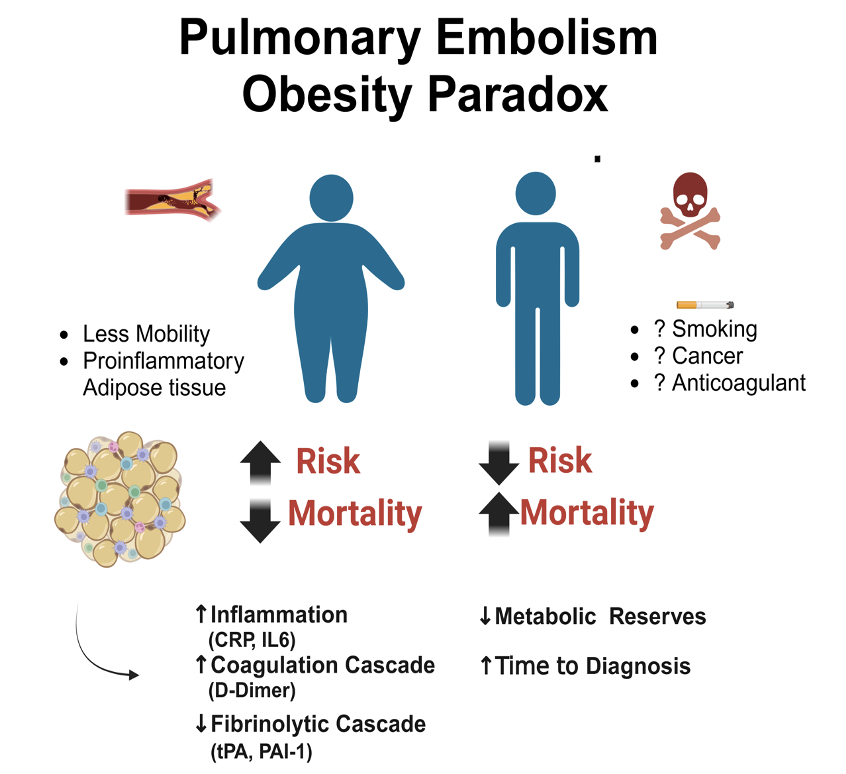
Abstract Body (Do not enter title and authors here): Background: Pulmonary embolism (PE) is a leading cause of cardiovascular morbidity and mortality. Obesity is a well-established risk factor for PE, yet the relationship between obesity and PE outcomes remains poorly characterized. Some data suggest an "obesity paradox," wherein obese individuals may have improved outcomes despite increased risk.
Research Question: To investigate the impact of obesity on mortality and inflammatory markers in patients presenting acute PE.
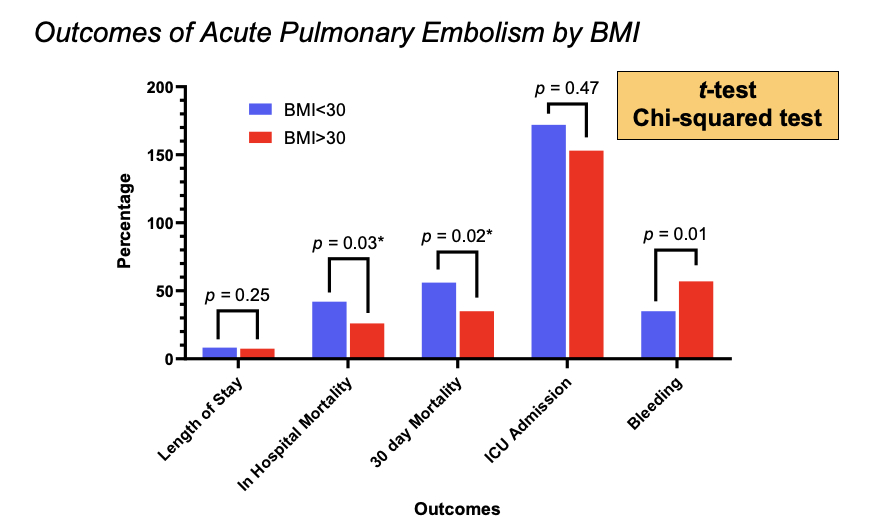
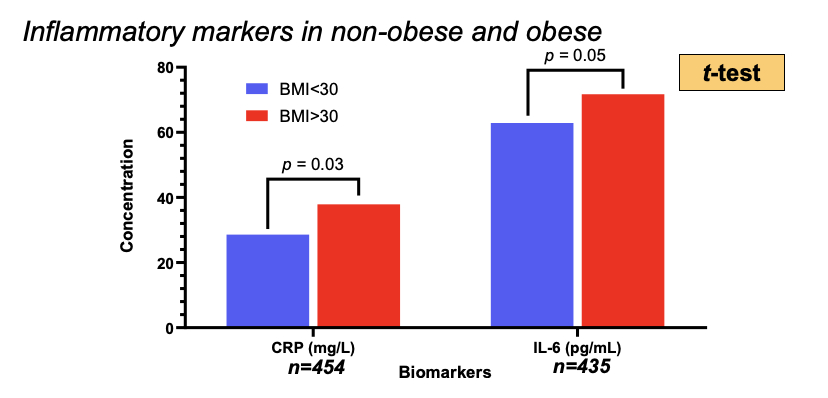
Methods: We conducted a retrospective analysis of 1,081 patients enrolled in a dedicated PE registry at our institution. All patients had a confirmed diagnosis of acute PE. Subjects were stratified into obese (BMI ≥30 kilograms per meter squared) and non-obese groups. Predictor variables included demographics, laboratory values, and imaging findings. The primary outcomes were in-hospital and 30-day mortality. Secondary outcomes included ICU admission, hospital length of stay, major bleeding events, and thrombo-inflammatory biomarkers such as CRP and IL-6.
Results: Obese patients demonstrated significantly lower in-hospital and 30-day mortality compared to non-obese counterparts (p = 0.03), supporting the presence of an obesity paradox. However, obese patients also exhibited higher levels of inflammatory biomarkers (p = 0.01) and experienced more major bleeding events (p = 0.01). ICU admission rates and length of stay did not differ significantly between groups.
Conclusions: In this large, single-center cohort of acute PE patients, obesity was associated with decreased short-term mortality despite elevated thrombo-inflammatory markers and increased bleeding complications. These findings highlight the complexity of the obesity paradox in acute thromboembolic disease and underscore the need for further prospective studies.
Darki, Cyrus
( Saint Ignatius
, Chicago
, Illinois
, United States
)
Gueyikian, Gabriel
( Loyola University
, Maywood
, Illinois
, United States
)
Dadabhoy, Dina
( Northwest Rheumatology
, Elk Grove Village
, Illinois
, United States
)
Darki, Amir
( Loyola University
, Maywood
, Illinois
, United States
)
Author Disclosures:
Cyrus Darki:DO NOT have relevant financial relationships
| Gabriel Gueyikian:DO NOT have relevant financial relationships
| Dina Dadabhoy:No Answer
| Amir Darki:DO NOT have relevant financial relationships