
Logo

American Heart Association

  18
  0


Final ID: MP1800

Endovascular Management of a Giant Right Coronary Artery Aneurysm With Right Atrial Compression

Abstract Body (Do not enter title and authors here): Description of Case
Giant coronary artery aneurysms (CAAs) are rare and pose diagnostic and therapeutic challenges, particularly when asymptomatic or incidentally discovered. Right atrial (RA) compression due to CAA is extremely uncommon and lacks standardized management guidelines.
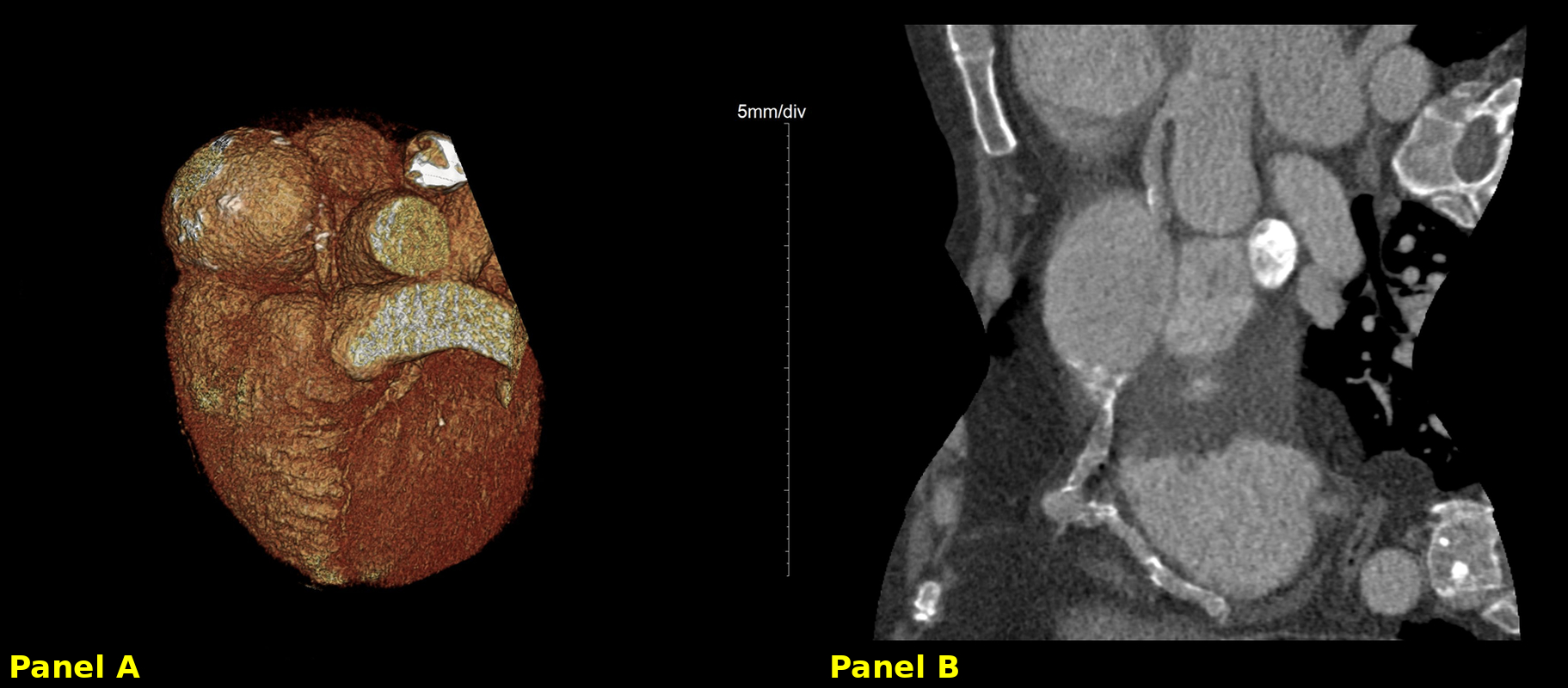
We report a 59-year-old man with prior inferior ST-elevation myocardial infarction (2009) and known right coronary artery (RCA) ectasia, presenting with dyspnea at rest and new-onset atrial fibrillation. Physical examination revealed hypoxemia, bilateral lower extremity edema, and bibasilar crackles. Transthoracic echocardiography showed mild biventricular dysfunction and biatrial enlargement. Pulmonary computed tomography angiography excluded thromboembolism but incidentally identified a 6.6 × 6.4 cm proximal RCA aneurysm. Coronary computed tomography confirmed RA compression without tamponade or restrictive physiology. Right heart catheterization showed normal pulmonary artery pressures, excluding pulmonary hypertension.
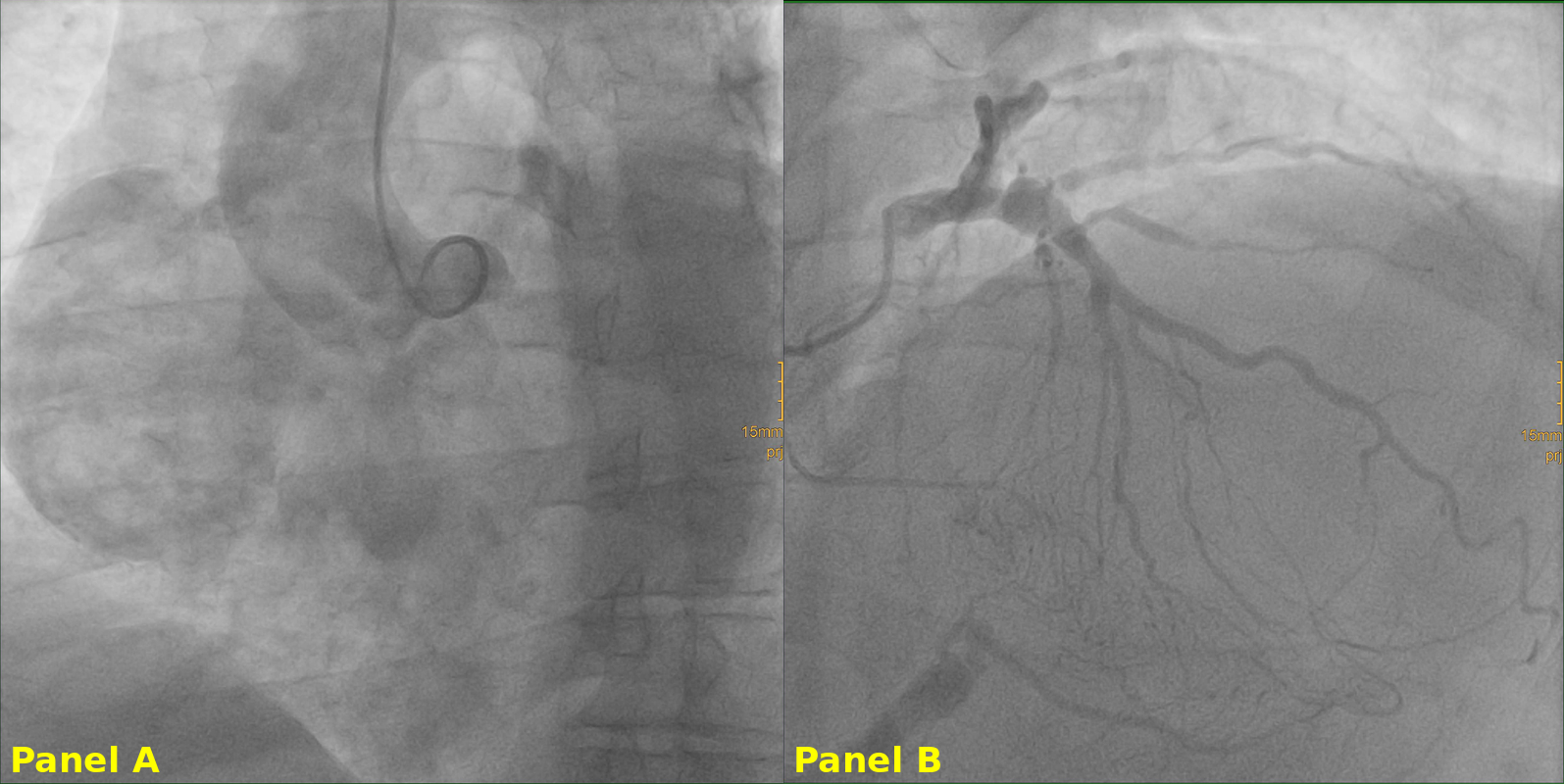
The patient remained hemodynamically stable and was initially discharged on optimal medical therapy. Coronary angiography revealed RCA occlusion with retrograde perfusion via left anterior descending artery collaterals. After multidisciplinary Heart Team discussion, conservative management was initially considered. However, due to aneurysm size and risk of complications, an endovascular approach was pursued.
Methods
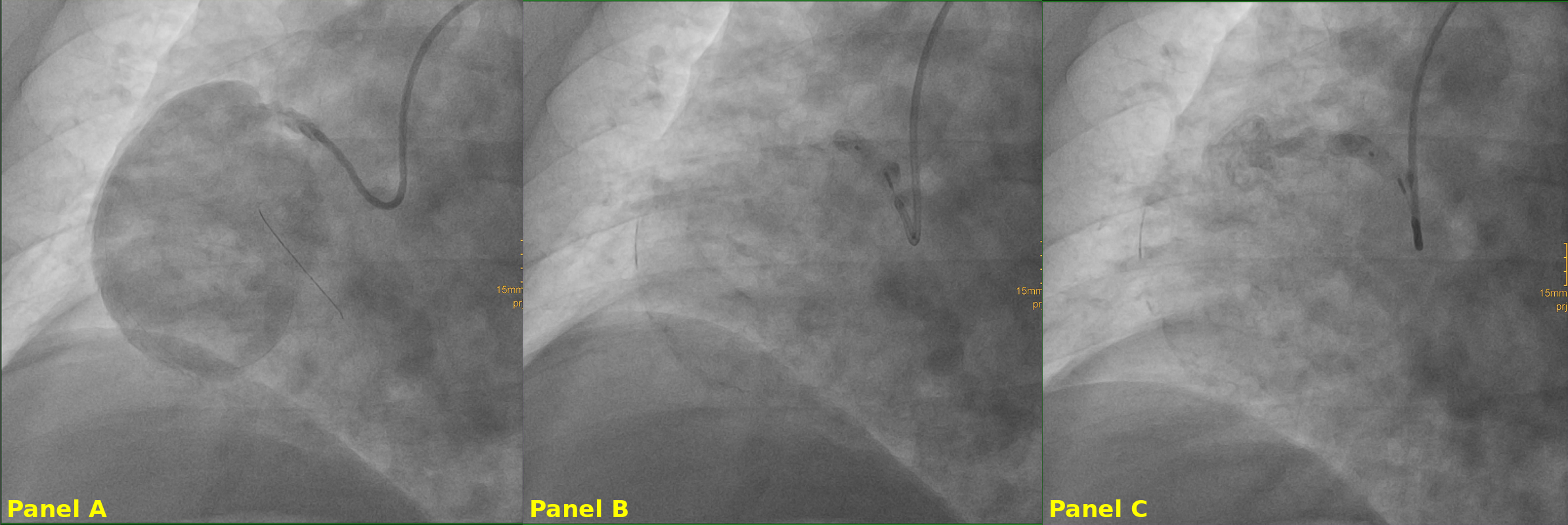
The patient underwent percutaneous intervention under conscious sedation, utilizing dual arterial access (right femoral and left radial). The procedure included selective RCA catheterization, balloon occlusion testing proximal to the aneurysm, and deployment of a vascular plug at the RCA ostium.
Discussion
Selective RCA catheterization was achieved, and a 0.014-inch guidewire was advanced into the aneurysmal sac. Balloon occlusion was performed proximal to the aneurysm to test for tolerance, followed by deployment of a vascular plug at the RCA ostium, achieving aneurysm exclusion. The patient remained stable throughout, with no clinical or electrical instability. Post-procedural imaging confirmed cessation of flow into the aneurysmal sac, without new compressive or ischemic complications.
This case highlights the importance of individualized, multidisciplinary management in rare giant CAAs. In selected patients with preserved hemodynamics and suitable anatomy, endovascular exclusion with vascular plugs offers a safe and effective alternative to surgery.
  • Cukierkorn, Eduardo  ( Heart Institute , Sao Paulo , Brazil )
  • Nicolau, Andre  ( InCor , Sao Paulo , Brazil )
  • Godinho, Roger  ( InCor , Sao Paulo , Brazil )
  • Rocha, Miriam Marques Nogueira  ( Instituto do Coracao - FMUSP , Sao Paulo , Brazil )
  • Silva Santos, Daniel  ( FMUSP , Sao Paulo , Brazil )
  • Segre, Alexandre  ( HEART INSTITUTE , Sao Paulo , Brazil )
  • Barradas S. Borges, Mariana  ( FMUSP - Incor , Sao Paulo - SP , Brazil )
  • Author Disclosures:
    Eduardo Cukierkorn: DO NOT have relevant financial relationships | Andre Nicolau: No Answer | Roger Godinho: No Answer | Miriam Marques Nogueira Rocha: DO NOT have relevant financial relationships | Daniel Silva Santos: DO NOT have relevant financial relationships | Alexandre Segre: No Answer | Mariana Barradas S. Borges: DO NOT have relevant financial relationships
Meeting Info:

Scientific Sessions 2025

2025

New Orleans, Louisiana

Session Info:

Lessons from the Front Lines: Challenging Coronary Case Reports

Sunday, 11/09/2025 , 09:15AM - 10:15AM

Moderated Digital Poster Session

You have to be authorized to contact abstract author. Please, Login
Not Available