Nationwide Trends and Disparities in Endocarditis-Related Mortality by Sex and Age Group Among U.S. Adults: A 25-Year Analysis, 1999–2023
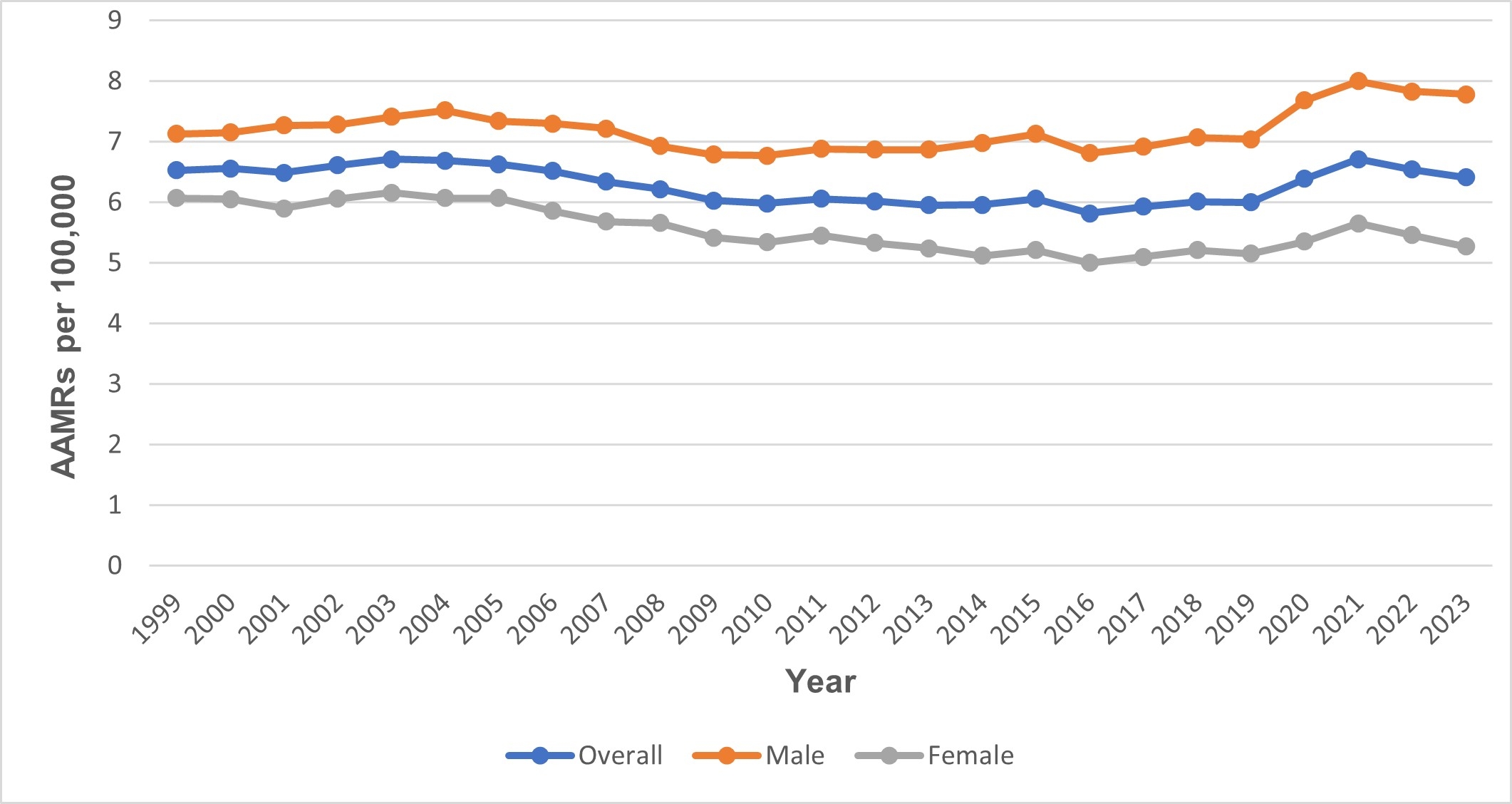
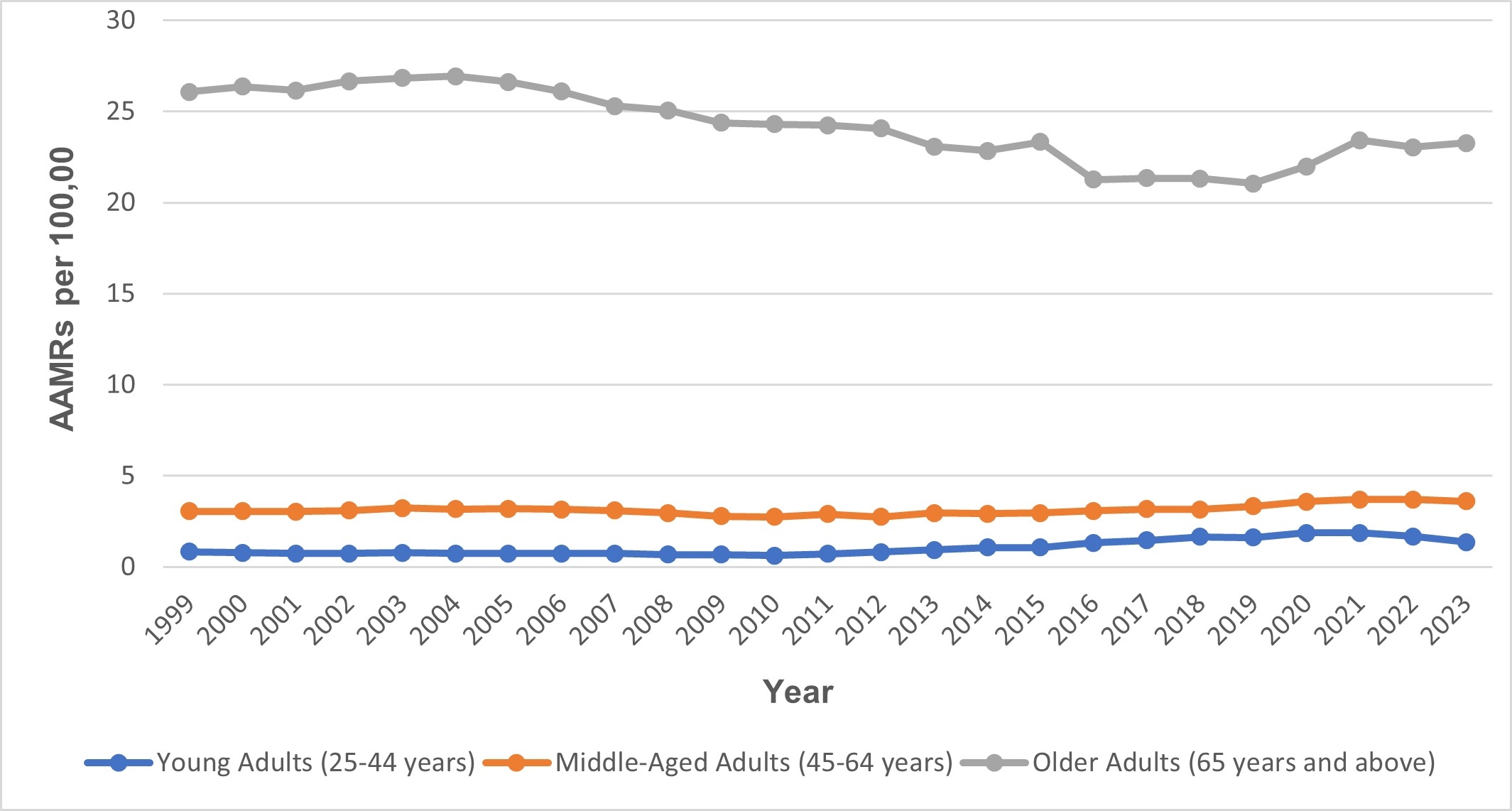
Abstract Body (Do not enter title and authors here): Background Endocarditis continues to be a significant contributor to cardiovascular mortality in the United States (U.S.). Although national efforts have led to improvements in overall cardiovascular outcomes, comprehensive data on long-term trends and disparities in endocarditis-related mortality by sex and age group remain limited. Methods We analyzed national mortality data from the CDC WONDER database (1999–2023) using ICD-10 codes I33.0, I33.9, and I38 for endocarditis among the U.S. adults. Age-adjusted mortality rates (AAMRs) were calculated using the 2000 U.S. standard population and stratified by sex and age-groups. Temporal trends were assessed using Joinpoint regression (v5.0) that identified inflection points and calculated Average Annual Percent Change (AAPC) and segmented Annual Percent Change (APC); a p-value <0.05 was considered statistically significant. Results From 1999 to 2023, a total of 344,822 endocarditis-related deaths were reported among U.S. adults. Between 1999 and 2005, the AAMR remained relatively stable, ranging from 6.5 to 6.6, followed by a significant decrease to 6.0 in 2009 (APC: -2.49, p<0.001), and a subsequent period of stability through 2018. This was followed by a significant increase to 6.7 in 2021 (APC: 4.10, p<0.001), then a significant decline to 6.4 in 2023 (APC: -1.90, p=0.01). Adult males had a higher average AAMR than adult females (7.20 vs. 5.55), with females showing a decline over the study period (AAPC: -0.51%, p<0.001), while males experienced a rise in AAMR (AAPC: +0.38%, p<0.001) (Figure 1). Based on age groups, older adults (65 years and older) had the highest average AAMR at 24.20, followed by middle-aged adults (45–64 years) at 3.13, and younger adults (25–44 years) at 1.04. Among younger adults (ages 25–44), there was a significant increase in AAMR (AAPC: +2.25%, p<0.001), while those aged 65 and older experienced a significant decline (AAPC: -0.42%, p=0.0004) (Figure 2). Conclusions Despite overall national efforts, endocarditis-related mortality in the U.S. has shown concerning recent increases, particularly after 2018. Notable disparities persist, with higher mortality rates among males and older adults, and a rising burden among younger adults. These findings highlight the need for targeted public health strategies to address emerging age- and sex-specific trends in endocarditis-related mortality.
Anwar, Muhammad Zahid
(
Lady Reading Hospital
, Peshawar , Pakistan )
Saeed, Humza
(
Rawalpindi Medical University
, Rawalpindi , Pakistan )
Tahir, Hareem
(
University of South Dakota
, Sioux Falls , South Dakota , United States )
Author Disclosures:
Muhammad Zahid Anwar:DO NOT have relevant financial relationships
| Humza Saeed:DO NOT have relevant financial relationships
| hareem tahir:DO NOT have relevant financial relationships