Hemodynamic progression and predictors of symptomatic valve dysfunction after TAVR: A single-center study
Abstract Body (Do not enter title and authors here): Background: Presumed valvular dysfunction following transcatheter aortic valve replacement (TAVR) is a recognized phenomenon that may lead to increased transvalvular gradients, and adverse cardiovascular outcomes. While subclinical leaflet thrombosis is often detected incidentally on 4D-CT, its progression to symptomatic valve thrombosis remains incompletely understood. This study investigates hemodynamic changes over time among TAVR patients, focusing on transvalvular aortic gradients and peak velocities, to identify key risk factors and trends associated with SLT.
Methods: We retrospectively analyzed TAVR patients at a single center over two years. Cases had symptomatic heart failure with elevated transvalvular gradients; controls were asymptomatic with stable gradients. Mean gradients and peak velocities were measured via transthoracic echocardiography (TTE) at baseline, 30 days, and 1 year. Changes over time were compared using paired t-tests and Wilcoxon signed-rank tests.
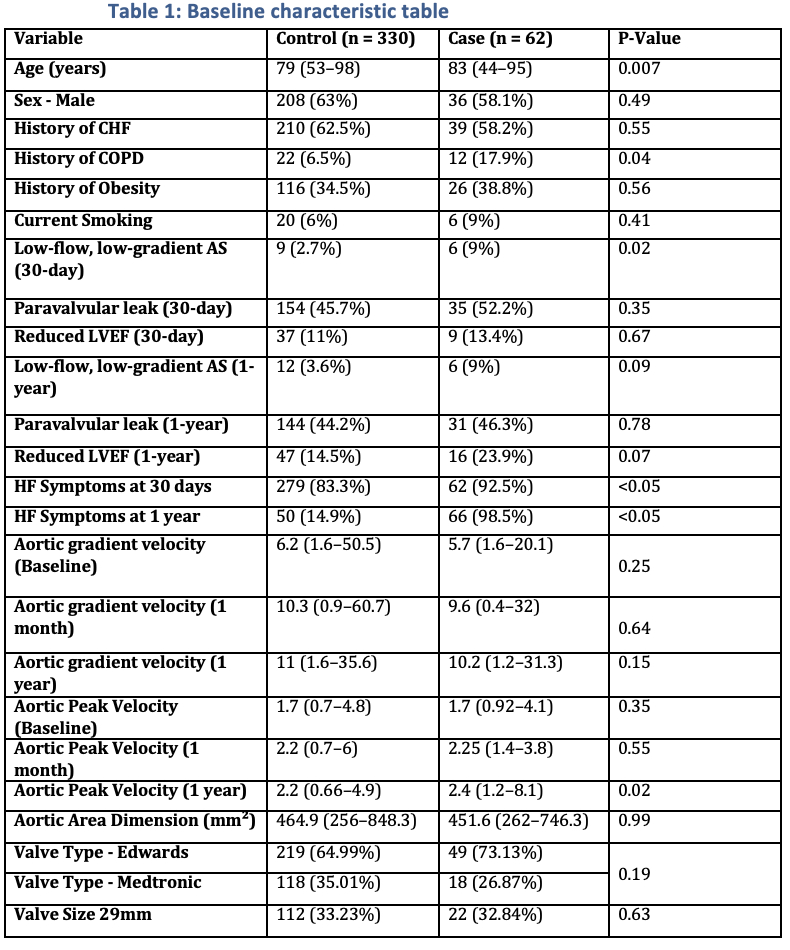
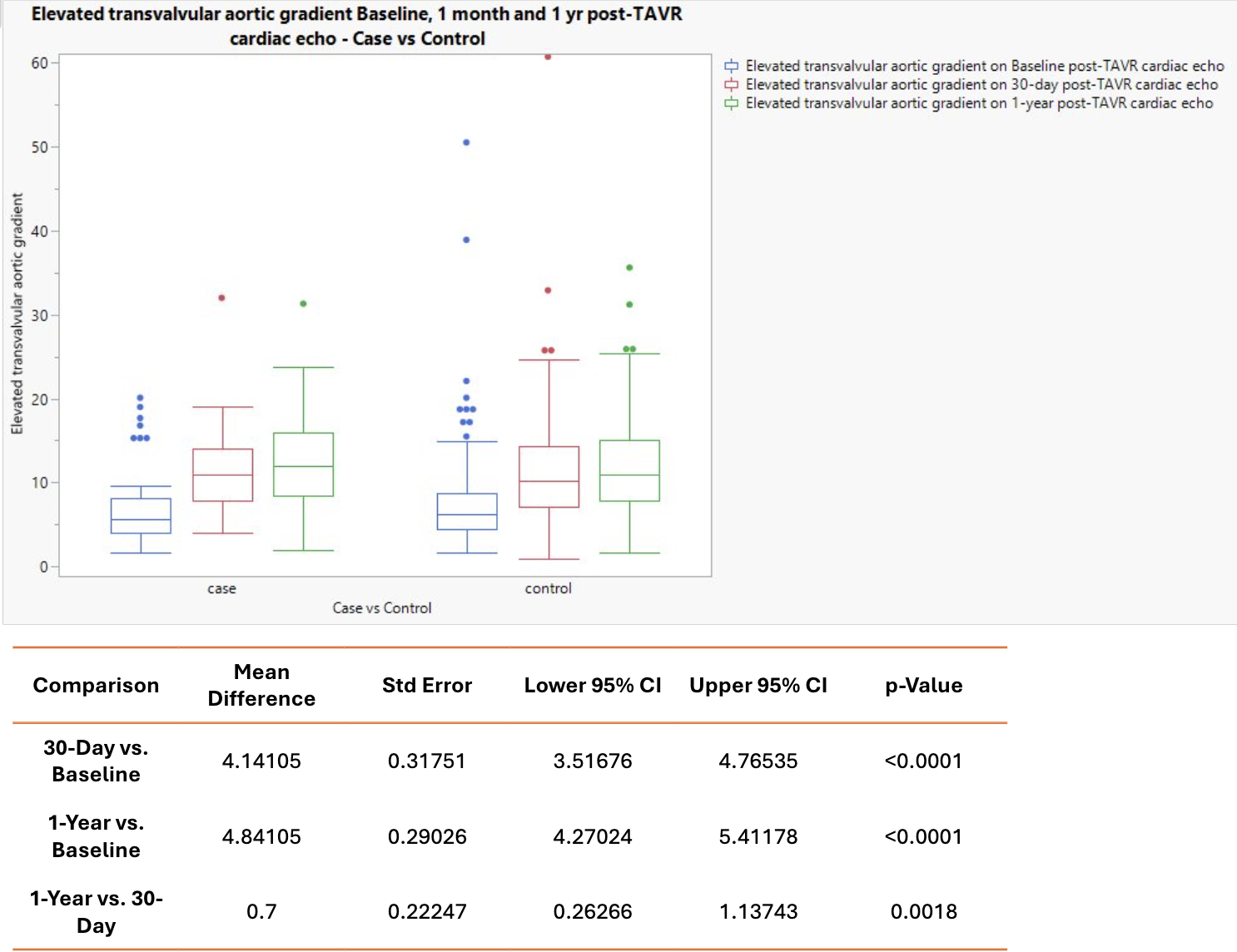
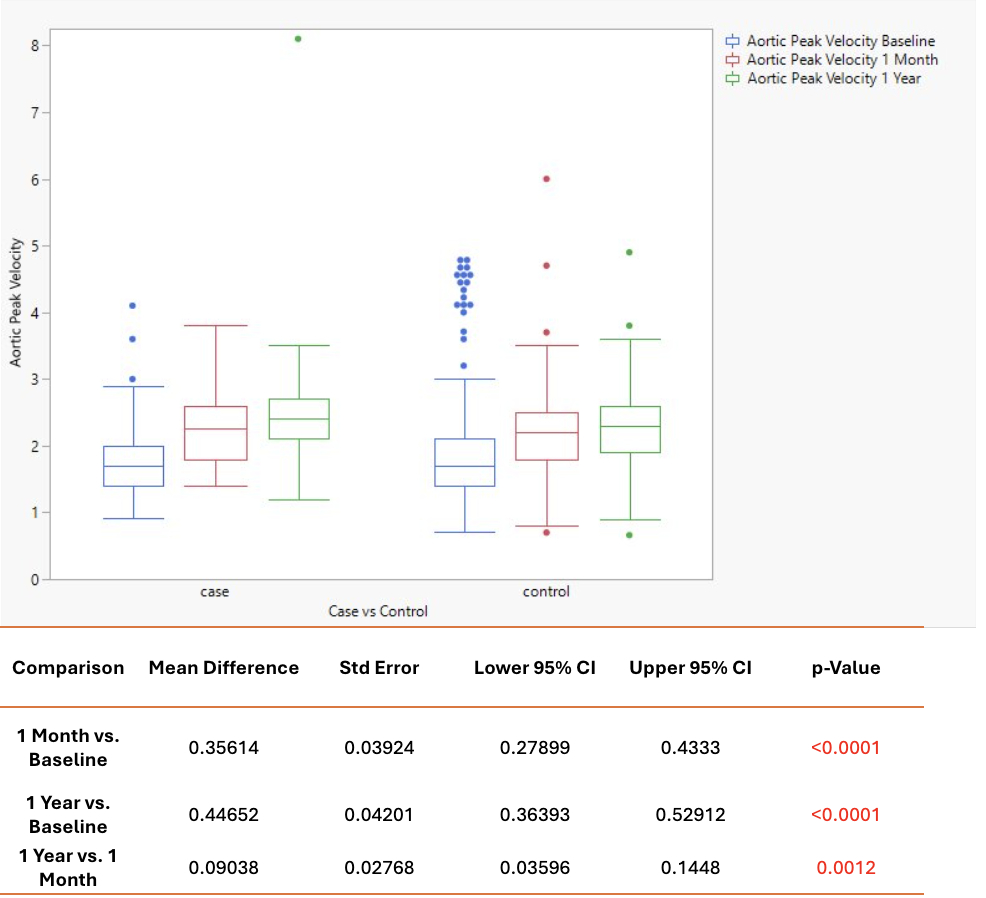
Results: A total of 392 patients (62 cases, 330 controls) were included (Table 1). Baseline transvalvular gradients and aortic peak velocities were similar between groups, indicating initially preserved valve function. At 30 days, both groups had a mild gradient increase (~4 mmHg) without significant differences. By 1 year, cases showed higher mean gradients (12 mmHg, p = 0.15) (Figure 1) and peak velocities (2.4 m/s, p = 0.02) (Figure 2). Cases gradient rise from 30 days to 1 year (+1.6 mmHg vs. +0.5 mmHg; p = 0.002). Predictors included older age (83 vs 79 yrs, p<0.05), COPD (18% vs 6.5%, p<0.05), and low-flow, low-gradient physiology at 30 days (9% vs. 3%, p = 0.028). Most cases developed heart failure symptoms by 1 year (92.5% vs 16.7%, p < 0.01).
Conclusion: Presumed valvular dysfunction after TAVR is marked by delayed but significant increases in transvalvular gradients and peak velocities, often leading to heart failure symptoms within a year. Despite similar early hemodynamics, cases showed distinct progression over time. Older age, COPD, and early low-flow, low-gradient physiology were key predictors. These findings highlight the need for ongoing echocardiographic monitoring to detect evolving dysfunction, early elevation in transvalvular gradient and guide timely intervention.
Hazique, Mohammad
(
Nuvance Health VBMC
, Poughkeepsie , New York , United States )
Lohana, Sameer
(
Nuvance Health VBMC
, Poughkeepsie , New York , United States )
Jafar, M Zubair
(
Nuvance Health VBMC
, Poughkeepsie , New York , United States )
Narayan, Rajeev
(
Columbia University Medical Center
, New York , New York , United States )
Author Disclosures:
Mohammad Hazique:DO NOT have relevant financial relationships
| Sameer Lohana:DO NOT have relevant financial relationships
| M zubair Jafar:DO NOT have relevant financial relationships
| Rajeev Narayan:No Answer