Decellularized Canola Leaves as a Bioscaffold for Cardiac Repair
Abstract Body (Do not enter title and authors here): Myocardial infarction (MI) causes cardiomyocyte loss and fibrotic scar formation, often leading to heart failure. Epicardial application of bioinductive ECM patches (e.g., SIS-ECM) has been shown to attenuate fibrotic scarring and improve post-MI heart function. However, animal-derived ECM materials are expensive, unsustainable, and can have batch-to-batch composition variability. Plant-based scaffolds are inexpensive, renewable, consistent, and easier to mass-produce, promoting planetary health and accessibility to a broader spectrum of patients. We evaluated decellularized canola (Brassica napus) leaves as a novel cardiac bioscaffold.
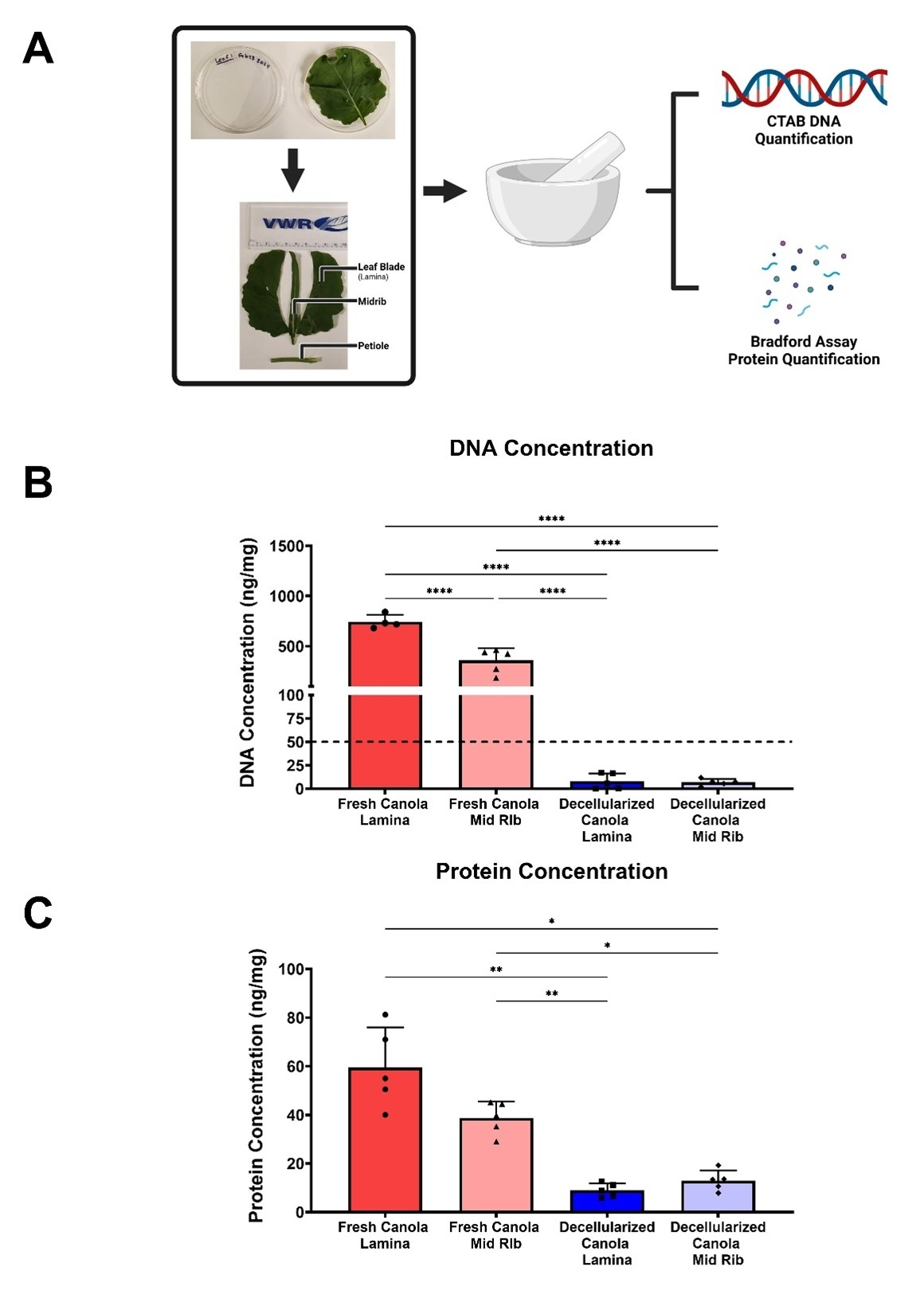
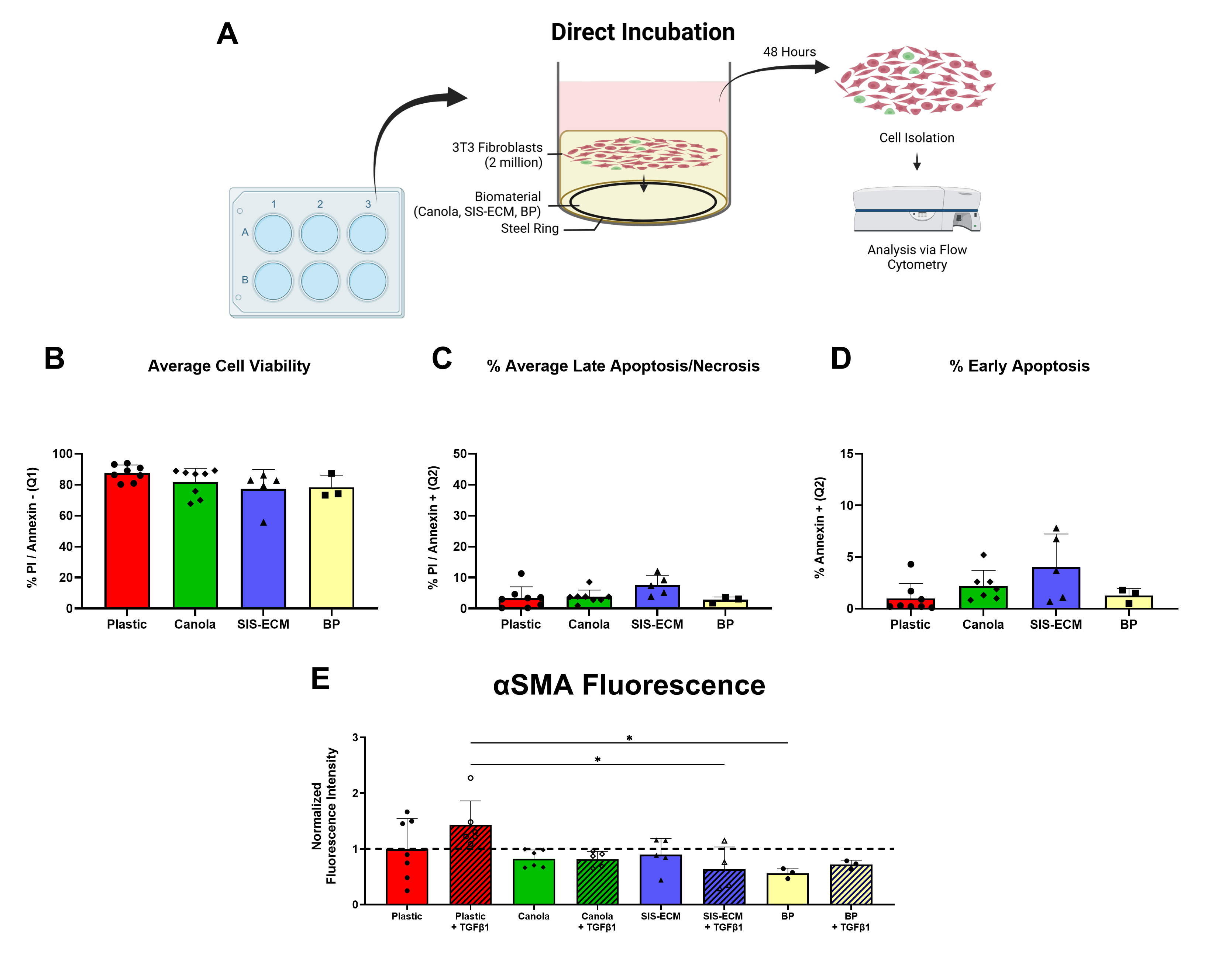
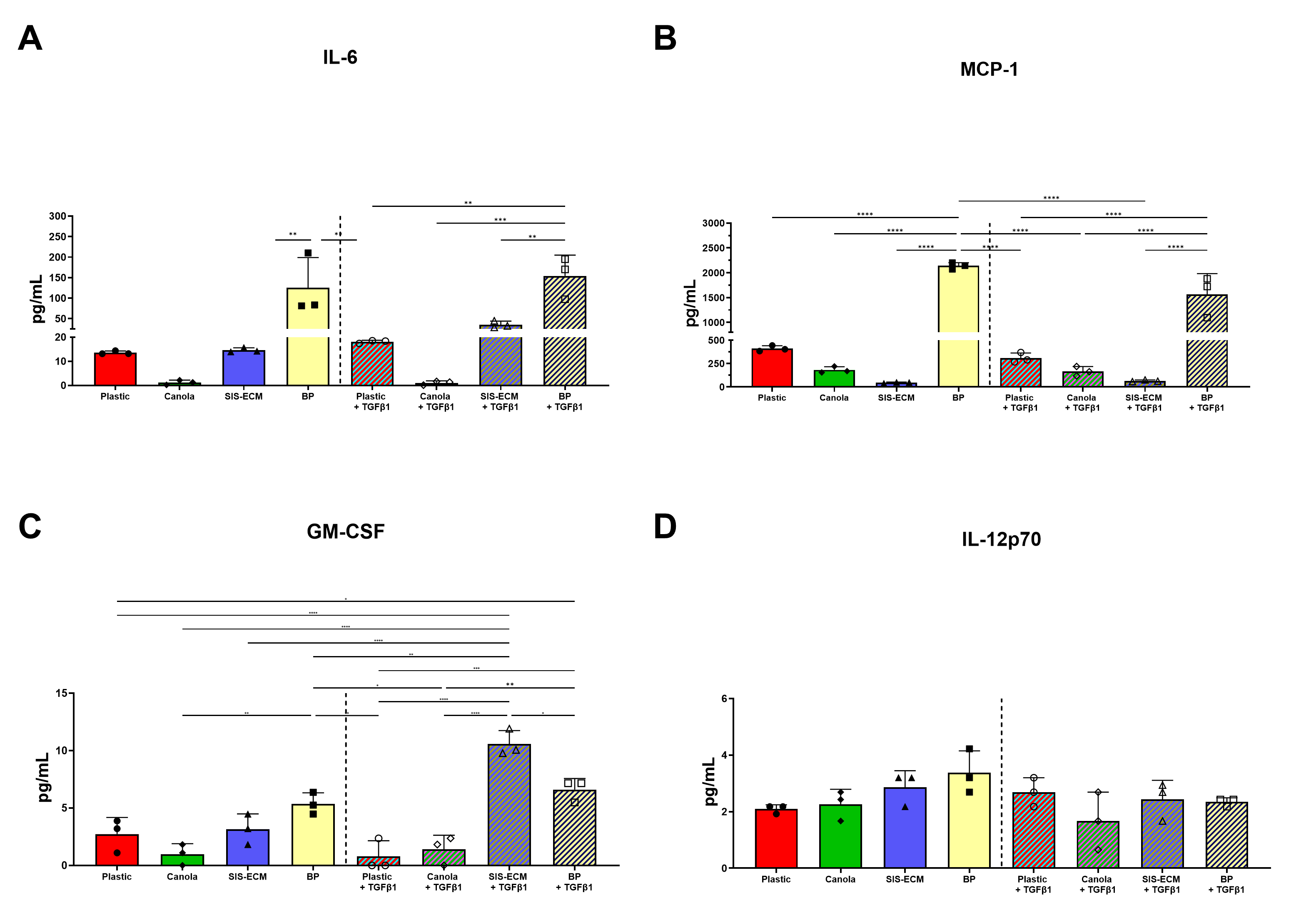
Canola leaves were decellularized via a detergent-based protocol. DNA quantification and histology confirmed complete cell removal with preservation of the leaves' native vasculature and cellulose-based architecture. Murine 3T3 fibroblasts were seeded for 48 hours onto canola scaffolds and FDA-approved materials, porcine small intestinal submucosa ECM (SIS-ECM) and bovine pericardium (BP), as controls. Cell viability and activation were measured by flow cytometry after Annexin V/propidium iodide or α-smooth muscle actin (α-SMA) staining. RT-qPCR quantified expression of profibrotic and angiogenic genes, and conditioned media were assessed for angiogenic proteins and inflammatory cytokines by multiplex immunoassay.
Detergent treatment produced acellular canola scaffolds with intact vascular and extracellular structure on histology. Fibroblast viability on canola (~82±9%) was high and did not differ significantly from SIS-ECM or BP controls (~77–78%; p>0.05). α-SMA levels in canola-treated fibroblasts (0.82±0.16) were comparable to SIS-ECM (0.90±0.29) and BP (0.56±0.09; p>0.05), indicating no excessive myofibroblast differentiation. Expression of pro-fibrotic genes (e.g. collagen I, TGF-β) showed no significant differences between groups. Notably, canola scaffolds elicited significantly lower secretion of IL-6, MCP-1, and GM-CSF from fibroblasts compared to SIS-ECM or BP controls, suggesting an attenuated inflammatory response.
Decellularized canola leaves constitute a structurally stable, non-cytotoxic scaffold that supports cardiac fibroblast survival without driving maladaptive fibrosis. As an abundant, inexpensive biomaterial, canola-derived scaffolds represent a novel, scalable alternative to animal ECM for myocardial repair. These proof-of-concept results warrant further in vivo evaluation of plant-based cardiac patches.
Kim, Sun Woo
(
UNIVERSITY CALGARY
, Calgary , Alberta , Canada )
Teng, Guoqi
(
UNIVERSITY CALGARY
, Calgary , Alberta , Canada )
Turnbull, Jeannine
(
UNIVERSITY CALGARY
, Calgary , Alberta , Canada )
Belke, Darrell
(
UNIVERSITY CALGARY
, Calgary , Alberta , Canada )
Deniset, Justin
(
UNIVERSITY CALGARY
, Calgary , Alberta , Canada )
Fedak, Paul
(
UNIVERSITY CALGARY
, Calgary , Alberta , Canada )
Author Disclosures:
Sun Woo Kim:DO NOT have relevant financial relationships
| Guoqi Teng:No Answer
| Jeannine Turnbull:No Answer
| Darrell Belke:No Answer
| Justin Deniset:DO NOT have relevant financial relationships
| Paul Fedak:DO NOT have relevant financial relationships