Post-operative Delirium Incidence and Correlates in Cardiac vs Non-cardiac Surgeries
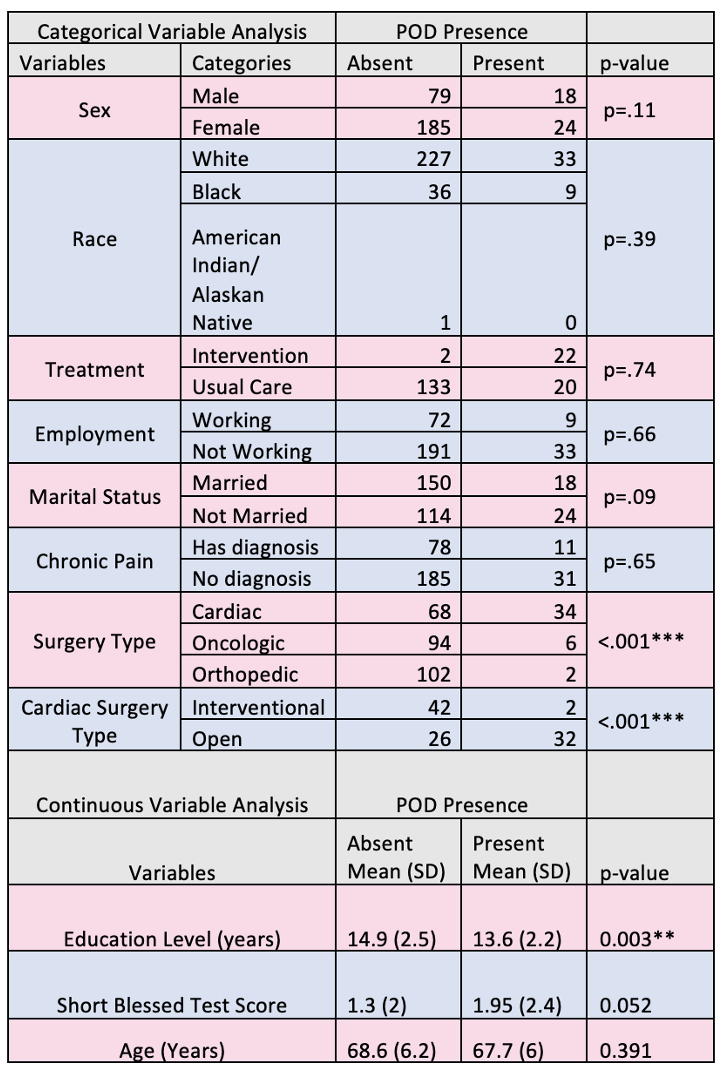
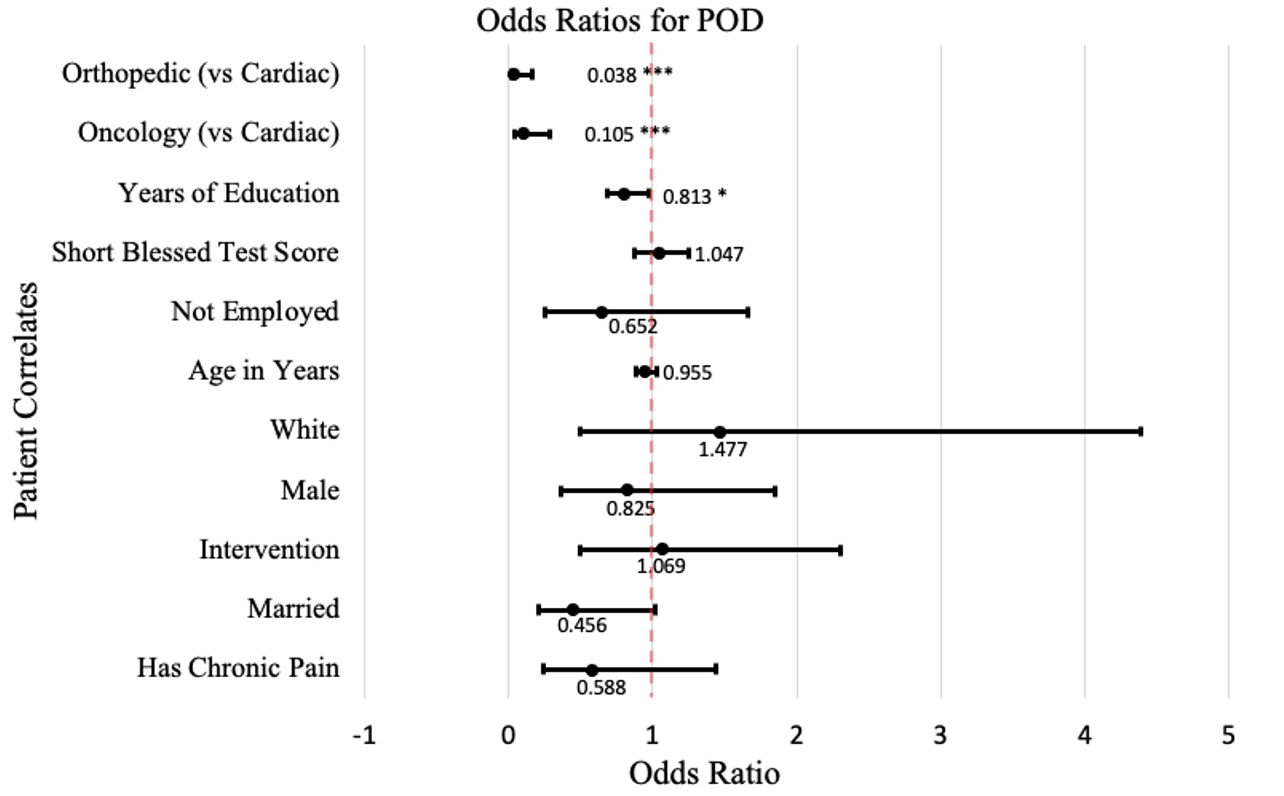
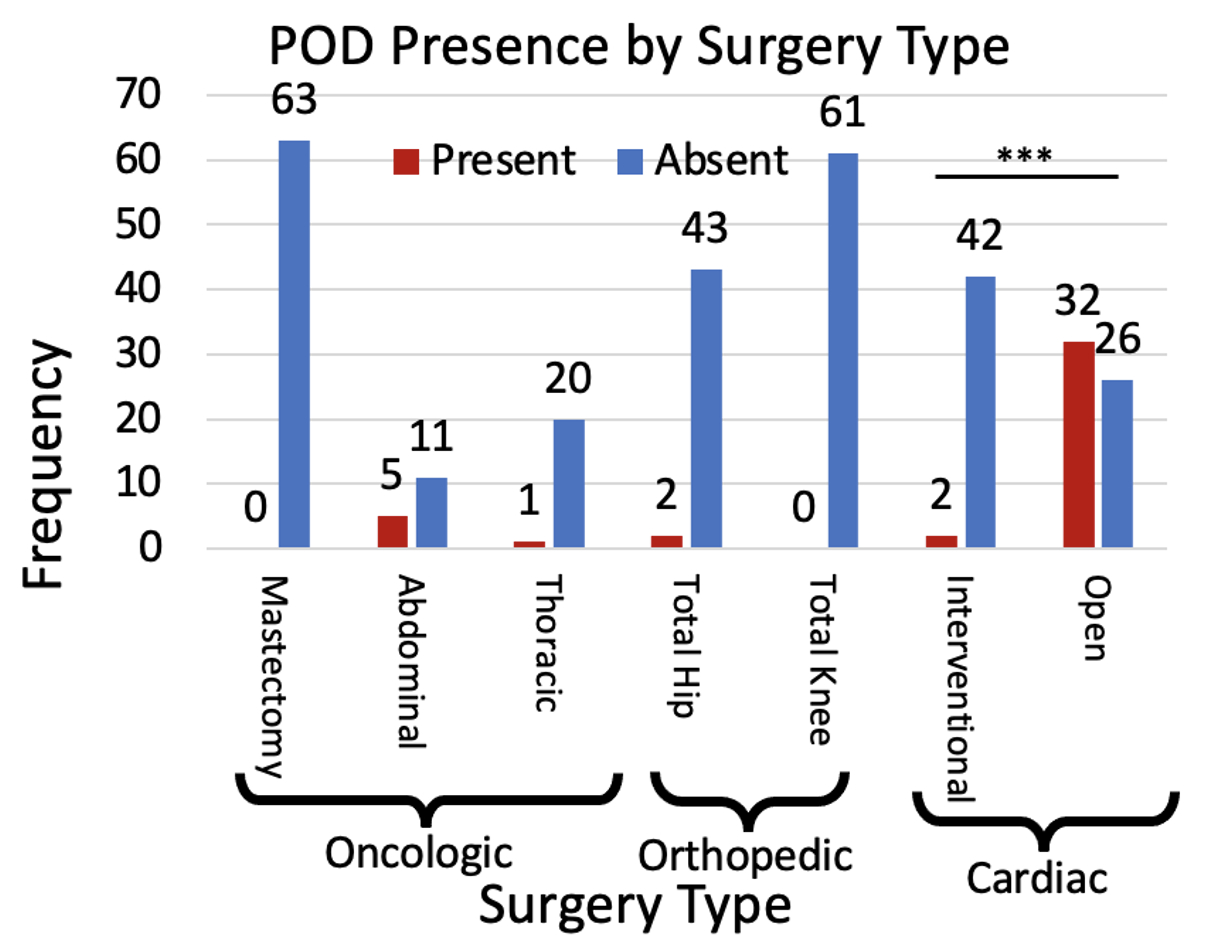
Abstract Body (Do not enter title and authors here): Background: Post-operative delirium (POD), characterized by an acute and fluctuating disturbance in mental status, is a common complication following surgery. Cardiac surgery, older adults, and those with anxiety or depression symptoms are especially vulnerable groups, yet few studies have evaluated the role of perioperative mental health interventions or examined the incidence and correlates of POD in this high-risk population. Research Question: What is the incidence and what are the correlates of POD in older adult surgical patients with symptoms of anxiety and/or depression prior to surgery, and how do these compare between cardiac and non-cardiac surgeries? Methods: This single-site randomized controlled trial (PMID:38569683) included 306 patients receiving cardiac (n=102), orthopedic (n=104), or oncologic surgery (n=100) aged ≥60 years with clinically significant anxiety and/or depression. Exclusion criteria included non-English speakers, severe cognitive impairment, and active suicidal ideation. POD was identified using the validated Chart-based Delirium Identification Instrument (CHART-DEL). Descriptive statistics were used to determine POD incidence and characterize the sample. Logistic regression analyses explored demographic predictors of POD. Results: The sample had a mean age of 68.5 years (SD=6), was 68.3% female (n=209), and predominantly white (85%, n=260). Overall, 13.7% (n=42) screened positive for POD. POD incidence varied significantly by surgical cohort: 33% (n=34) in the cardiac cohort, compared to 6% (n=6) in the oncologic cohort and 2% (n=2) in the orthopedic cohort. Among cardiac patients, open procedures were associated with significantly higher POD rates (55%, n=32) compared to interventional procedures (5%, n=2) (p<.001). Education level and surgery type were significant predictors of POD. Greater education attainment was associated with reduced POD risk (OR=.813; 95%CI: 0.681, 0.970; p=.022). Marital status showed a non-significant trend toward a protective effect (OR=.456 95%CI: 0.204, 1.02; p=.056). Conclusion: Older adults with anxiety and/or depression symptoms undergoing cardiac surgery, particularly open procedures, are at elevated risk for POD. Higher educational attainment appears to confer a protective effect, potentially via increased cognitive reserve. These findings emphasize the need for targeted perioperative mental health strategies in high-risk surgical populations.
Hanson, Jorin
(
Washington University School of Med
, Saint Louis , Missouri , United States )
Abraham, Joanna
(
Washington University School of Med
, Saint Louis , Missouri , United States )
Cordner, Theresa
(
Washington University School of Med
, Saint Louis , Missouri , United States )
Avidan, Michael
(
Washington University School of Med
, Saint Louis , Missouri , United States )
Lenze, Eric
(
Washington University School of Med
, Saint Louis , Missouri , United States )
Holzer, Katherine
(
Washington University School of Med
, Saint Louis , Missouri , United States )
Author Disclosures:
Jorin Hanson:DO NOT have relevant financial relationships
| Joanna Abraham:DO NOT have relevant financial relationships
| Theresa Cordner:DO NOT have relevant financial relationships
| Michael Avidan:No Answer
| Eric Lenze:No Answer
| Katherine Holzer:DO NOT have relevant financial relationships