Comprehensive Phenotypic Characterization of Late Gadolinium Enhancement Improves Sudden Cardiac Death Risk Stratification in Nonischemic Dilated Cardiomyopathy
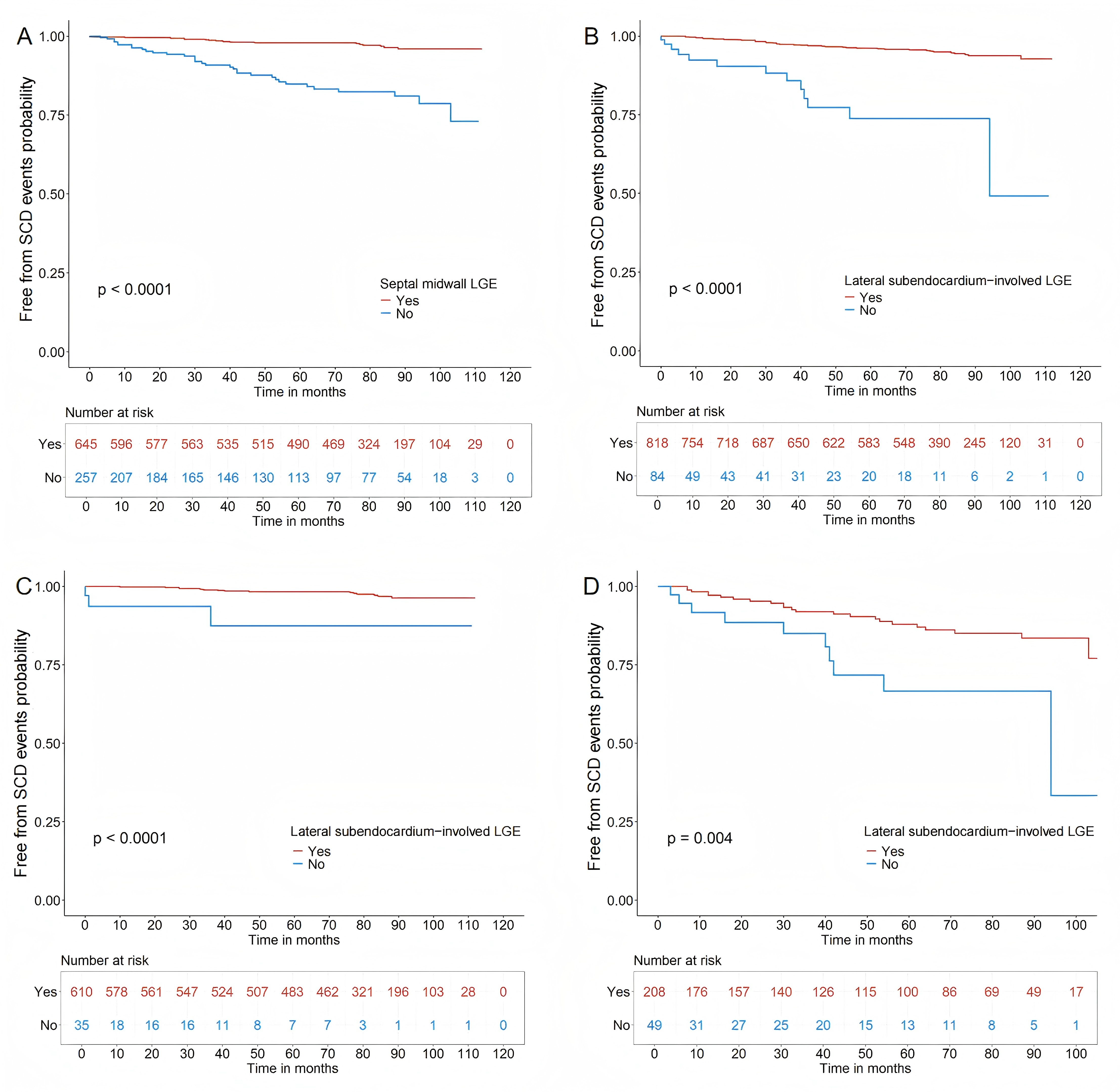
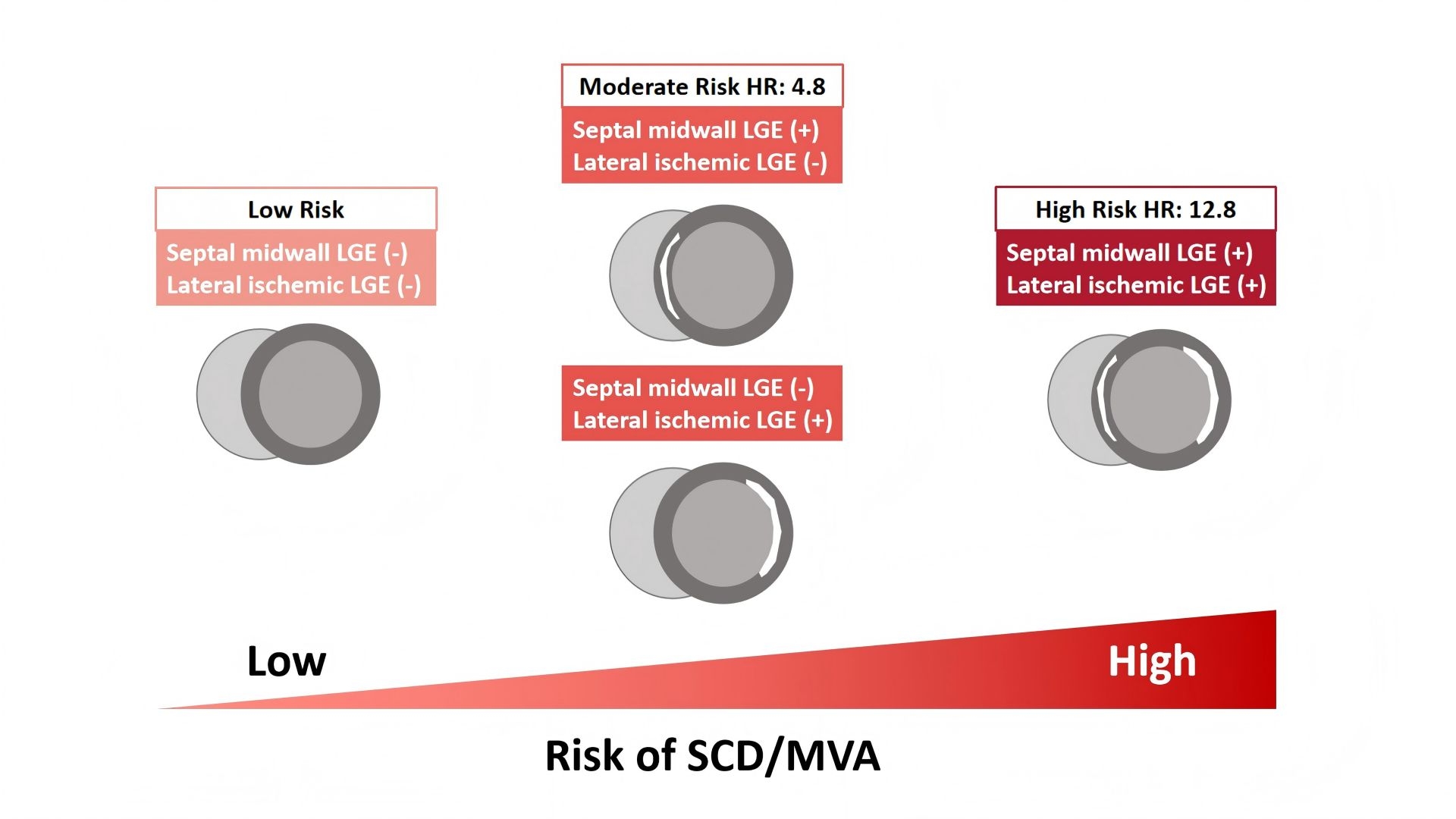
Abstract Body (Do not enter title and authors here): Background Late gadolinium enhancement (LGE) is an established predictor of sudden cardiac death (SCD) in nonischemic dilated cardiomyopathy (DCM). However, the prognostic value of LGE phenotypes-particularly those involving the subendocardium-remain incompletely demonstrated. Research Questions To explore the prevalence and prognostic value of subendocardium-involved LGE in nonischemic DCM, and to determine whether integrating LGE pattern and location improves SCD risk stratification. Methods In this retrospective single-center study, adults with nonischemic DCM who underwent cardiac MRI between July 2015 and December 2018 were consecutively enrolled. SCD-related events included SCD, appropriate implantable cardioverter-defibrillator shock, and resuscitation after cardiac arrest. Cox regression analysis and Kaplan-Meier analysis were performed to identify the association of LGE phenotypes with outcomes. Results Among 902 patients (mean age 46 years±14, 78.7% men), subendocardium-involved LGE and mid-wall LGE were observed in 14.3% and 29.1%, predominantly involving the lateral wall (65.1%) and interventricular septum (97.7%), respectively. During a median follow-up of 77 months (IQR 40-92 months), 51 (5.7%) patients experienced SCD events. In multivariable analysis, septal midwall LGE (adjusted HR 3.84; 95% CI 2.06-7.17; P < .001) and lateral subendocardium-involved LGE (HR 3.53; 95% CI 1.76-7.08; P < .001) were independent predictors of SCD-related events. A three-tier SCD risk model was developed: lowest risk (no septal midwall or lateral subendocardium-involved LGE), intermediate risk (either LGE phenotype; HR 4.8, 95% CI 2.5-9.2, P < .001), and highest risk (both phenotypes; HR 12.8, 95% CI 5.35-30.51, P < .001). This model reclassified 53.5% of patients and demonstrated incremental prognostic value beyond LVEF≤35% (C-statistic 0.75 vs 0.56, P < .001). Conclusion In nonischemic DCM, both lateral subendocardial LGE and septal midwall LGE emerged as independent predictors of SCD. The novel SCD risk model integrating these LGE phenotypes demonstrated superior prognostic performance compared to conventional prognosticator, potentially enabling more precise implantable cardioverter-defibrillator (ICD) candidate selection.
Jia, Xi
( Fuwai Hospital
, Beijing
, China
)
Zhao, Shihua
( Fuwai Hospital
, Beijing
, China
)
Author Disclosures:
Xi Jia:DO NOT have relevant financial relationships
| Shihua Zhao:No Answer