
Logo

American Heart Association

  22
  0


Final ID: MP269

Mapping Cardiogenic Shock Care in California: Geographic Gaps and Hospital Capability Across a Decentralized System

Abstract Body (Do not enter title and authors here): Background:
Cardiogenic shock (CS) is a high-acuity condition with in-hospital mortality rates of 30–40%. Over time, the acuity and multimorbidity of patients with CS has increased, along with the number of CS admissions and use of mechanical circulatory support (MCS). In response, professional societies advocate for a three-tiered cardiac intensive care unit (CICU) model based on patient acuity and hospital capabilities. State level and national data outlining availability of CICU care is not available, hampering efforts to develop coordinated care systems. This challenge is pronounced in large states with competing health care systems like California.

Objective:
The goal of this study is to characterize CS care capabilities across California, map the location and catchment areas of Level 1 and Level 2 CICUs, and identify access disparities within the state's decentralized healthcare system.

Methods:
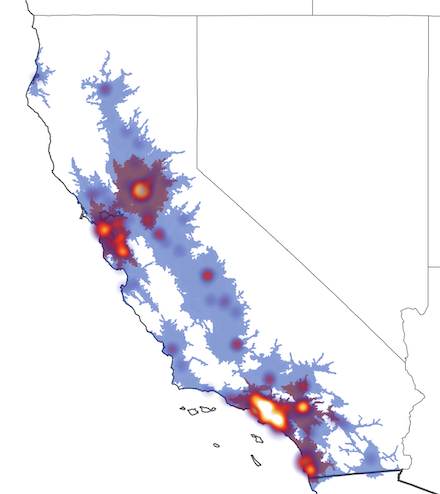
We identified cardio-capable hospitals using California HCAI databases, 2021 Census data, and manufacturer information (Getinge, Abiomed). Structured surveys were sent to each hospital to assess staffing and resource availability. Hospitals were categorized by their capability to manage CS as Level 1-3 CICUs based on professional staffing and therapeutic resources. Geospatial analysis was performed to map CICU locations with their estimated geographic reach based on 60-minute travel time and population density.

Results:
We identified 184 cardio-capable hospitals throughout the state of California. Of these, 16 (8.7%) met the criteria for Level 1 CICU designation. These were concentrated in densely populated urban areas, leaving large rural areas outside of timely access to advanced CS care (Figure 1 and Figure 2). Survey responses were received from 88 institutions (Table 1), most of which were urban (89.7%). Dedicated CICUs were present in 29.5%. CS care resources varied: dedicated shock teams (21.6%), on-site ECMO (44.3%), Impella (69.3%), and intra-aortic balloon pumps (76.1%). Only 19.3% had 24/7 intensivist coverage, and 10.2% reported critical care cardiologist staffing. Most had on-site cath labs (78.4%) and cardiothoracic surgery (64.7%).

Conclusion:
There is significant variation in hospital capabilities for managing CS across California, with a limited number of Level 1 CICUs that are concentrated in urban areas. These findings highlight the need for regionalized care networks to ensure equitable access to comprehensive care for patients with CS.
  • Cornell, Ella  ( UCSF , San Francisco , California , United States )
  • Klein, Alyssa  ( Tufts University School of Medicine , Boston , Massachusetts , United States )
  • Oconnor, Catherine  ( Wake Forest University , Winston-Salem , North Carolina , United States )
  • O'brien, Connor  ( UCSF , San Francisco , California , United States )
  • Author Disclosures:
    Ella Cornell: DO NOT have relevant financial relationships | Alyssa Klein: No Answer | Catherine OConnor: DO NOT have relevant financial relationships | Connor O'Brien: DO have relevant financial relationships ; Consultant:Johnson and Johnson MedTech:Past (completed)
Meeting Info:

Scientific Sessions 2025

2025

New Orleans, Louisiana

Session Info:
More abstracts on this topic:
Admission Acid-Base Status and Mortality in Cardiac Intensive Care Unit Patients

Canova Tyler, Lipps Kirsten, Hillerson Dustin, Kashani Kianoush, Dahiya Garima, Jentzer Jacob

An Unusual Presentation of Cerebellar Stroke Following the Removal of Microaxial Flow Pump

Liu Zi Qian, Alsheikh-kassim Mohammad, Karpenos Joseph, Frodey Kevin

More abstracts from these authors:
Expert Faculty Pericardiocentesis

Il'giovine Zachary, O'brien Connor, Yuriditsky Eugene

Biomarkers in cardiogenic shock: but isn't lactic acide enough?

O'brien Connor, Park Ashley

You have to be authorized to contact abstract author. Please, Login
Not Available