
Logo

American Heart Association

  17
  0


Final ID: MP1905

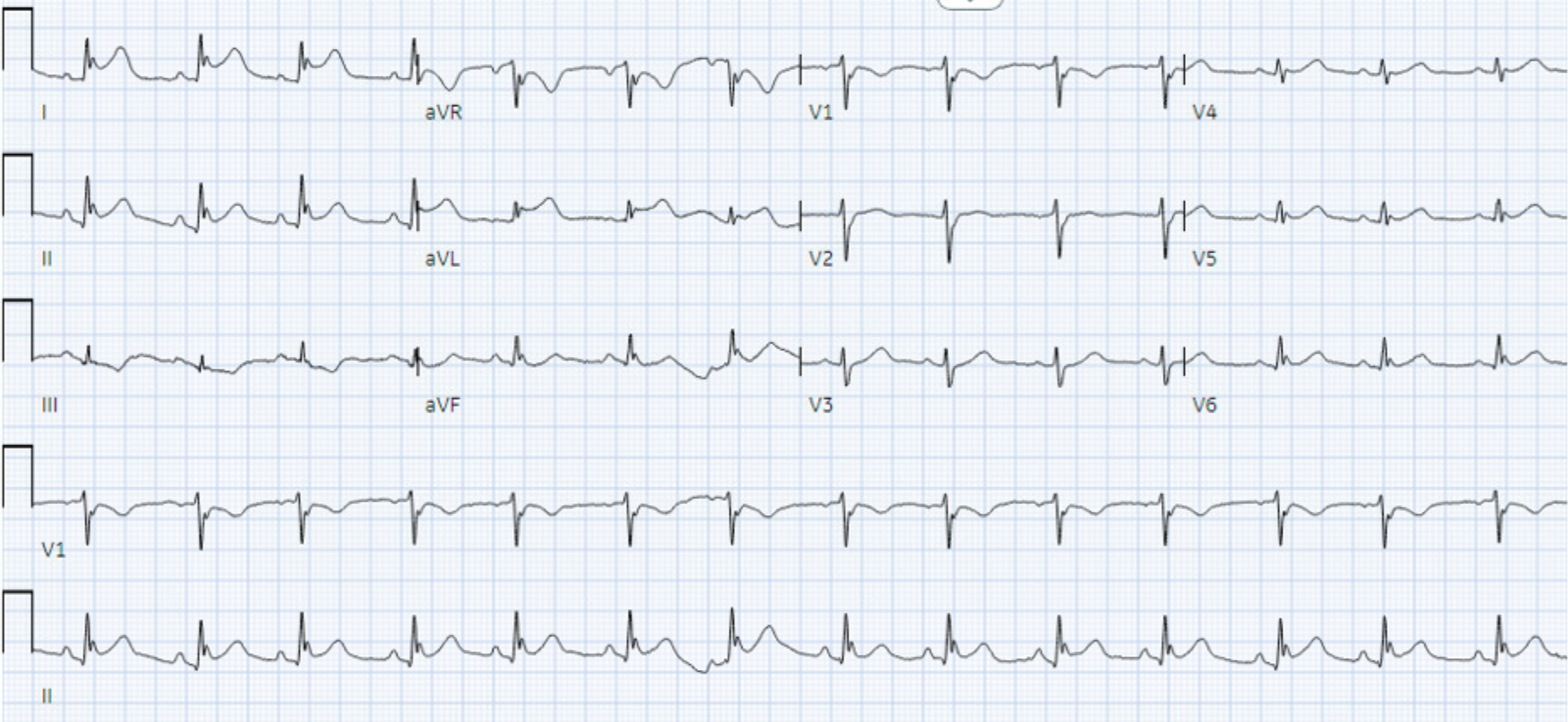
Myocarditis Mimicking a Lateral STEMI: A Façade by Flu-Associated Empyema

Abstract Body (Do not enter title and authors here): Background
Myocarditis can present with ST-segment elevations and rising troponin levels, mimicking an acute coronary syndrome. This case highlights a rare presentation of myocarditis secondary to influenza B that mimicked a lateral ST-segment elevation myocardial infarction (STEMI).

Case Presentation
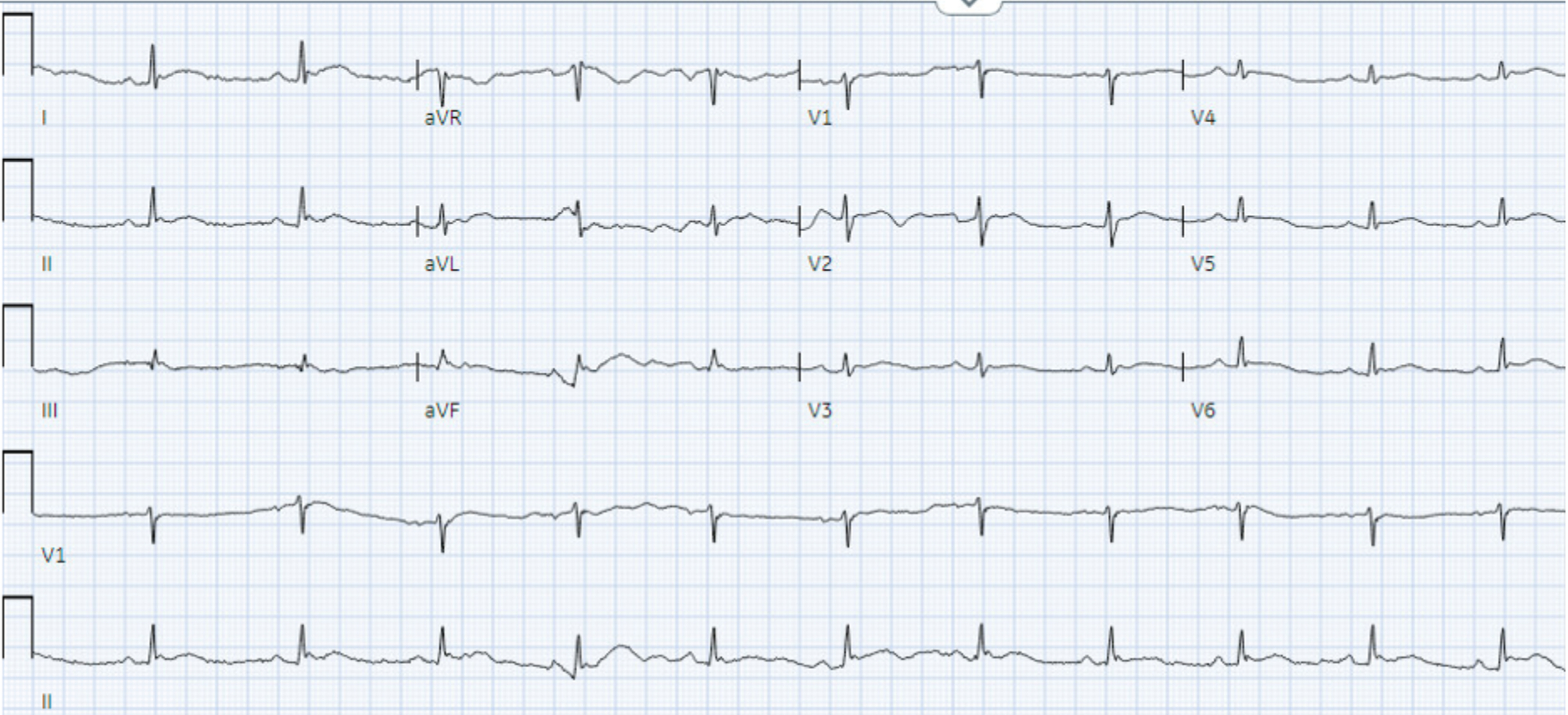
A 50-year-old woman presented to the emergency department with shortness of breath and hypoxia, diagnosed with influenza B. Computed tomography revealed superimposed bacterial pneumonia and a complex parapneumonic effusion in the left lower lobe. The patient reported chest pain, and an electrocardiogram (ECG) showed ST-segment elevations in leads I, II, and aVL. Troponin-T was elevated at 723 ng/L. Urgent cardiac catheterization revealed no evidence of coronary artery disease. A chest tube drained the empyema and within 12 hours, ST-segment elevations normalized. Echocardiogram was unremarkable except for a left pleural effusion. Cardiac magnetic resonance imaging could not be obtained due to worsening respiratory status.

Management & Outcome
The patient was treated with colchicine and aspirin for presumed myocarditis. The hospital course was complicated by recurrent atrial fibrillation and multifocal atrial tachycardia. After aggressive pulmonary hygiene, the patient recovered and was discharged. The lateral ST-segment elevation was ultimately attributed to localized myocarditis from adjacent inflammation from empyema.

Discussion
This case underscores the importance of considering myocarditis in the differential for ST-segment elevations, particularly in the setting of acute infection. This presentation was unique in that ST-segment elevations initially concerning for acute coronary syndrome were instead a result of inflammation localized to the lateral wall of the left ventricle from the empyema. Although cardiac magnetic resonance imaging was unable to be obtained for confirmation, the diagnosis of myocarditis is supported by ECG changes, elevated troponin, and non-obstructive coronary arteries.

Conclusion
Myocarditis should remain a key consideration in patients presenting with ST-segment elevations and elevated troponin levels, even when ECG changes localize to a specific coronary territory. This case demonstrates how localized myocardial inflammation from an adjacent empyema can mimic a STEMI pattern, which can resolve following drainage of the empyema. Clinicians should be aware that extracardiac inflammatory processes can trigger regional myocarditis.
  • Mkrtchyan, Norayr  ( UC Davis School of Medicine , Sacramento , California , United States )
  • Akram, Alirameen  ( UC Davis , Sacramento , California , United States )
  • Dixit, Neal  ( UC Davis , Sacramento , California , United States )
  • Author Disclosures:
    Norayr Mkrtchyan: DO NOT have relevant financial relationships | Alirameen Akram: No Answer | Neal Dixit: No Answer
Meeting Info:

Scientific Sessions 2025

2025

New Orleans, Louisiana

Session Info:

Clinical Case: Critical Care Cardiology

Monday, 11/10/2025 , 09:15AM - 10:25AM

Moderated Digital Poster Session

More abstracts on this topic:
A Case Presentation of Severe Left Ventricular Dysfunction from Focal Myocarditis due to Immune Checkpoint Inhibitor

Patel Romil, Hussain Kifah, Gordon Robert

City-Wide Hands-On Cardiopulmonary Resuscitation Training Improves Basic Life Support Skills in Elementary School children:A Healthcare-Led Initiative With Support From Local Authorities and Fire Department.

Otsuka Maki, Nohara Shoichiro, Kawakami Shoji, Fukumoto Yoshihiro, Yamakawa Rei, Hayashida Miyu, Nishikido Aya, Matsushima Yoshihisa, Yanai Toshiyuki, Ohbu Kyoko, Homma Takehiro, Shibata Tatsuhiro

You have to be authorized to contact abstract author. Please, Login
Not Available