Logo

American Heart Association

  13
  0


Final ID: MP1925

Utilizing Virtual Reality for Pre-Transplant Planning in Patients with Congenital Heart Disease

Abstract Body (Do not enter title and authors here): Background
Virtual reality (VR) has emerged as a powerful tool in the pre-procedural planning of complex congenital heart disease (CHD), enabling enhanced visualization of anatomy beyond traditional imaging. This technology allows for immersive, patient-specific simulations that support surgical decision-making and procedural strategy, particularly in high-risk transplant cases. This case focuses on a 17-year-old Jehovah’s Witness with complex congenital anatomy undergoing evaluation for bloodless heart transplantation, highlighting how VR was integrated into the planning process.

Research Question
How can VR segmentation and simulation enhance surgical planning and team readiness in pediatric heart transplants, particularly for patients with complex anatomy or prior surgeries?

Methods
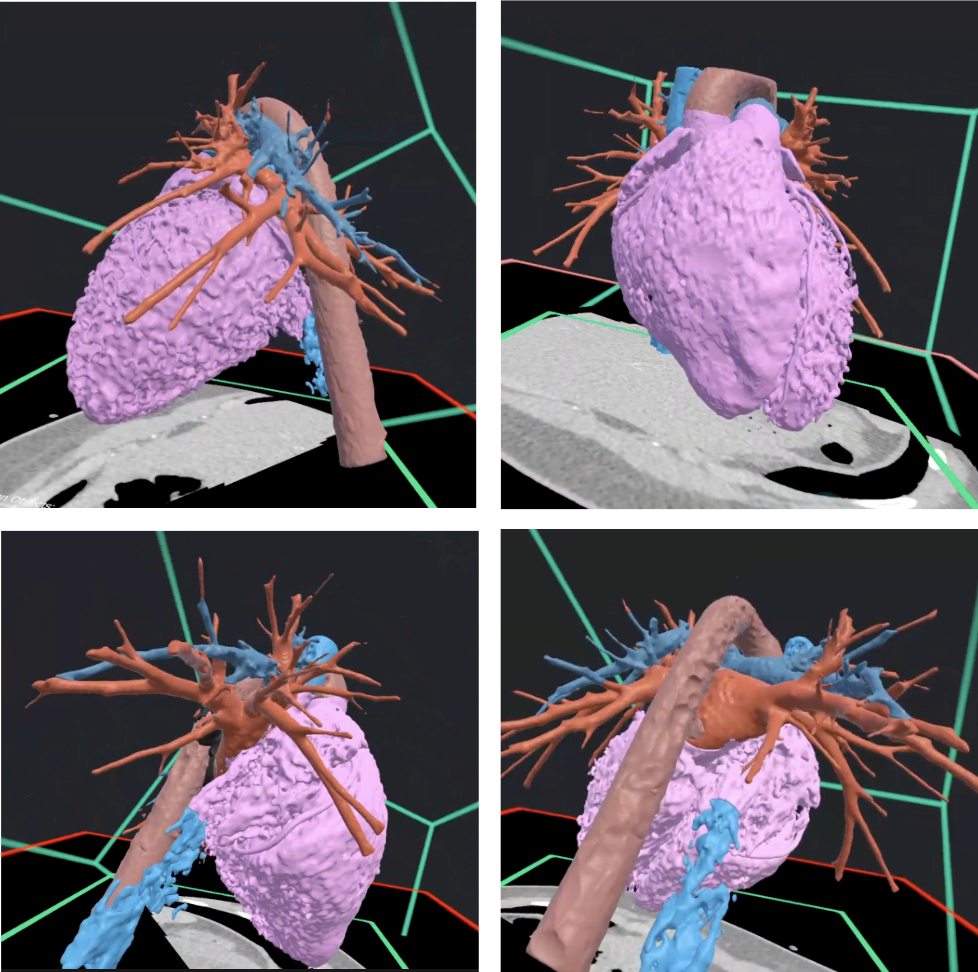
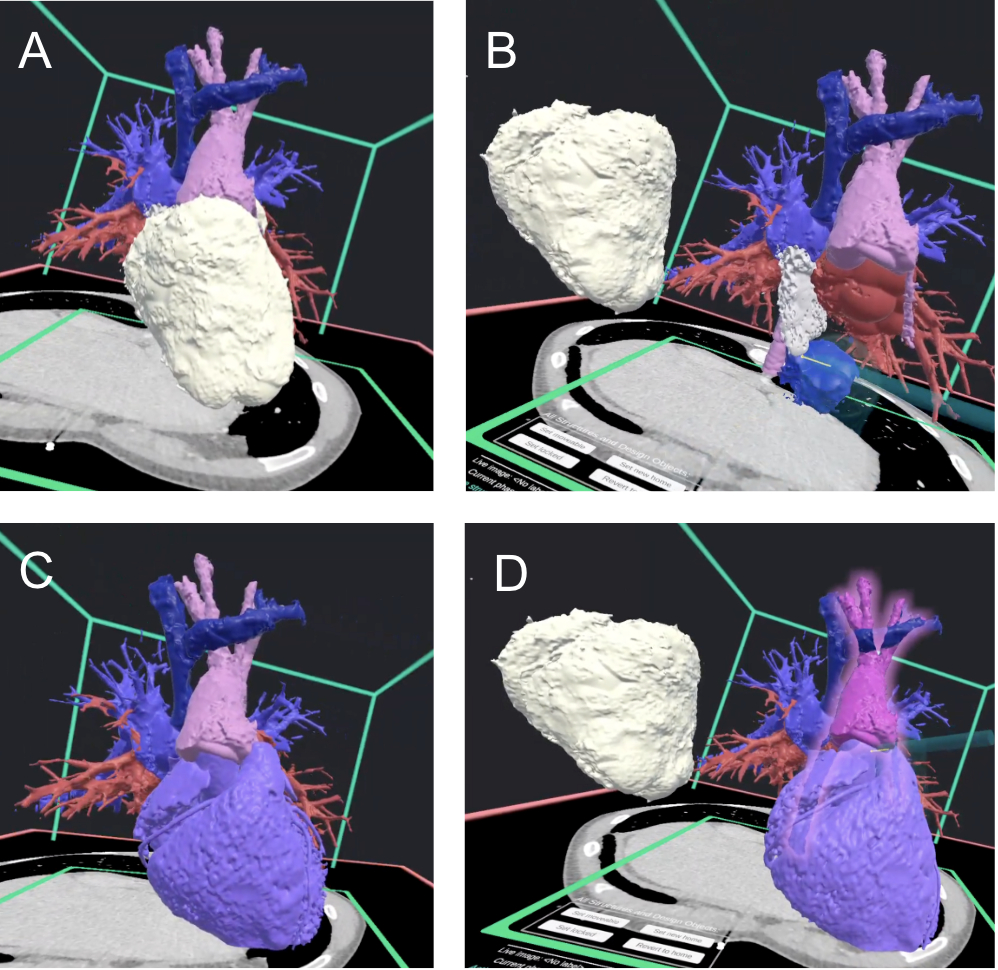
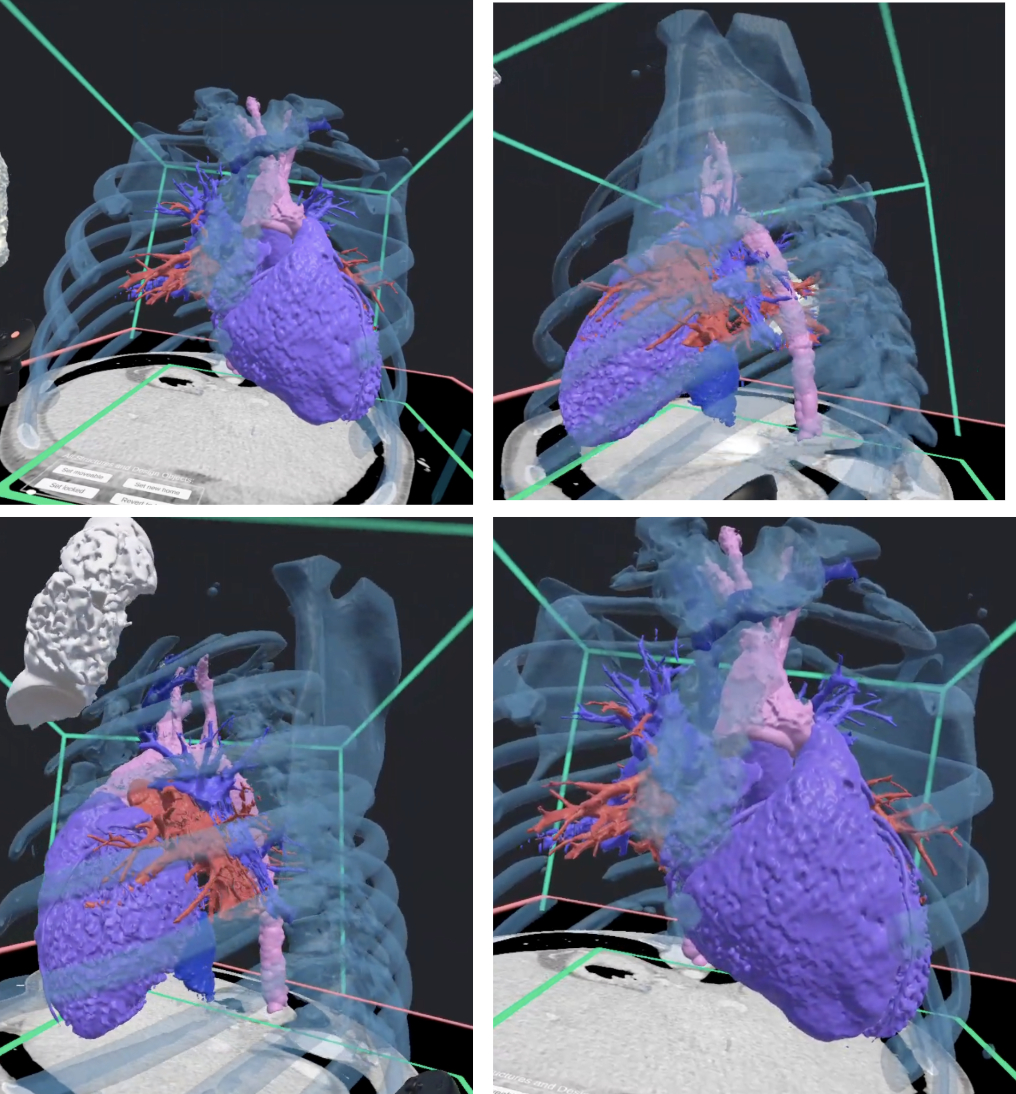
The patient’s history includes heterotaxy syndrome with right atrial isomerism, right-dominant complete AV canal defect and D-transposition of the great arteries, who is s/p staged Fontan palliation. His venous anatomy consisted of a right-sided SVC with bidirectional cavopulmonary anastomosis to the right pulmonary artery, left-sided IVC to the Fontan conduit and all pulmonary veins draining to a left atrium. Additionally, he underwent stent placement in the LPA and the Fontan conduit for stenosis. Cardiac CT and CTA abdomen/pelvis were acquired for transplant evaluation. 3D segmentation was performed by FDA-approved Elucis software and analyzed in a VR environment using a Meta Pro VR headset. In collaboration with the surgical team, virtual heart transplantation was performed with baffling of the left sided IVC to a ‘normal’ donor heart of appropriate size.

Results
The patient successfully underwent cardiac transplant. VR simulated virtual transplant enabled a thorough pre-operative assessment of complex intracardiac and extracardiac anatomy and allowed for patient specific planning. These tools helped identify potential surgical challenges in advance and aided in the development of a detailed operative roadmap. The team reported improved procedural confidence and more robust interdepartmental communication during planning.

Conclusion
The application of VR segmentation and simulation provided critical insights that shaped surgical planning for a bloodless pediatric heart transplant. Incorporating virtual 3D modeling into transplant evaluation enhances decision-making and outcomes in complex cases, supporting its broader use in congenital cardiac surgery.
  • Nair, Priya  ( University of Chicago , Chicago , Illinois , United States )
  • Pophal, Stephen  ( University of Chicago , Chicago , Illinois , United States )
  • Hibono, Narutoshi  ( University of Chicago , Chicago , Illinois , United States )
  • Ganigara, Madhusudan  ( University of Chicago , Chicago , Illinois , United States )
  • Author Disclosures:
    Priya Nair: DO NOT have relevant financial relationships | Stephen Pophal: No Answer | Narutoshi Hibono: DO NOT have relevant financial relationships | Madhusudan Ganigara: No Answer
Meeting Info:

Scientific Sessions 2025

2025

New Orleans, Louisiana

Session Info:

Deep Learning and Enhancing Risk Evaluation

Monday, 11/10/2025 , 01:45PM - 02:35PM

Moderated Digital Poster Session

You have to be authorized to contact abstract author. Please, Login
Not Available