
Logo

American Heart Association

  18
  0


Final ID: MP892

Impact of downtime on surgical outcomes of acute type-A aortic dissection presenting with cardiopulmonary arrest

Abstract Body (Do not enter title and authors here): Background: We analyzed patients with acute type-A aortic dissection (ATAAD) presenting with cardiopulmonary arrest (CPA) to establish whether the timing of operative treatment and aggressive cardiopulmonary resuscitation (CPR) are factors in determining outcomes.
Methods: A total of 671 patients with ATAAD were brought to our hospital between August 2003 and July 2023. Of the total, 201 patients (30%) presented with CPA. Their mean age was 71.0 ± 13.8 years, with the prevalence of out-of-hospital CPA at 89%. The return of spontaneous circulation (ROSC) was achieved after initial CPR in 25 patients (12%), and extracorporeal cardiopulmonary resuscitation (ECPR) was subsequently applied in 37 patients (18%). Immediate aortic repair was selected as the first line of treatment if ROSC had been achieved during CPR; eventually 30 patients (15%) underwent surgery (CPA patient )(Image 1). Among the patients who had not experienced CPA (non-CPA patient), 439 underwent aortic repair. We analyzed the effects of downtime, defined as the interval between the collapse and return of spontaneous circulation, or between collapse and the establishment of ECPR, as well as immediate aortic repair on surgical outcomes.
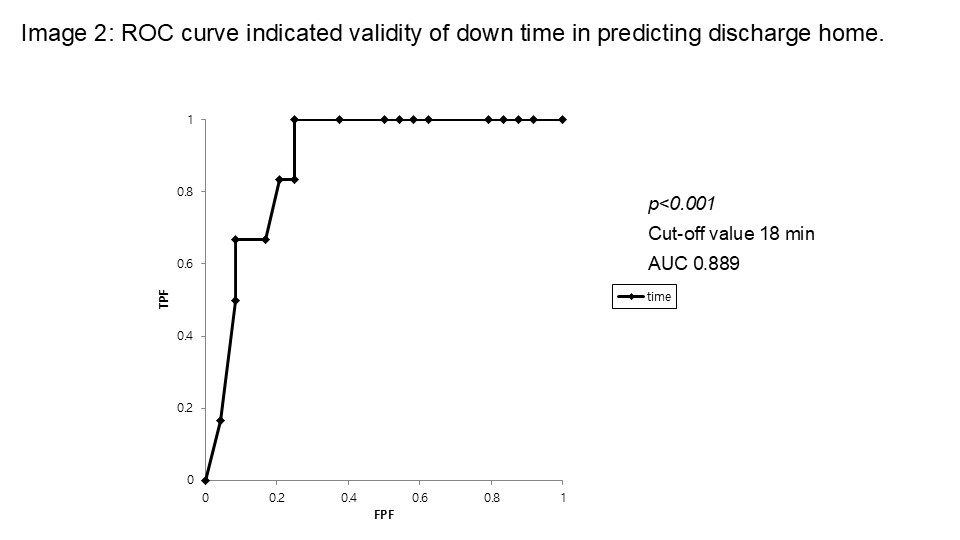
Results: We observed a significant difference in early mortality rates between patients with CPA and non-CPA of 36.6% (n=11/30) and 5.0% (n=22/439), respectively (P < .001). Among CPA patients, preoperative coronary malperfusion was the only predictor of early mortality (P = .04). Seven CPA patients (23.3%) were able to return home, and the cumulative five-year survival rate was 27.5%. According to the multivariable Cox survival analysis, coronary malperfusion and downtime were associated with increased long-term mortality (P = .002 and P = .009). The optimum downtime cut-off point for predicting discharge from hospital was 18 minutes (P < .001)(Image 2).
Conclusions: Although preoperative cardiopulmonary arrest is associated with significantly high mortality in patients undergoing aortic repair for AYAAD, shorter intervals between the collapse and return of circulation, combined with immediate aortic repair, significantly improved their outcomes.
  • Tsukube, Takuro  ( Japanese Red Cross Kobe Hospital , Kobe , Japan )
  • Izumi, So  ( Japanese Red Cross Kobe Hospital , Kobe , Japan )
  • Miki, Fuyuko  ( Japanese Red Cross Kobe Hospital , Kobe , Japan )
  • Karaki, Jun  ( Japanese Red Cross Kobe Hospital , Kobe , Japan )
  • Kanno, Reiko  ( Japanese Red Cross Kobe Hospital , Kobe , Japan )
  • Author Disclosures:
    Takuro Tsukube: DO NOT have relevant financial relationships | So Izumi: DO NOT have relevant financial relationships | Fuyuko Miki: DO NOT have relevant financial relationships | Jun Karaki: No Answer | Reiko Kanno: No Answer
Meeting Info:

Scientific Sessions 2025

2025

New Orleans, Louisiana

Session Info:

Best of Aortic Aneurysm and Dissection Aortic disease - Clinical Science

Saturday, 11/08/2025 , 09:15AM - 10:15AM

Moderated Digital Poster Session

More abstracts on this topic:
Apabetalone: evaluating cardiovascular and safety outcomes in meta-analysis

Tanriverdi Lokman Hekim, Dogan Muhammed Melih, Bytyci Ibadete, Penson Peter, Toth Peter, Banach Maciej

Clinical Impact of Utilization of Circulatory Assist Pump Cathter as Bridge to Cardiovascular Surgery for Preoperative Cardiogenic Shock -J-PVAD registry study-

Domae Keitaro, Mishima Takehito, Okoshi Yuki, Suzuki Shuhei, Onishi Ryo, Okubo Yuka, Okamoto Takeshi, Tsuchida Masanori

You have to be authorized to contact abstract author. Please, Login
Not Available