
Logo

American Heart Association

  20
  0


Final ID: MP1889

Short-term Particulate Matter 2.5 Exposure and Chronic Psychosocial Stress Cause Maladaptive Remodeling in the Heart.

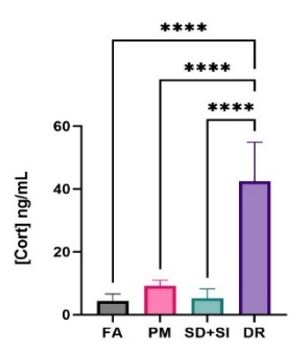
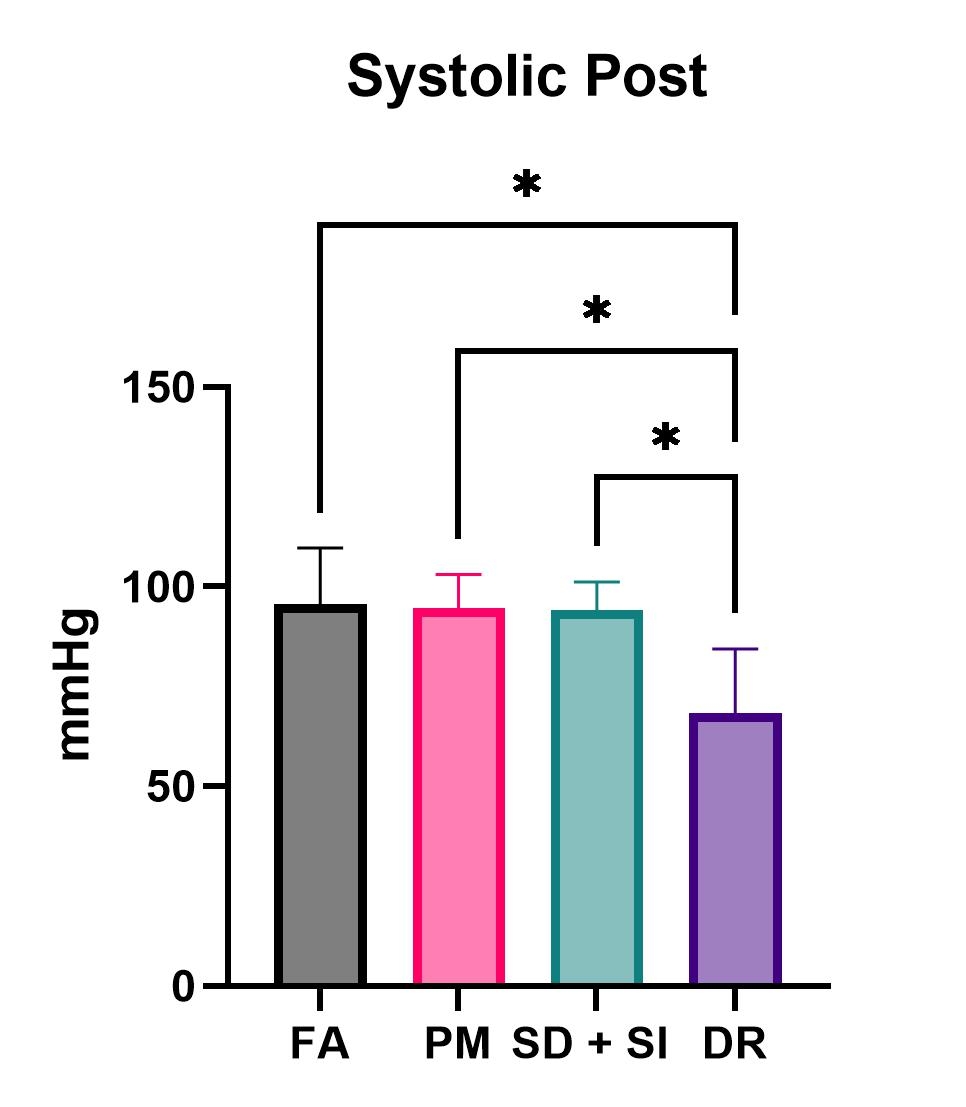
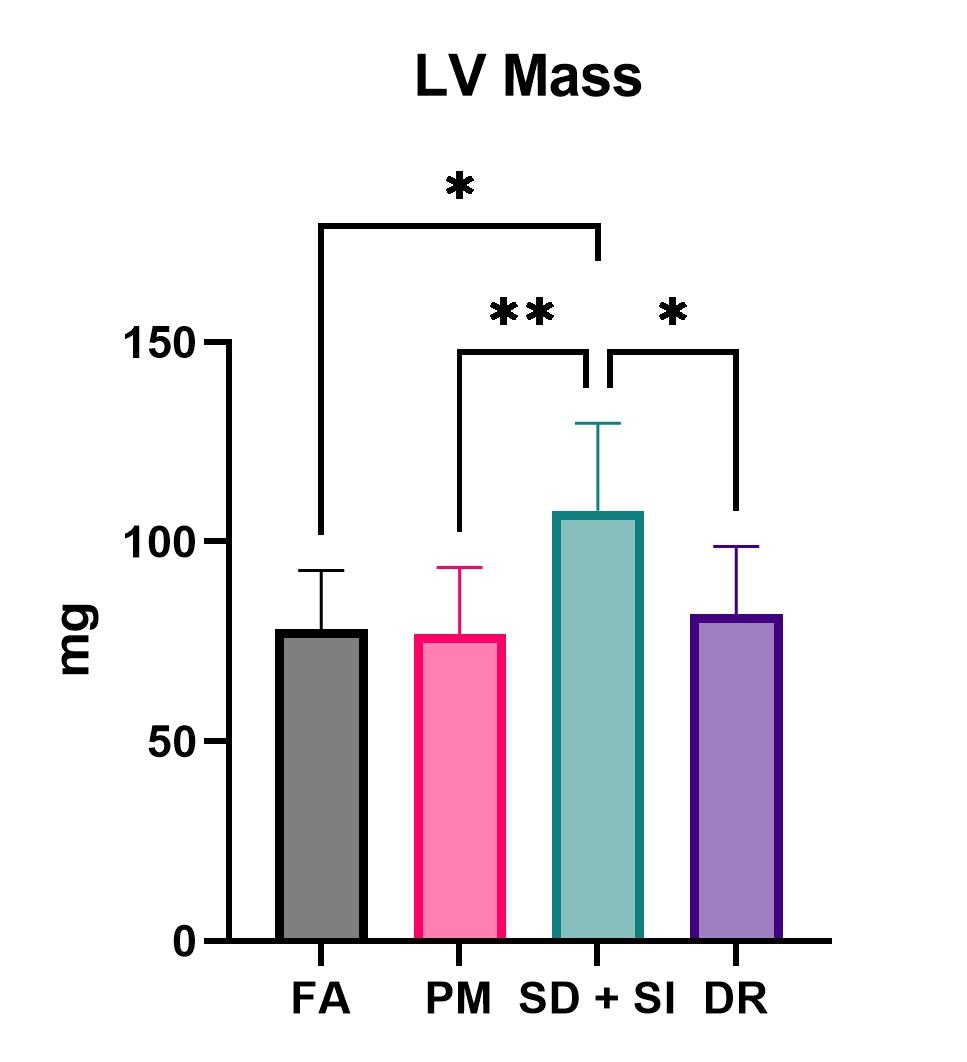
Abstract Body (Do not enter title and authors here): Background: Cardiovascular disease (CVD) remains the leading cause of death in the U.S., with major influence by environmental factors (Particulate Matter PM2.5 exposure), and psychosocial stress. These factors converge on shared biological pathways, including direct particle translocation, systemic inflammation, and oxidative stress, ultimately impacting cardiovascular and behavioral outcomes such as anxiety-like behavior and the hypothalamic-pituitary-adrenal (HPA) axis activation. Hypothesis: PM2.5 or psychosocial stress exposures can both have significant effects on the cardiovascular system. Methods: Male C57BL/6 mice were exposed to filtered air (FA) or PM ≤2.5 μm at concentrations of 34.85 μg/m3 for six hours/day, five days/week for three weeks. Mice underwent 10 minutes of physical interaction with a retired FVB breeder, followed by 18 hours of sensory (non-physical) contact (SDSI) for 10 days. For the Daily Restraint (DR) group, mice were placed in perforated conical tubes for 2 hours over 7 days. Data was analyzed using one-way ANOVA with significance set at p<0.05. Results: DR exposure significantly increased corticosterone levels (p<0.0001). Tail-cuff measurements exhibited a statistically significant reduction in both systolic and diastolic blood pressure for the DR group (p<0.05). Echocardiography revealed that left ventricular mass was significantly increased for the SDSI and DR groups. Ejection Fraction and Fractional Shortening were both significantly increased from the DR exposure (p<0.05). Pressure-volume (PV) loop analyses demonstrated that SDSI exposure caused an increase in the End-diastolic PV-relationship (p<0.05). Functional analyses of isolated cardiac myocytes revealed that PM2.5 and DR groups exhibited reduced contraction velocity under isoproterenol stimulation compared to FA (p<0.05). Additionally, these groups showed increased relaxation velocity under the same conditions (p<0.05). Conclusion: Chronic stress induced a compensatory cardiac response, marked by increased LV mass, elevated systolic function, and reduced blood pressure. Moreover, isolated cardiomyocytes showed impaired β-adrenergic contractility and relaxation. Elevated circulating corticosterone levels further indicate HPA axis activation; therefore, PM2.5 could also be considered a stressor. These findings suggest that early maladaptive remodeling occurs in the heart under chronic stress, highlighting its potential role in increasing long-term risk for CVD.
  • Gallego Perez, Mariana  ( The Ohio State University , Columbus , Ohio , United States )
  • Doss, Colin  ( The Ohio State University , Columbus , Ohio , United States )
  • Ghadi, Esha  ( The Ohio State University , Columbus , Ohio , United States )
  • Miller, Roy  ( The Ohio State University , Columbus , Ohio , United States )
  • Gorr, Matthew  ( The Ohio State University , Columbus , Ohio , United States )
  • Wold, Loren  ( THE OHIO STATE UNIVERSITY , Columbus , Ohio , United States )
  • Hookfin, Harrison  ( The Ohio State University , Columbus , Ohio , United States )
  • Schwieterman, Neill  ( The Ohio State University , Columbus , Ohio , United States )
  • Woodbury, Emerson  ( The Ohio State University , Columbus , Ohio , United States )
  • Saldana, Sierra  ( The Ohio State University , Columbus , Ohio , United States )
  • Smith, Colby  ( The Ohio State University , Columbus , Ohio , United States )
  • Abid, Ayra  ( The Ohio State University , Mason , Ohio , United States )
  • Citek, Noah  ( The Ohio State University , Columbus , Ohio , United States )
  • Mohler, Eleanor  ( The Ohio State University , Columbus , Ohio , United States )
  • Author Disclosures:
    Mariana Gallego Perez: DO NOT have relevant financial relationships | Colin Doss: DO NOT have relevant financial relationships | Esha Ghadi: DO NOT have relevant financial relationships | Roy Miller: DO NOT have relevant financial relationships | Matthew Gorr: DO NOT have relevant financial relationships | Loren Wold: DO NOT have relevant financial relationships | Harrison Hookfin: DO NOT have relevant financial relationships | Neill Schwieterman: No Answer | Emerson Woodbury: DO NOT have relevant financial relationships | Sierra Saldana: No Answer | Colby Smith: No Answer | Ayra Abid: DO NOT have relevant financial relationships | Noah Citek: DO NOT have relevant financial relationships | Eleanor Mohler: DO NOT have relevant financial relationships
Meeting Info:

Scientific Sessions 2025

2025

New Orleans, Louisiana

Session Info:

Cardiac Regeneration, Epigenetics & Environmental Stress

Sunday, 11/09/2025 , 03:15PM - 04:30PM

Moderated Digital Poster Session

More abstracts on this topic:
A Novel Cardioprotective Mechanism in Myocardial Reperfusion Injury: Dual Neutrophil Modulation and ROS/HOCl Scavenging by an Atypical Chemokine

Zwissler Leon, Bernhagen Juergen, Cabrera-fuentes Hector Alejandro, Hernandez Resendiz Sauri, Yap En Ping, Schindler Lisa, Zhang Zhishen, Dickerhof Nina, Hampton Mark, Liehn Elisa, Hausenloy Derek

A Multicentre Study for Hands Only CPR (HOCPR) training assessment towards building a ‘Nation of Life Savers” in India

Ravikumar Thanjavur, Sarma Kvs, Ravikumar Thanjavur, Sarkar Manuj, Debnath Dhrubajyoti, Behera Priyamadhaba, Ghate Jayshri, Trikha Divay, Samantaray A, Madhavi K

More abstracts from these authors:
Right Ventricle Fibroblasts Display a Hyperfibrotic Phenotype In Vitro

Burghaze Madeline, Gorr Matthew

Maternal Exercise Negates the Effects of Maternal PM2.5 Exposure on Offspring Metabolic and Cardiovascular Health

Esteves Joao Victor, Wold Loren, Stanford Kristin, Batabyal Anandi, Baer Lisa, Miller Roy, Schwieterman Neill, Hookfin Harrison, Gallego Perez Mariana, Galley Jeff, Gur Tamar

You have to be authorized to contact abstract author. Please, Login
Not Available