Troponin I and Cardiac Remodeling in Male Basketball Players: An Integrated Strategy for Sudden Cardiac Death Risk Using ECG, Imaging, and Biomarkers – A Systematic Review and Meta-Analysis
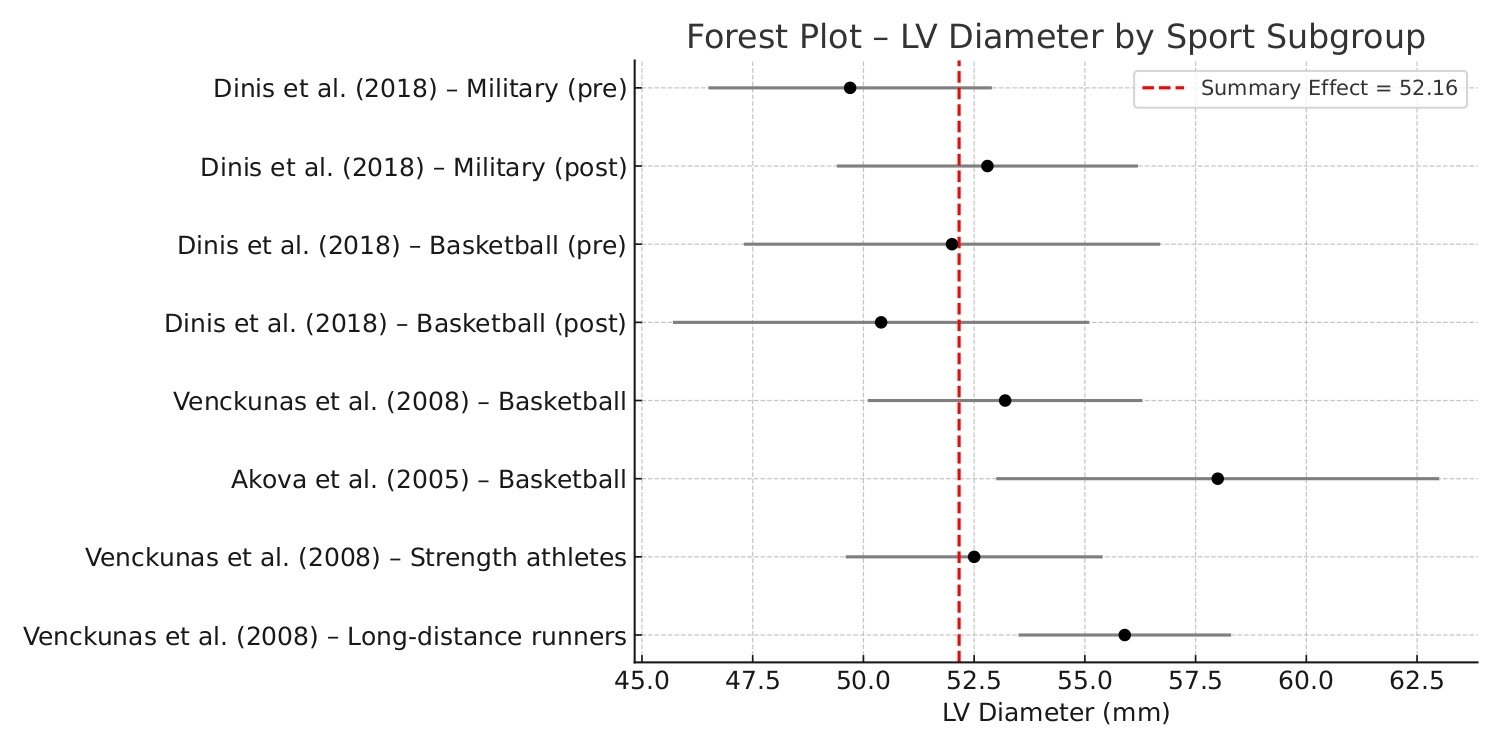
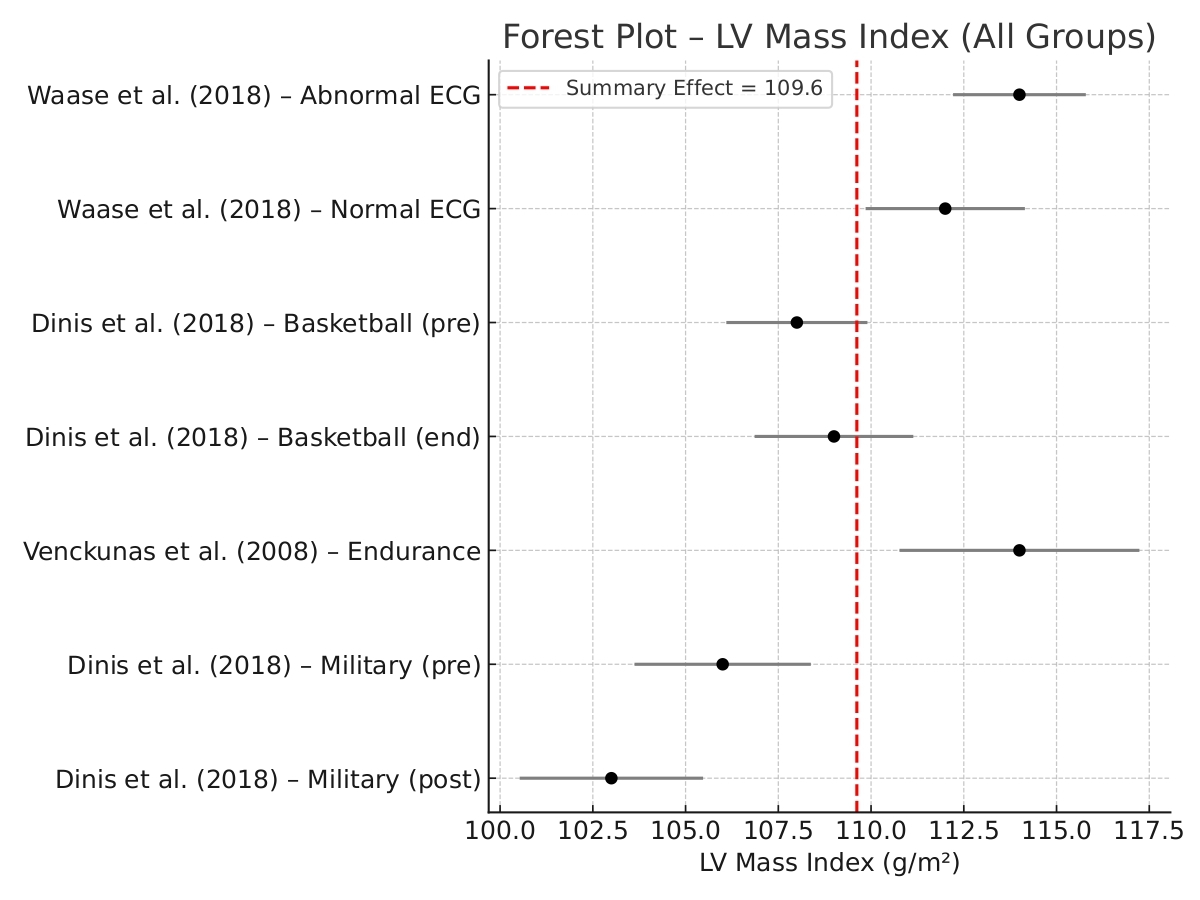
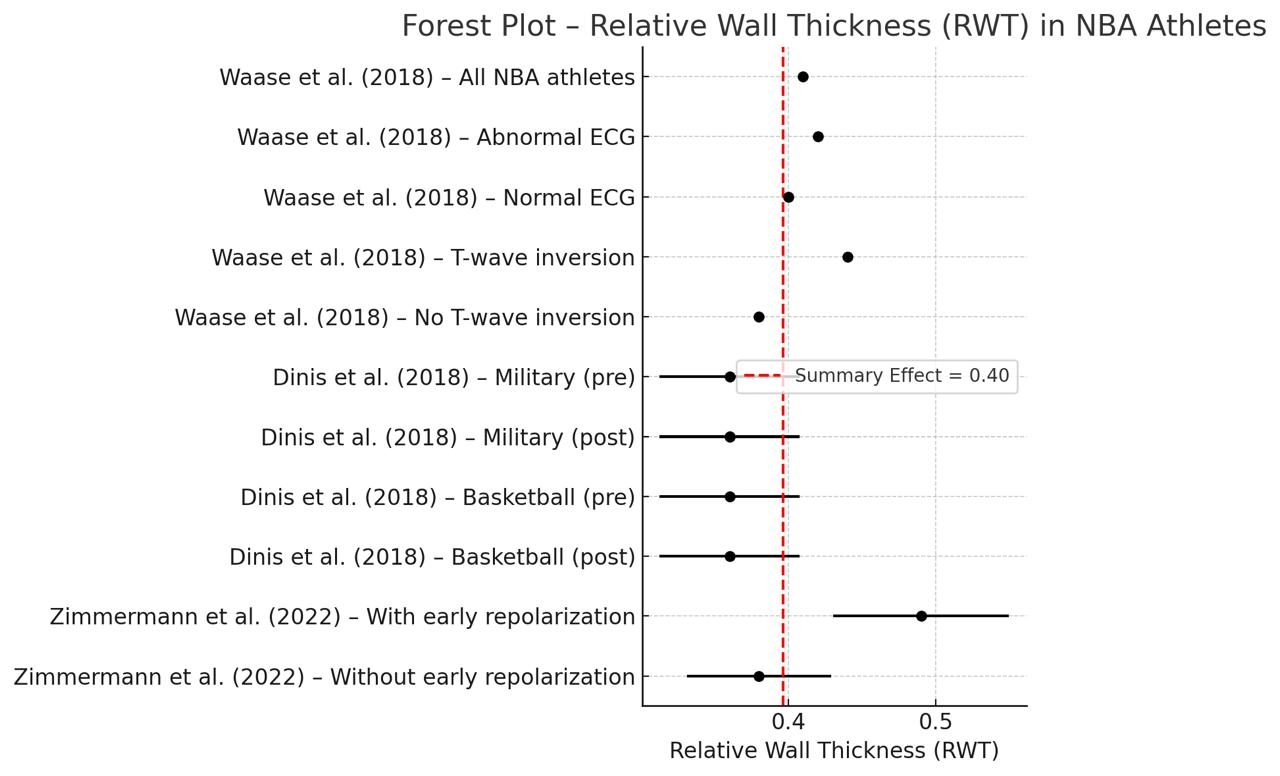
Abstract Body (Do not enter title and authors here): Background: Sudden cardiac death (SCD) remains an intriguing and devastating event among competitive athletes, disproportionately affecting male basketball players (MBP), prominently African Americans. Physiological cardiac remodeling is expected in this group due to high-intensity interval training. However, distinguishing adaptive from maladaptive changes remains challenging. Cardiac troponin I (cTnI), typically is used for myocardial infarction, may also reflect subclinical injury when repeatedly elevated post-exercise. Methods: We performed a systematic review and meta-analysis (PROSPERO: CRD420251047421) following PRISMA guidelines. Observational studies from 2000–2025 in English and Portuguese were included if they reported cTnI levels, structural cardiac parameters (LV mass index [LVMI], relative wall thickness [RWT], or left ventricular diameter [LVD]), ECG findings, or SCD in male athletes aged 14–40. Data from 35 studies were included. Random-effects meta-analyses were performed using the DerSimonian–Laird method, and heterogeneity assessed via I^2. Results: We analyzed data from 580 athletes for RWT, 108 for LVD, 566 for LVMI, and 176 for cTnI. LVMI was higher in basketball players than in military or endurance athletes. NBA players with abnormal ECGs had higher LVMI (-114 vs. -111 g/m^2). RWT was elevated in athletes with early repolarization (0.49 vs. 0.38), suggesting concentric remodeling. LVD was greatest in endurance athletes (56 mm) and intermediate in basketball players (50–54 mm). Post-exercise cTnI increased by a pooled mean of +0.115 ng/mL (95% CI: 0.089–0.142), with higher values in athletes with fibrosis or concentric patterns. T-wave inversion was more common in athletes with abnormal geometry (OR: 4.12, 95% CI: 2.3–7.4), often coexisting with elevated RWT and cTnI. Conclusion: MBP exhibit a hybrid remodeling pattern due to their training load profile, combining volume overload (typical of endurance sports) and pressure overload (typical of strength sports). Often considered benign, these findings may mimic pathological features, as gray zones complicates clinical decision-making in athletes. Persistent post-exercise elevations in cTnI may reflect subclinical myocardial stress and carry long-term prognostic significance. Integrating ECG, imaging, and cTnI monitoring could enhance early risk stratification and SCD prevention in high-performance athletes. Longitudinal studies are needed to confirm prognostic value and guide screening strategies.
Almeida, Yan
(
UNIFESO
, Teresopolis , Brazil )
Author Disclosures:
Yan Almeida:DO NOT have relevant financial relationships