Oncologic Treatment in a Patient with Dextrocardia and Congenitally Corrected Transposition: A Personalized Approach
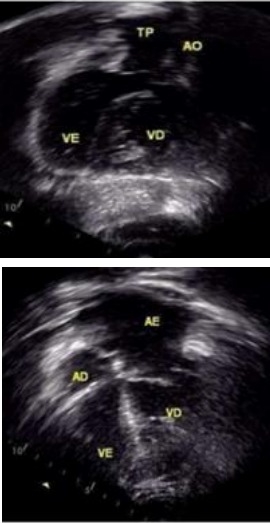
Abstract Body (Do not enter title and authors here): Background Dextrocardia is a rare congenital anomaly in which the heart is positioned in the right hemithorax, often accompanied by complex structural abnormalities involving the cardiac chambers and great vessels. In oncology, this condition poses therapeutic challenges, particularly regarding cardiotoxicity risk. A thorough anatomical evaluation is essential to ensure the safety of invasive procedures and systemic cancer therapies. Research Questions This case report explores how congenital cardiac anatomical variations influence clinical decision-making and cardio-oncology monitoring strategies. Approach We describe a 35-year-old woman with left-sided invasive ductal carcinoma (HER2-, ER/PR+, Ki-67: 10%) and complex congenital heart disease: dextrocardia, congenitally corrected transposition of the great arteries, pulmonary stenosis, and ventricular septal defect. Pre-treatment evaluation included chest X-ray (Fig.1a), ECG (Fig. 1b), transthoracic echocardiography (Fig. 2), and cardiac MRI (Fig. 3). She underwent mastectomy, radiotherapy, and six cycles of docetaxel/cyclophosphamide chemotherapy. Cardiac function was monitored with serial echocardiograms and cardiac biomarkers (troponin, NT-proBNP). The patient developed heart failure with preserved ejection fraction (HFpEF) during chemotherapy. Clinical management with a loop diuretic and ACE inhibitor led to symptom resolution and clinical stabilization. The patient remained hemodynamically stable, with no drop in left ventricular ejection fraction. Discussion Docetaxel and cyclophosphamide can be safely administered in dextrocardia, provided standard precautions are observed along with attention to altered cardiac anatomy. In cases with associated congenital heart disease, detailed cardiac imaging is crucial prior to chemotherapy. Serial monitoring with cardiac biomarkers allows early detection of cardiotoxicity. Interestingly, in this patient, dextrocardia led to reduced cardiac exposure during left-sided breast radiotherapy, possibly affording additional protection against radiation-induced myocardial fibrosis, coronary artery disease, and late cardiotoxicity. Conclusion This case highlights the value of personalized oncology care in patients with congenital heart defects. While dextrocardia does not inherently preclude chemotherapy with agents such as docetaxel and cyclophosphamide, detailed imaging and vigilant clinical and laboratory monitoring are essential to optimize treatment safety and efficacy.
Moraes, Giovanna
(
Faculdade Israelita Albert Einstein
, Sao Paulo , Brazil )
Predeus, Isabella
(
Faculdade Israelita Albert Einstein
, Sao Paulo , Brazil )
Cunha, Ana Beatriz Nepomuceno
(
Albert Einstein Israelite Hospital
, Sao Paulo , Brazil )
Gioli-pereira, Luciana
(
Faculdade Israelita Albert Einstein
, Sao Paulo , Brazil )
De Sant Anna Melo, Edielle
(
Faculdade Israelita Albert Einstein
, Sao Paulo , Brazil )
Author Disclosures:
Giovanna Moraes:DO NOT have relevant financial relationships
| Isabella Predeus:DO NOT have relevant financial relationships
| Ana Beatriz Nepomuceno Cunha:DO NOT have relevant financial relationships
| Luciana Gioli-Pereira:DO NOT have relevant financial relationships
| Edielle de Sant Anna Melo:DO NOT have relevant financial relationships