Dual Burden of Cancer and Stroke: Long-term Cardiovascular Risk in Survivors of Post-cancer Stroke
Abstract Body (Do not enter title and authors here): Background: Cancer survivors are at increased risk for cardiovascular disease (CVD), yet the long-term impact of new-onset stroke occurring after cancer diagnosis remains poorly characterized.
Objectives: To investigate the incidence, predictors, and long-term cardiovascular outcomes associated with new-onset stroke after cancer diagnosis in a large prospective cohort.
Methods: We analyzed data from 491,767 participants in the UK Biobank, with baseline assessment between 2006 and 2010 and follow-up through 2022. Participants with a prior history of stroke at recruitment were excluded. Stroke and cancer diagnoses were obtained via hospital records and cancer registries. Individuals were categorized into four groups: no cancer & no stroke, cancer & no stroke, no cancer & stroke, and cancer before stroke. The primary outcome was major adverse cardiac and cerebrovascular events (MACCE), including all-cause mortality, heart failure (HF), shock, and major bleeding. Cox proportional hazards models were used to estimate hazard ratios (HRs), adjusting for demographics, lifestyle factors, comorbidities, and cancer treatments.
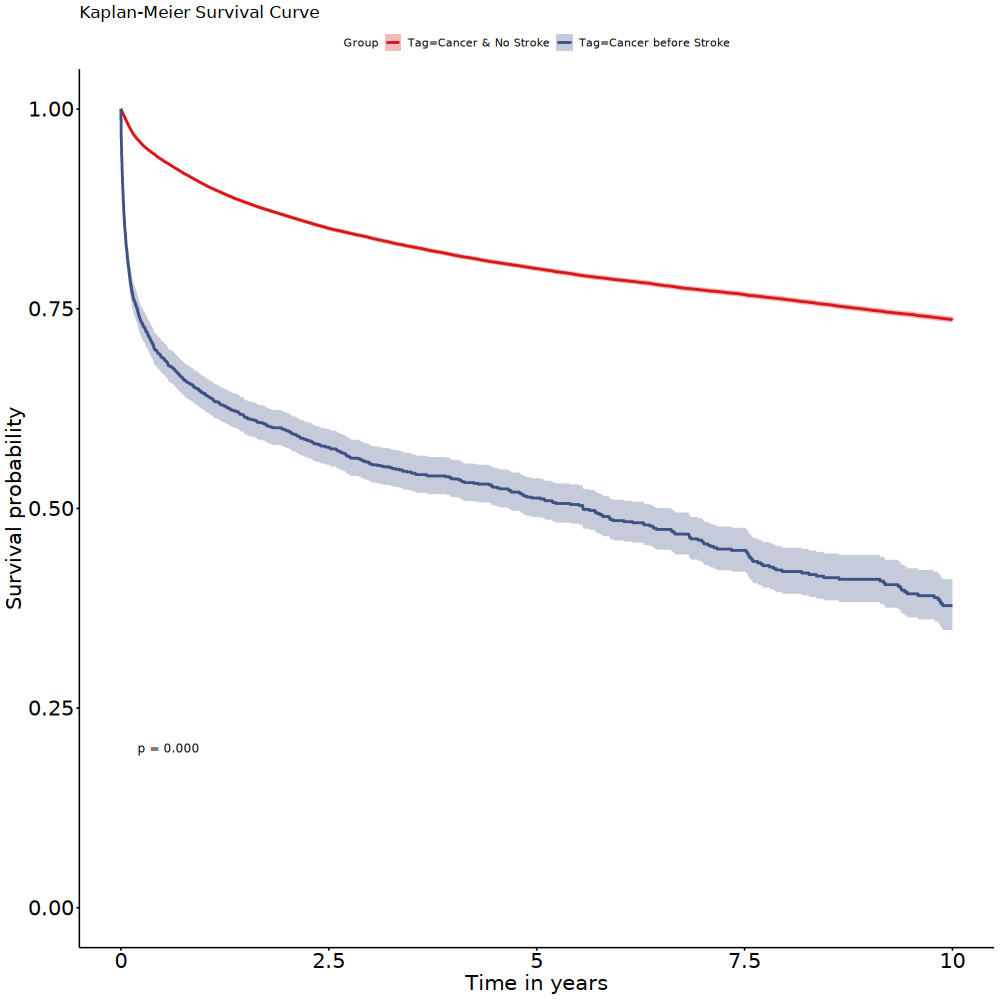
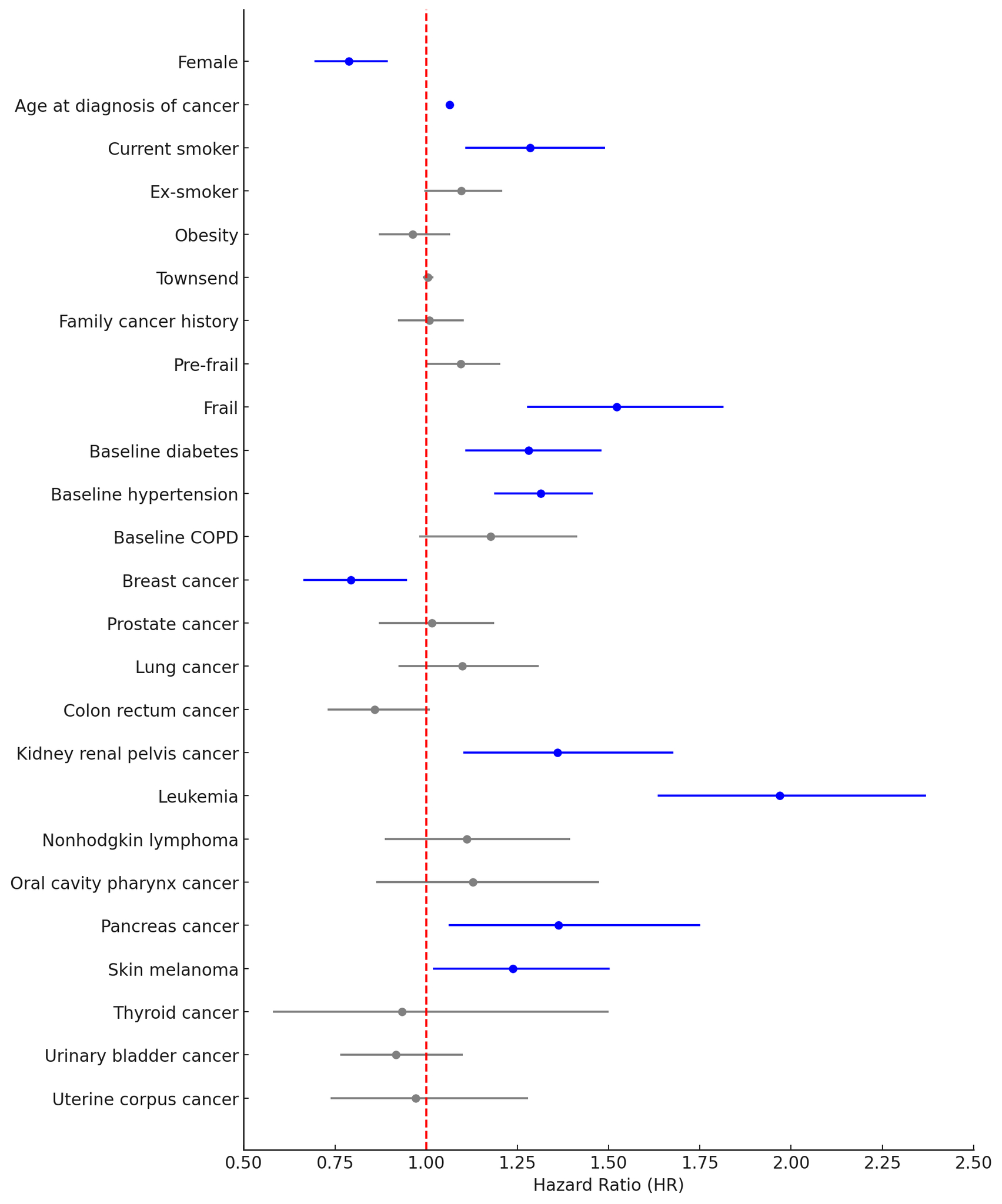
Results: Among 68,764 cancer patients, 2,033 (3.0%) experienced stroke after cancer diagnosis. Compared to cancer patients without stroke, those with stroke had significantly higher MACCE incidence (68.5% vs. 31.3%), mortality (48.8% vs. 25.4%), HF (9.4% vs. 3.6%), and major bleeding (37.4% vs. 4.8%). Multivariate Cox regression analysis identified specific cancer type, including pancreatic, leukemia, skin melanoma and kidney/renal/pelvis, as well as baseline factors including sex, age at diagnosis of cancer, current smoker, frailty, baseline diabetes and hypertension, as significant independent risk factors for developing stroke among cancer patients.
Conclusions: New-onset stroke following cancer diagnosis is associated with a markedly increased risk of cardiovascular morbidity and mortality in cancer survivors. Stroke may act as a sentinel event identifying a high-risk subgroup requiring intensified cardio-oncology surveillance. These findings highlight the need for integrated cardiovascular care pathways in cancer patients with stroke.
Zhu, Fang
(
Shanghai Chest Hospital Shanghai Jiao Tong University School of Medicine
, Shanghai , China )
Zhang, Qian
(
Shanghai Chest Hospital Shanghai Jiao Tong University School of Medicine
, Shanghai , China )
Cai, Wenjie
(
Johns Hopkins University Bloomberg School of Public Health
, Baltimore , Maryland , United States )
Liu, Gang
(
Shanghai Chest Hospital Shanghai Jiao Tong University School of Medicine
, Shanghai , China )
Li, Jiantao
(
Shanghai Chest Hospital Shanghai Jiao Tong University School of Medicine
, Shanghai , China )
Chen, Hao
(
Shanghai Children's Medical Center
, Shanghai , China )
Wu, Dongjin
(
Shanghai Chest Hospital Shanghai Jiao Tong University School of Medicine
, Shanghai , China )
Luo, Qingquan
(
Shanghai Chest Hospital Shanghai Jiao Tong University School of Medicine
, Shanghai , China )
Cheng, Xinghua
(
Shanghai Chest Hospital Shanghai Jiao Tong University School of Medicine
, Shanghai , China )
Hou, Xumin
(
Shanghai Chest Hospital Shanghai Jiao Tong University School of Medicine
, Shanghai , China )