Machine Learning–Based Prediction of Right Heart Failure After LVAD Implantation with Visualization of Individual Risk Factors
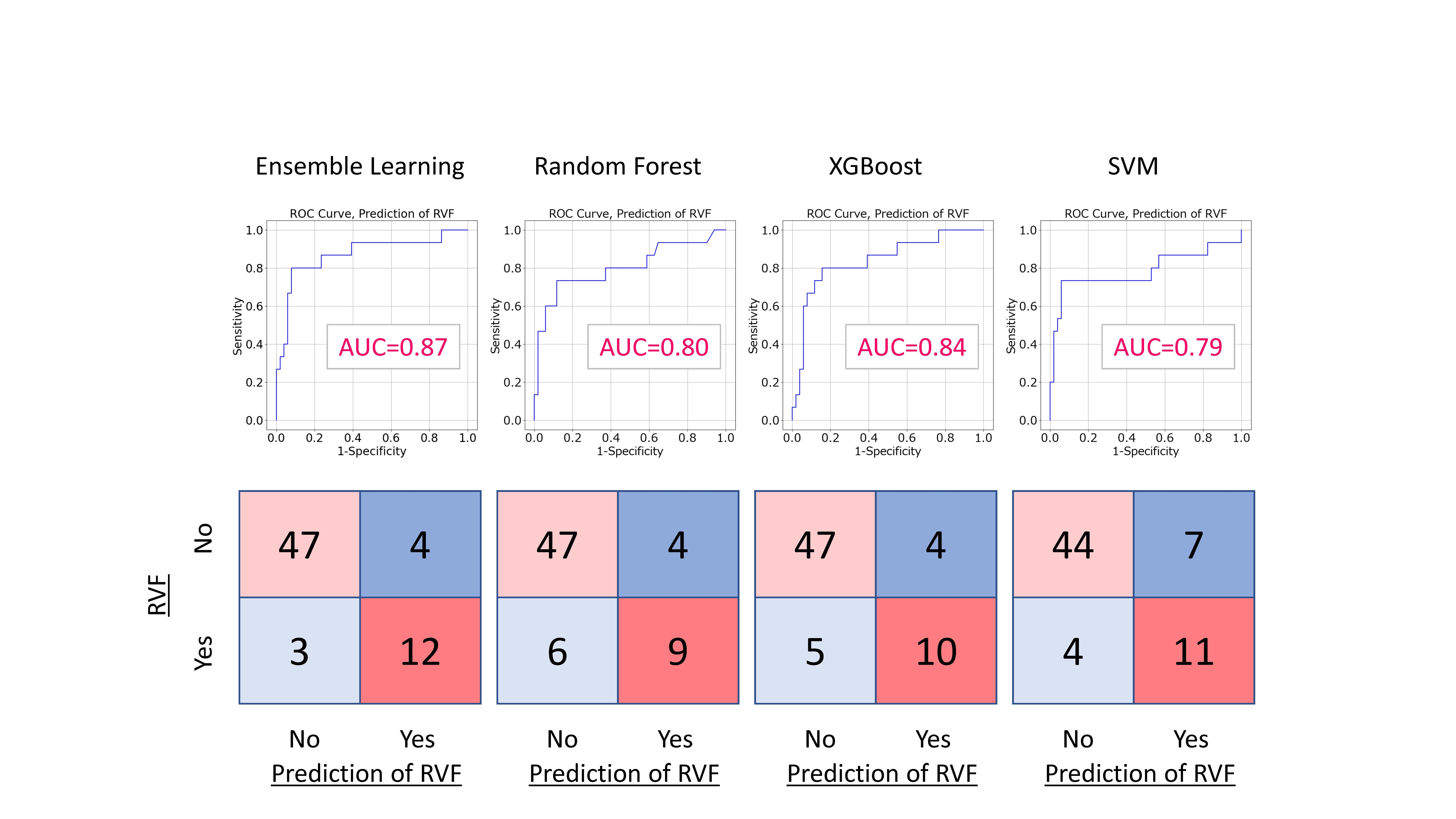
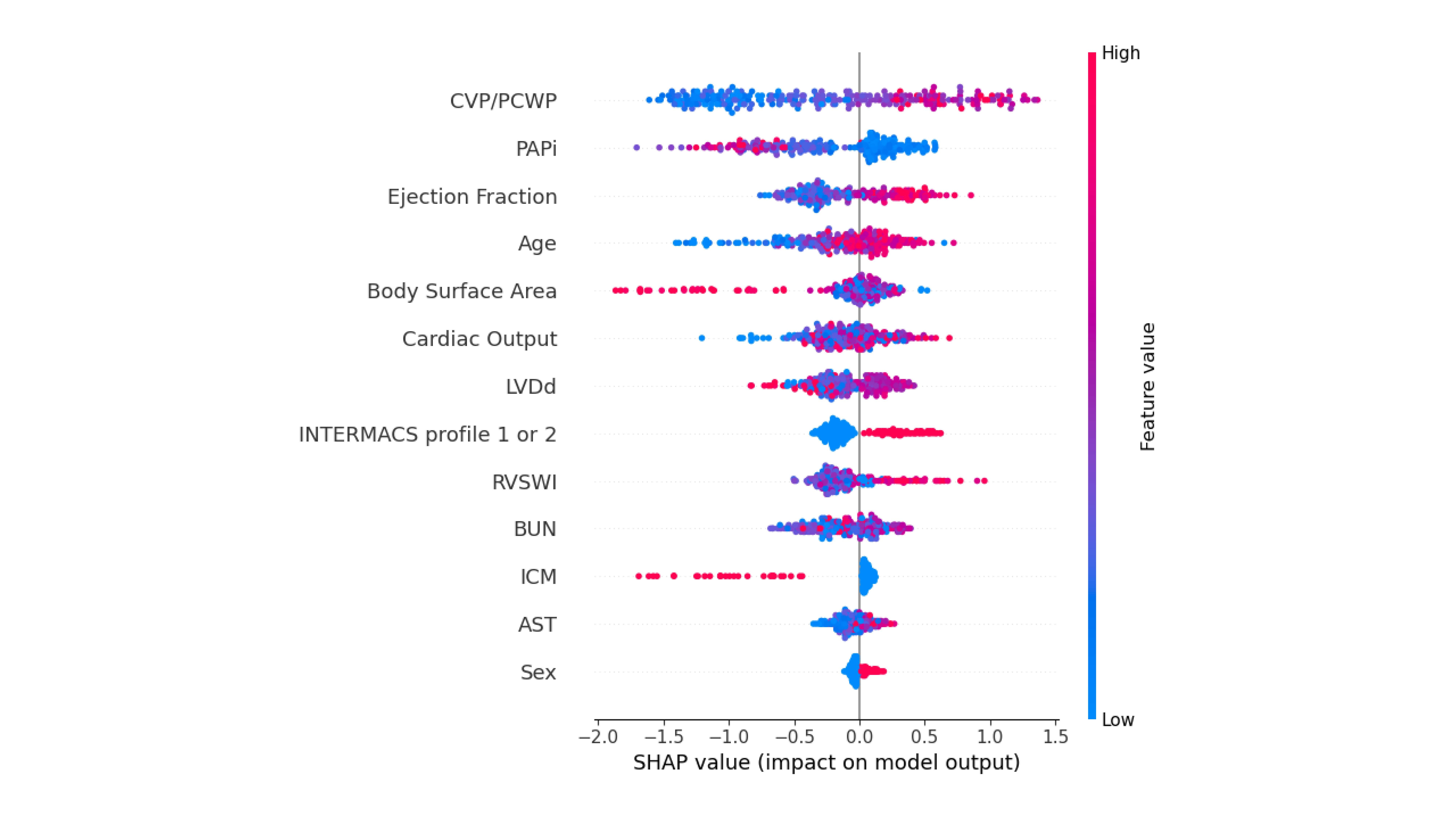
Abstract Body (Do not enter title and authors here): Introduction: Right ventricular failure (RVF) is a major adverse event following left ventricular assist device (LVAD) implantation. The complex mechanisms involved make it challenging to accurately predict RVF. Although supervised machine learning is useful for predicting complex outcomes, it is often difficult to identify specific factors that increase a patient's risk. This study aimed to assess the risk of RVF in individual patients and identify their unique risk factors using supervised machine learning. Methods: Between June 2010 and January 2024, 482 consecutive patients underwent continuous-flow LVAD implantation at Osaka University Hospital or the National Cerebral and Cardiovascular Center. Of them, 326 who underwent preoperative right heart catheterization and echocardiography were included in the analysis. Important features for predicting the risk of RVF were selected using the χ2 or Mann-Whitney U test, the Gini index in a random forest algorithm, and a literature review. The optimal classification algorithm for this analysis was selected from among the random forest, eXtreme Gradient Boosting, support vector machine, logistic regression, and ensemble learning algorithms by comparison of the area under the curve, accuracy, F1 score, and sensitivity through five-fold cross-validation of the test data. The SHapley Additive exPlanations (SHAP) value was used to assess the individual risk factors for RVF. Results: Thirteen important features (sex, age, non-ischemic cardiomyopathy, body surface area, aspartate aminotransferase level, blood urea nitrogen level, left ventricular end-diastolic dimension, left ventricular ejection fraction, right ventricular stroke work index, central venous pressure, pulmonary capillary wedge pressure, pulmonary pulsatility index, and Interagency Registry for Mechanically Assisted Circulatory Support profile) were selected. Ensemble learning was the most reliable classification algorithm. The area under the curve, accuracy, F1 score, and sensitivity were 0.87, 0.89, 0.77, and 0.80, respectively. The SHAP analysis revealed that impaired right ventricular function assessed by right heart catheterization, poor preoperative condition, and a good ejection fraction were associated with an increased risk in most cases. Conclusions: Supervised machine learning enables the accurate prediction of RVF after LVAD implantation, while SHAP values visualize individual risk factors and may optimize preoperative conditions.
Samura, Takaaki
(
Tokyo Medical and Dental University
, Tokyo , Japan )
Masaki, Hideki
(
Tokyo Medical and Dental University
, Tokyo , Japan )
Yoshioka, Daisuke
(
OSAKA UNIVERSITY HOSPITAL
, Suita Osaka , Japan )
Tonai, Kohei
(
National Cerebral and Cardiovascular Center
, Osaka , Japan )
Tsukamoto, Yasumasa
(
National Cerebral and Cardiovascular Center
, Osaka , Japan )
Fukushima, Satsuki
(
National Cerebral and Cardiovascular Center
, Osaka , Japan )
Nakauchi, Hiromitsu
(
Stanford Unviersity
, Stanford , California , United States )
Miyagawa, Shigeru
(
OSAKA UNIVERSITY HOSPITAL
, Suita Osaka , Japan )